
Boiler Repair in Newbury, MA
Newbury has a lot of old houses carrying old boilers, and a lot of those boilers are still running fine with the right maintenance. If yours has stopped making heat, or it’s making noise, short cycling, or leaking, the first question isn’t replacement. It’s whether the part that failed is worth fixing on a system that still has years left in it.
Boiler Repair in Newbury
We take boiler repair calls across Newbury, from the older neighborhoods near the town center out to the farms and larger lots toward the Rowley line. A lot of what we see here is steam and hot water heat in houses built well before anyone thought about gas lines or modern venting, sitting alongside additions and renovations that changed the heating load without anyone rebalancing the system.
Chris handles the plumbing and heating side of the business directly. He’ll tell you straight whether what’s in front of him is a repair or the start of a bigger conversation about replacement.
What Newbury homes typically have
A good share of Newbury’s housing stock predates forced hot air heat entirely, which means cast iron radiators fed by steam or hot water boilers, some of them decades old and rebuilt more than once. Newer construction and additions out toward Route 1 and the Parker River side of town tend to run hot water baseboard or radiant systems instead.
Gas availability is not uniform here the way it is closer to Salem. Parts of Newbury have gas on the street. Other sections, especially the more rural stretches, run on oil because gas was never extended out that far. That changes your repair and replacement options directly: an oil boiler with a bad nozzle or a failed primary control is a different job than a gas boiler with an ignition or gas valve problem, and it changes what you can convert to down the line.
Well water is common outside the center of town, which matters for boiler longevity too. Hard water and mineral buildup work on a hot water system’s heat exchanger and expansion tank the same way they work on a water heater, so a system on well water often needs closer attention to expansion tank pressure and periodic flushing than one on town water.
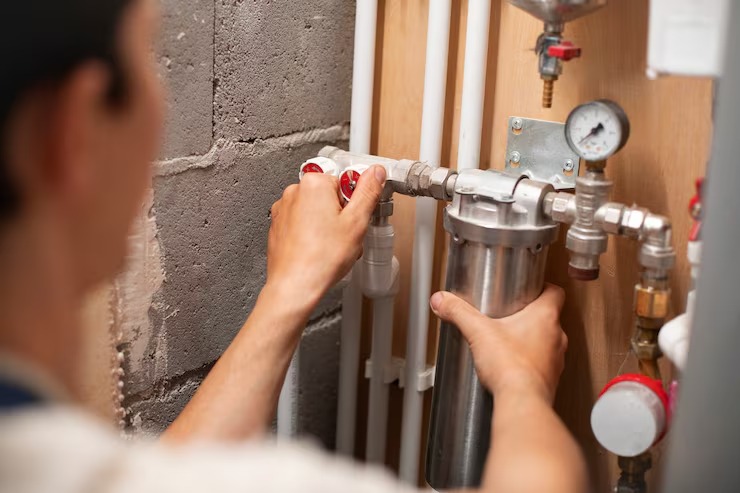
Repair or replace
This is the part most companies skip past because replacement pays better. We won’t skip it.
A boiler with a cracked heat exchanger, a firebox that’s rusted through, or a burner assembly that’s been patched more than once is done. No amount of parts swapping fixes a cracked exchanger, and running one is a carbon monoxide risk, not a maintenance decision.
Short of that, most boiler problems are repairable. A failed circulator pump, a bad zone valve, a stuck aquastat, a pilot or ignition control on an older gas unit, a leaking pressure relief valve, a waterlogged expansion tank, none of these mean the boiler is finished. They’re normal wear parts on a system that can otherwise run another decade or two, especially on the cast iron boilers common in Newbury’s older housing, which were built heavier than most of what’s sold today.
If your boiler is under about 15 years old and the problem is a component failure rather than the vessel itself, repair is almost always the right call. Past that age, we’ll walk you through the real math: what the repair costs now against what you’re likely to be back here for next, so you’re deciding with the full picture instead of a scare tactic.
What the work involves
A typical boiler repair starts with draining down the section of the system we need to open, whether that’s the boiler itself, a zone valve, or a circulator. On steam systems we’re also checking the water gauge glass, the low water cutoff, and the near-boiler piping, which on older installs is often not up to current code and affects how well the system actually performs.
Gas-fired repairs on units with pilot or standing ignition sometimes need the gas line sizing checked, particularly if a previous owner added appliances downstream without confirming the boiler was still getting proper input. Oil-fired repairs more often center on the burner, nozzle, and primary control, along with checking the flue venting for corrosion, which is a real issue on older masonry chimneys common in this town’s housing.
Most straightforward repairs, a circulator, a valve, a control swap, are same-day work. You’re without heat or hot water for part of a day, not multiple days. If we find something that needs a part we don’t carry on the truck, we’ll tell you that up front along with a real timeline instead of a vague one.
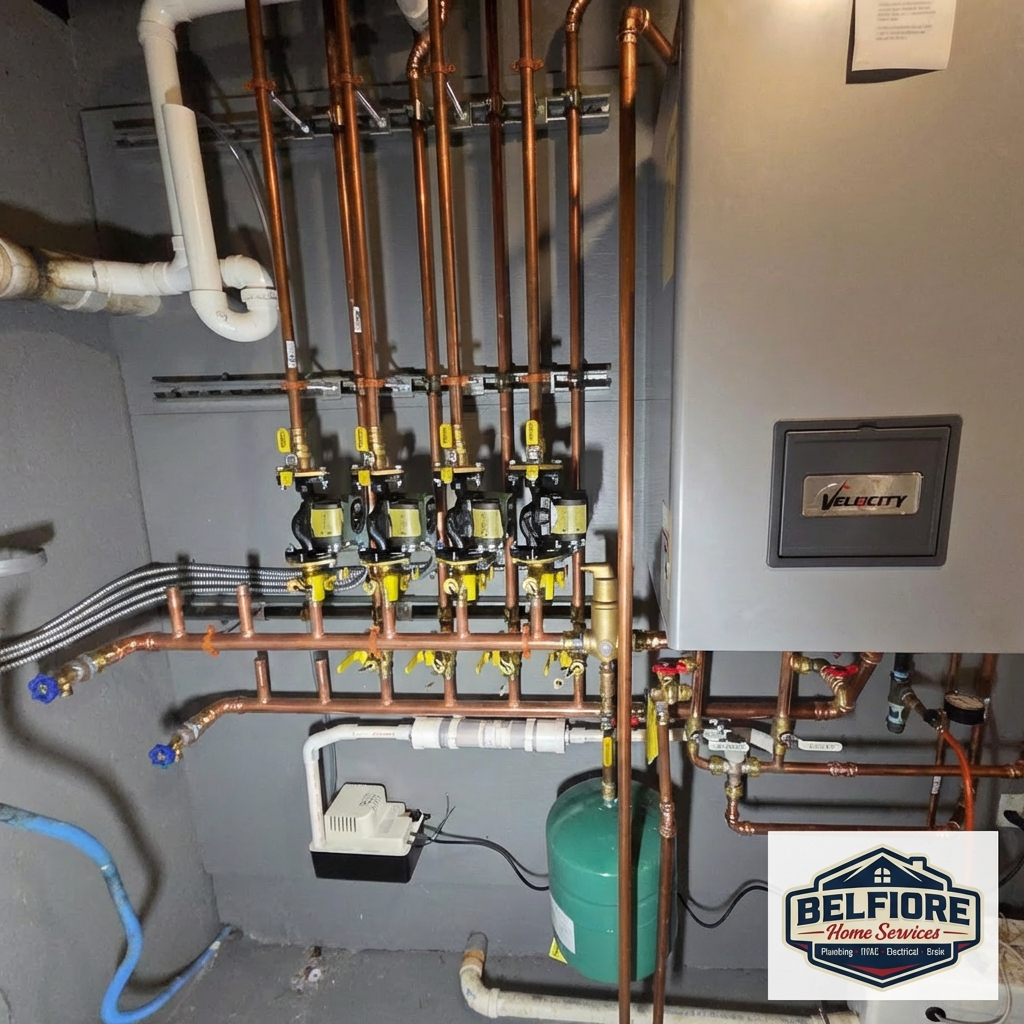
What it costs
Boiler repair costs vary by what’s actually failed. A zone valve or circulator replacement is a modest, contained repair. A gas valve, ignition module, or burner assembly job runs higher because of parts cost. We quote the repair itself before we start, not after, so you’re not signing off on a number after the work is already done.
We’ll also tell you plainly if a system is getting close to the point where repair costs stop making sense against the cost of {PLACEHOLDER}. That comparison is part of the job, not an upsell tacked onto it.
How long it takes
Most single-component repairs, a circulator, a zone valve, an aquastat or control, are finished in a few hours and your heat is back on the same day. Jobs that involve draining and refilling a full system, or diagnosing an intermittent steam problem, can run longer, particularly on older systems where the near-boiler piping needs adjustment to get proper circulation back. We’ll give you a realistic window before we start, not just an appointment time.
Common Questions
Can an old steam boiler in a Newbury house still be repaired instead of replaced?
Usually yes. Cast iron steam boilers were built to last, and most failures involve controls, valves, or venting rather than the boiler itself. As long as the heat exchanger and firebox are sound, repair is typically the right call.
My boiler runs on oil. Does that change repair options?
Yes. Oil boilers are common in the parts of Newbury without gas service on the street. Repairs on oil systems more often involve the burner, nozzle, and primary control rather than the gas valve and ignition components you'd see on a gas unit.
Does well water affect my boiler?
It can. Mineral content in well water contributes to expansion tank and heat exchanger wear over time, so systems on well water often need more frequent checks of pressure and water quality than systems on town water.
How fast can you get my heat back on?
Most single-part repairs, like a circulator or zone valve, are same-day. If the issue turns out to be more involved, we'll give you a specific timeline once we've seen the system, not a guess.
Reach Out for Boiler Repair
We work across Newbury on both older steam and hot water systems and newer installs, gas and oil alike. Call {PHONE} to get a repair scheduled, or to get a straight answer on whether your boiler is worth fixing before you spend a dollar on it.
Contact information
Talk to Chris
If your boiler’s down or acting up, call and describe what you’re seeing: no heat, banging pipes, a leak, a boiler that short cycles. Chris can usually tell from that description roughly what’s going on and what to expect from the visit, before anyone sets foot on your property.