Boiler Installation and Replacement in Topsfield, MA
Topsfield has a lot of older steam and hot water boilers still doing their job, some of them well past the age where parts are easy to find. Big lots and long driveways also mean a fair number of these homes are on well water, which changes how a heating system should be piped and protected against sediment and mineral buildup.
Boiler Installation and Replacement in Topsfield
When a boiler in Topsfield finally gives out, it is usually not a surprise. The pilot gets harder to light, the system short-cycles, or a section of cast iron starts weeping. Chris handles these calls directly, from the first look at the old system to sizing and installing the replacement. The goal on every job is a system that matches the actual heat loss of the house, not just a same-size swap because that is what was there before.
What Topsfield homes typically have
A good share of the housing stock here is older farmhouse or colonial construction, with additions built on over the decades. That means original steam boilers in some homes, converted hot water systems in others, and a mix of cast iron radiators and baseboard depending on when the last renovation happened.
Gas availability is genuinely mixed across Topsfield. Some streets have natural gas at the road, and for those homes a gas-fired boiler is usually the simplest and most efficient path. Other parts of town run on oil, and for those properties an oil-fired boiler replacement, or a switch to propane, is the more realistic option. This is not a detail to gloss over. It changes the equipment, the venting, and the fuel line work before a number ever gets discussed.
Well water is also common on the larger lots. It does not directly affect a closed heating loop the same way it affects a water heater, but if the boiler shares an indirect tank for domestic hot water, water quality and filtration are worth addressing at the same time.
What the work involves
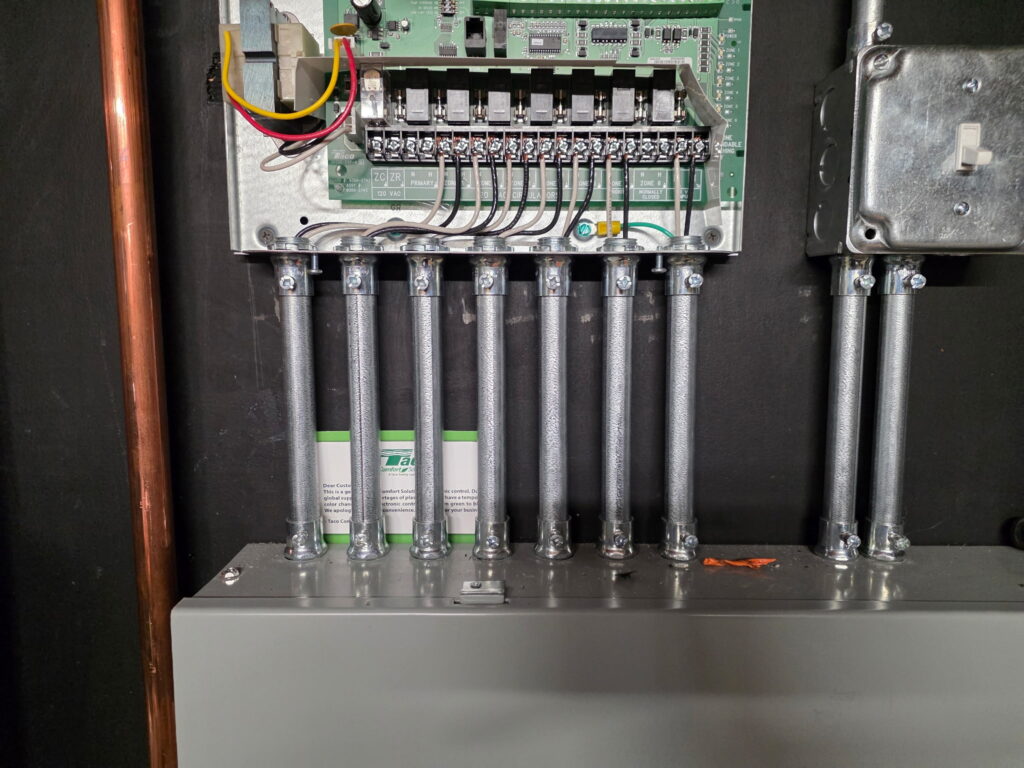
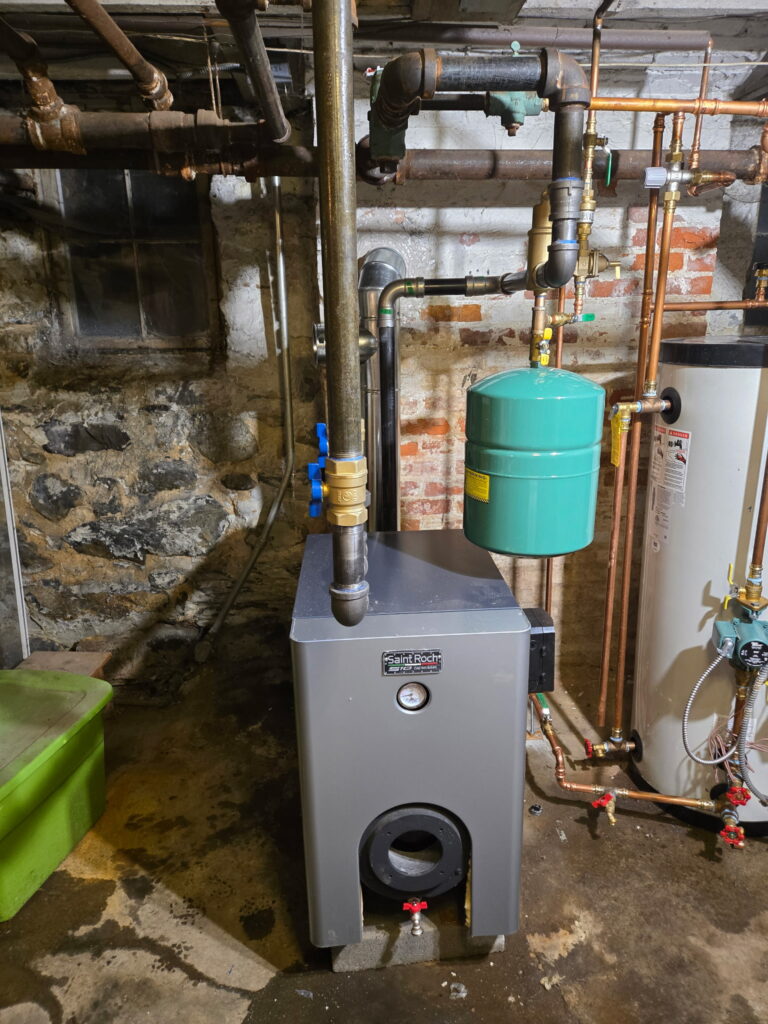
A full boiler replacement starts with draining the existing system and disconnecting the old unit from supply, return, and venting. For steam systems, that includes checking the near-boiler piping, the header, and the equalizer, since a new boiler installed on bad old piping will never run right. For hot water systems, it means checking zone valves, circulators, and the expansion tank, and replacing any of those that are undersized or failing alongside the boiler itself.
Gas-fired installs need correct gas line sizing for the new unit’s BTU input, which sometimes means upsizing the line from the meter rather than just reconnecting the old one. Venting has to match the equipment: some newer high-efficiency boilers use PVC intake and exhaust, while standard efficiency units still need a masonry chimney or a properly sized metal liner. Getting the vent wrong is one of the most common mistakes on cheap installs, and it is a safety issue, not a cosmetic one.
Most Topsfield homes are without heat for one day during a straightforward swap. Steam systems with piping issues, or jobs where a chimney liner needs to be added, can run into a second day.
Repair or replace
Not every failing boiler needs to come out. If the heat exchanger is sound and the problem is a control, a circulator, an igniter, or a zone valve, a repair is usually the right call and Chris will say so. A boiler in reasonable shape that is ten or twelve years old with one bad part still has years left in it.
Replacement makes sense when the heat exchanger itself is cracked or leaking, when a steam boiler is severely oversized or undersized for the connected radiation, when repairs are stacking up year after year, or when the unit is old enough that parts are becoming hard to source. If a system has been limping along on repeated patch jobs, replacement often ends up cheaper over a five-year window than continuing to chase failures on an old boiler.
What it costs
Cost depends on fuel type, boiler size, whether the venting needs to change, and how much of the near-boiler piping has to be redone. A straightforward gas boiler swap with existing venting reused is the lower end of the range. Add a chimney liner, a fuel conversion, or significant steam piping corrections, and the number goes up. Chris will walk the system with you and give you a real number for your house before any work starts, not a phone estimate. Call {PHONE} for that walkthrough.
How long it takes
A standard hot water or steam boiler replacement in a Topsfield home usually runs one full day, from draining the old system to firing up the new one and checking every zone. Jobs that involve a fuel conversion, a new chimney liner, or piping rework on an older steam system typically take a second day. Either way, you get a clear timeline before the crew arrives, not a moving target.
Common Questions
Is it worth repairing an old steam boiler instead of replacing it?
Often, yes. If the heat exchanger is intact and the issue is a control, circulator, or valve, a repair can add years of service without the cost of a full replacement. Chris will tell you honestly when a repair makes sense versus when it is just delaying the inevitable.
Can I switch from oil to gas when I replace my boiler in Topsfield?
It depends on whether natural gas runs down your street. Some parts of Topsfield have gas available, others do not. If gas is an option, converting at replacement time is often worth discussing since it changes the equipment and long-term fuel costs.
How long will my house be without heat during a boiler replacement?
Most straightforward swaps take one day. Jobs that involve a fuel conversion, a new chimney liner, or repairs to old steam piping can take a second day.
Does well water affect my boiler system?
A closed heating loop is not directly affected by well water, but if your boiler feeds an indirect tank for domestic hot water, water quality is worth addressing at the same time as the boiler work.
What size boiler does my Topsfield home need?
Reach Out for Boiler Installation and Replacement
Belfiore is a Salem-based company working across Topsfield and the rest of the North Shore. Call {PHONE} to talk through your boiler, get a straight answer on repair versus replace, and get a real installation timeline for your home.
Contact information
Talk to Chris
Chris runs the plumbing and heating side of Belfiore and looks at every boiler job himself before anything gets scheduled. If your system in Topsfield is acting up, or you just want a second opinion before committing to a full replacement, that conversation is the place to start.