
Boiler Installation and Replacement in North Andover, MA
A lot of North Andover homes are still running on the boiler that came with the house, sometimes a converted gravity steam system from the historic center, sometimes a mid-century hot water system in one of the post-war neighborhoods. Add in stretches of the town on private wells, and you’ve got two problems that show up together more than people expect: an aging heating plant and water quality that affects how long that new equipment actually lasts.
Boiler Installation and Replacement in North Andover
Chris and the plumbing crew handle boiler installation and replacement across North Andover, from the older homes near the town common to the larger colonials and newer builds further out toward the Andover and Boxford lines. This is one of the higher-stakes calls we get. A boiler is not something you replace every few years, and it needs to be sized and installed right the first time.
North Andover is on the western edge of the area we cover out of Salem. We’re upfront about that. We still get out here for boiler work, but if you’re calling with no heat on a bitter January morning, we’ll tell you honestly where you sit in the schedule rather than promise a five-minute response we can’t back up.
What North Andover homes typically have
The housing stock here splits pretty cleanly. Around the historic center and older village areas, you’ll find early to mid-1900s homes that started on coal-converted-to-oil steam systems, many of them still cast iron, some of them 30 to 40 years old with the original boiler still limping along. Further out, the post-war and modern subdivisions mostly run hot water baseboard or radiant systems, often with equipment installed in the 1980s or 90s that’s now due.
Gas availability is a real variable in North Andover, more than in towns closer to Salem. Some streets have natural gas service, particularly in denser residential sections, while other parts of town, especially the more rural western edges, run on oil or propane because gas mains never got extended out there. This changes your options. If gas is on your street, a modern condensing gas boiler is usually on the table. If you’re on oil, we size and install oil-fired equipment, and we tell you plainly if converting to gas would require a utility hookup that’s not worth the cost for your situation.
Well water is also common on the outskirts of town, and it matters for boiler longevity. Hard water and sediment accelerate scale buildup in heat exchangers and can shorten the life of newer high-efficiency units. If you’re on a well, we’ll talk about basic filtration or a scale inhibitor alongside the boiler itself, not as an add-on sale but because it protects the equipment you’re paying for.
What the work involves
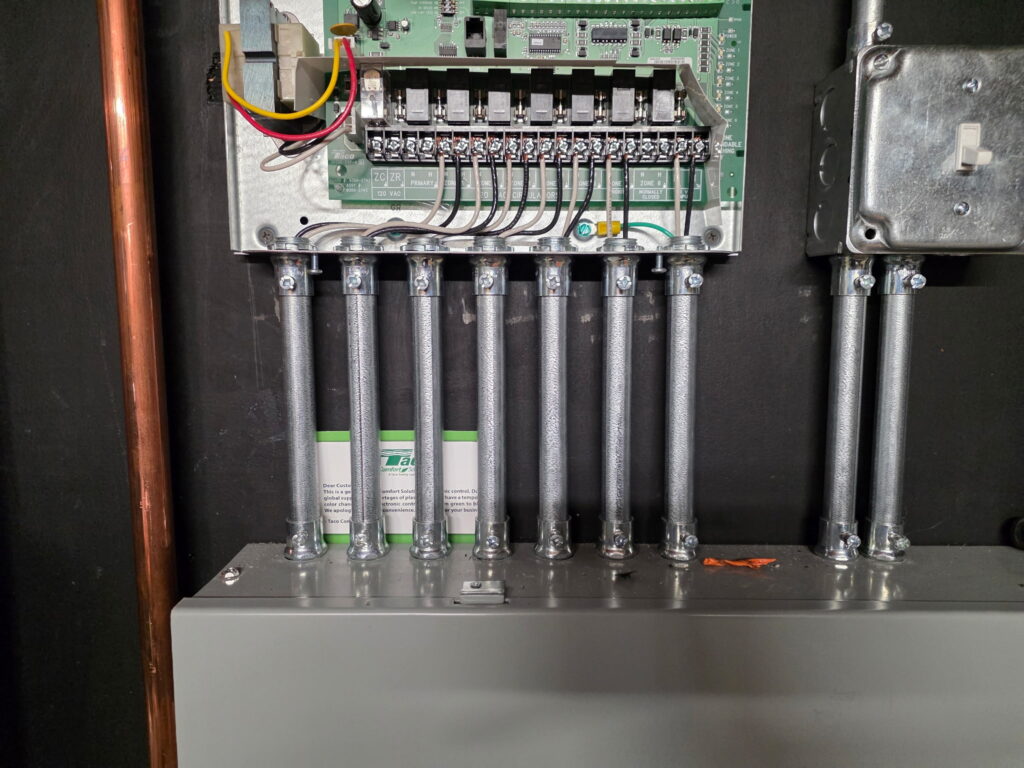
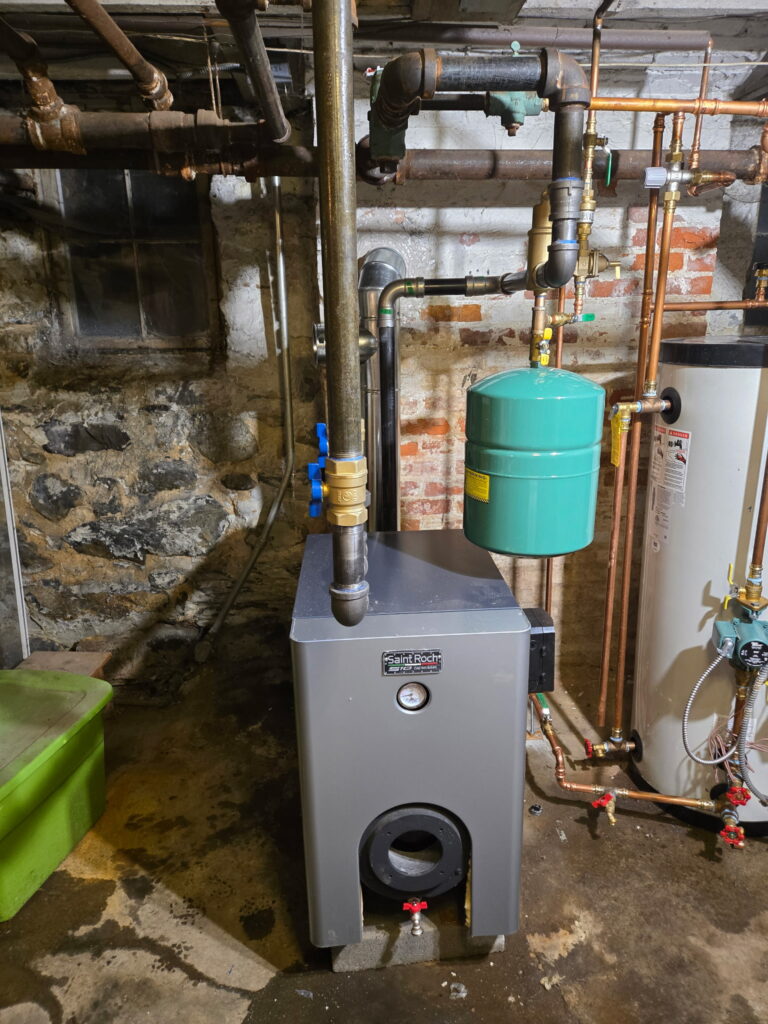
A full boiler replacement starts with draining the system, which on an older steam setup can mean dealing with decades of sediment in the returns. We disconnect the old boiler, cap or reroute existing piping, and set the new unit on a proper base with correct clearances.
Venting is where a lot of older installs go wrong, and we don’t cut corners here. Atmospheric oil and gas boilers need a chimney liner in good condition or a direct vent kit sized to the unit. Condensing gas boilers vent through PVC, which usually means a new penetration through the wall and attention to condensate drainage, since these units produce acidic condensate that needs to go somewhere it won’t eat through a floor drain or a slab.
Gas sizing gets checked against the whole house, not just the boiler. If you’ve got a gas water heater, range, or dryer already on the same line, we run the math on total BTU load and pipe diameter before we assume the existing gas line can handle a new boiler. Undersized gas lines are a common finding in older North Andover homes that have added gas appliances over the years without anyone reconfirming the main run.
For a straightforward like-for-like swap, you’re typically without heat for the better part of a day. Jobs involving new venting, gas line upsizing, or zone valve and control upgrades run longer, and we’ll walk you through the real timeline before we start, not after.
Repair or replace
Not every boiler call ends in a replacement, and Chris will say so on the spot if that’s the honest answer. A cracked heat exchanger, a boiler that’s flooding the firebox, or a unit north of 20 years old with rust showing through the jacket are signs replacement is the right call. But a failed zone valve, a bad circulator pump, a tripped low-water cutoff, or a pilot and ignition problem on an otherwise sound boiler are usually repairs, and often not expensive ones.
Age alone doesn’t decide it. We’ve seen 30-year-old cast iron boilers in North Andover that are still solid mechanically because they were maintained and the water chemistry was decent. We’ve also seen 12-year-old units in rough shape because of well water sediment or a install that was never quite right. We look at the actual condition, not just the year on the nameplate, before we tell you which way to go.
What it costs
Boiler installation cost depends on fuel type, venting requirements, and whether the existing piping and zoning can be reused or needs rework. A straightforward oil-to-oil or gas-to-gas swap on existing venting costs less than a job that requires a new chimney liner, gas line upsizing, or a switch in fuel type. We’ll give you {PRICE} once we’ve seen the existing system and your gas or oil service, and we’ll break out labor, equipment, and any venting or gas work separately so you know what’s driving the number.
How long it takes
Most residential boiler replacements are a one-day job for the swap itself, meaning you lose heat and hot water (if the boiler handles your domestic hot water too) for that day and have it back by evening. Jobs that involve running new gas line, adding a direct vent through an exterior wall, or replacing corroded near-boiler piping typically run into a second day. We schedule around weather when we can, since nobody wants to be without heat longer than necessary in a North Andover winter.
Common Questions
Is natural gas available in North Andover, or should I plan for oil?
It depends on your street. Parts of North Andover have natural gas service, especially in denser residential areas, while other sections, particularly toward the western and more rural edges, run on oil or propane. We check your street's gas availability before recommending a fuel type for your new boiler.
How do I know if my boiler needs to be replaced instead of repaired?
Signs pointing to replacement include a cracked heat exchanger, visible rust through the jacket, water pooling around the base, or a unit that's failed repeatedly in the last year or two. A single failed component like a circulator pump or zone valve on an otherwise sound boiler is usually a repair, not a replacement.
Will I be without heat during the installation?
For a standard swap on existing venting, you're typically without heat and hot water for one day. Jobs that need new venting, a chimney liner, or gas line work can run into a second day, and we'll tell you which situation you're in before we start.
Does well water affect boiler equipment?
It can. Hard water and sediment common in well systems on North Andover's outskirts can accelerate scale buildup in heat exchangers, especially in high-efficiency condensing units. We'll talk through basic filtration or a scale inhibitor if you're on a well.
Can you convert my oil boiler to gas?
Reach Out for Boiler Installation and Replacement
Call {PHONE} to set up a look at your current system. We’ll check the boiler, the venting, the gas or oil supply, and your water source, and give you a clear answer on repair versus replacement before any work starts.
Contact information
Talk to Chris
Chris runs the plumbing and heating side of the business and has been in enough North Andover basements to know the difference between a boiler that needs a part and one that’s done. If yours is making noise, short-cycling, leaking, or just old enough to worry about, call and describe what you’re seeing. He’ll tell you straight whether it’s a repair call or a replacement conversation, and what to expect either way.