
Boiler Installation and Replacement in Georgetown, MA
Georgetown has a lot of houses built before anyone thought about central heating, which means a lot of retrofit steam and hot water systems that have been patched together over decades. Add well water on many lots and you get boiler problems that are really water problems in disguise, sediment, hardness, and feed valves that never quite close right.
Boiler Installation and Replacement in Georgetown
Chris handles boiler work directly, no subcontractors, no call center scheduling someone else’s crew. When a Georgetown homeowner calls about a boiler that’s short-cycling or a system that’s lost pressure again, he wants to see the actual equipment before anyone talks about a new unit. Half the calls that start as ‘I need a new boiler’ end with a repair, because the old system just needed a real diagnosis instead of a guess.
This page covers heating equipment only. If you’re dealing with a full system replacement, expansion tank sizing, or a straight oil-to-gas conversion, that’s exactly the kind of job Chris walks through in person before quoting anything.
What Georgetown homes typically have
A good share of Georgetown’s housing stock dates back to when oil-fired steam was the standard, and a lot of those original systems are still running, just older and less efficient than what’s available now. Cast iron radiators are common in the center of town and along the older roads, tied to boilers that may be original to a 1960s or 70s replacement, not the house itself.
Gas availability is inconsistent here. Some streets have a main running past them, others don’t, and that changes the whole conversation. If gas isn’t at the street, you’re looking at propane or staying with oil, and Chris will tell you which makes sense for your specific setup rather than pushing a conversion that doesn’t pencil out.
Water is a mixed picture too. Town water reaches a good portion of Georgetown, but private wells are common on larger lots and in the more rural sections. Well water brings sediment and mineral content that affects boiler feed valves and heat exchangers over time, so filtration comes up as a real maintenance item, not an add-on sale.
What the work involves
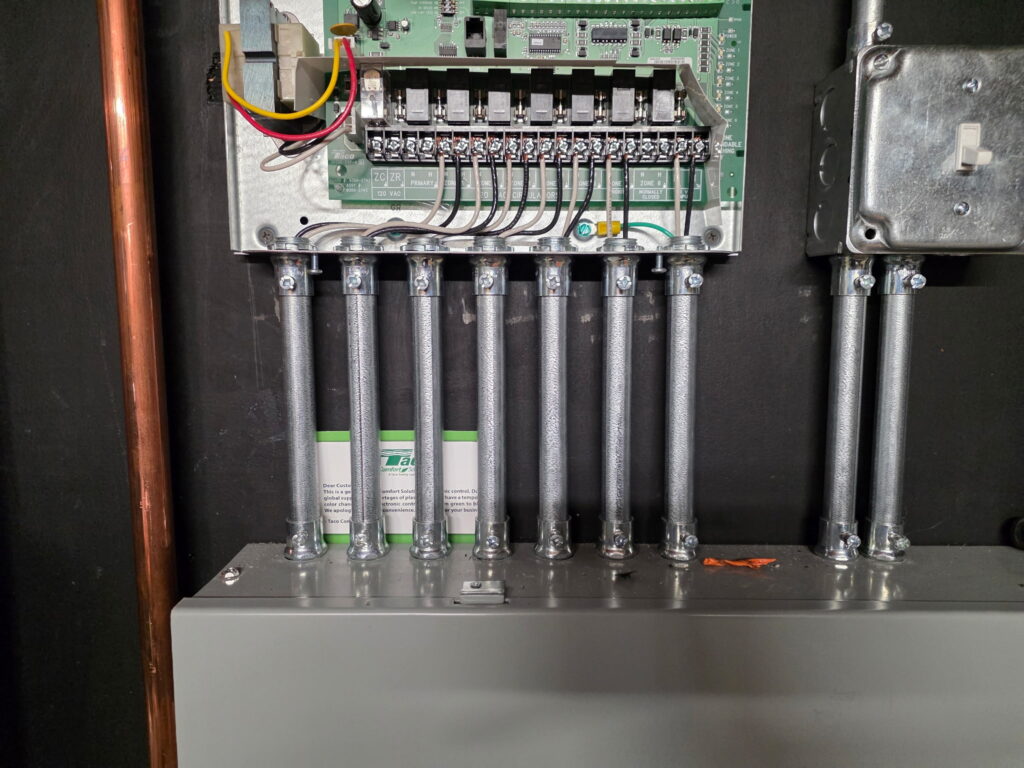
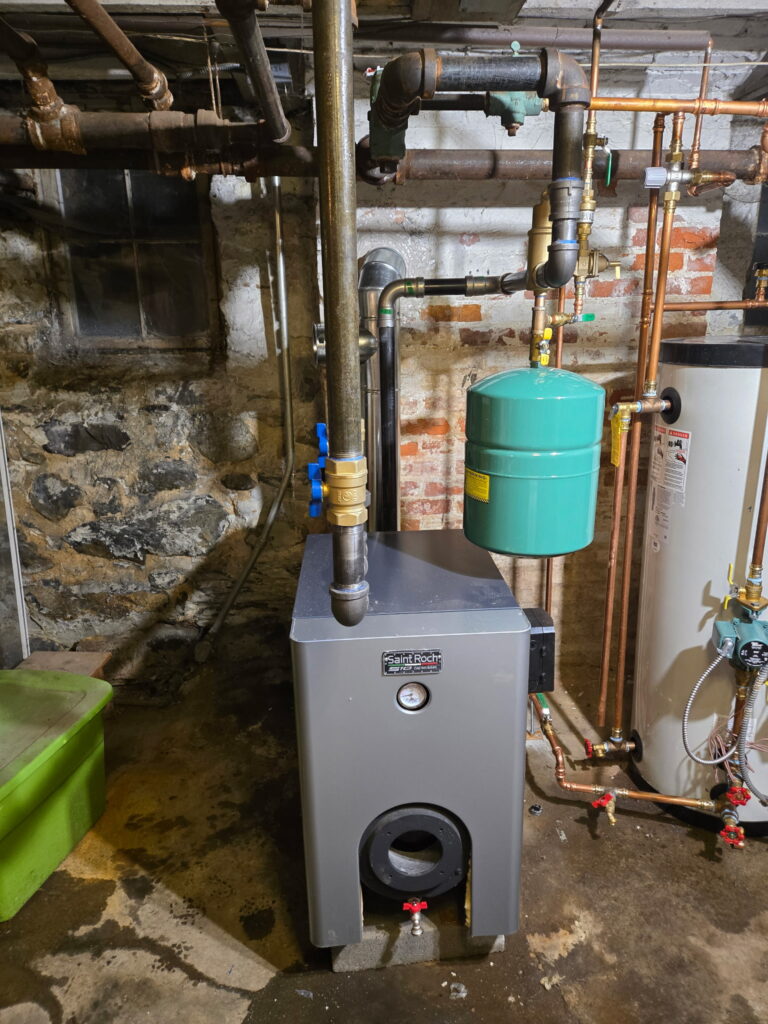
A full replacement starts with draining the existing system and disconnecting the old boiler, gas or oil line, and any electrical controls tied to it. For steam systems, that means checking the near-boiler piping and header configuration, since a lot of older steam boilers were installed with piping that doesn’t meet current manufacturer specs and needs correcting for the new unit to run properly.
Venting gets evaluated case by case. Some replacements can reuse existing chimney venting, others need a direct-vent or power-vent setup run through a sidewall, which is a different install entirely. Gas sizing matters here too. Older Georgetown homes were often piped for a smaller appliance, so a new high-efficiency boiler may need a larger gas line run from the meter, which Chris sizes to the BTU load, not just swapped like-for-like.
On a standard swap, most Georgetown homes are without heat for one day. Steam systems with piping corrections or gas line upsizing can run into a second day. Chris tells you which one you’re looking at before the crew shows up, not after.
Repair or replace
This is the part most companies skip because repair doesn’t pay as well as a new install. Chris doesn’t skip it.
If your boiler is under 15 years old, has a cracked heat exchanger ruled out, and the problem is a failed circulator, a bad zone valve, or a pressure-reducing valve that’s stuck, that’s almost always a repair. Steam boilers with a leaking gauge glass, a bad low-water cutoff, or noisy pipes from bad pitch are usually fixable without touching the boiler itself.
Replacement makes sense when you’re looking at a cracked cast iron section, repeated flooding from a failed heat exchanger, or a unit old enough that parts are getting hard to source. If your oil boiler is pushing 20-plus years and you’re already looking at a repair bill, that’s usually the point where Chris will lay out both numbers side by side and let you decide, not tell you what to do.
What it costs
Boiler installation cost depends on fuel type, venting changes, and whether the near-boiler piping needs rework. A straight like-for-like oil boiler swap costs less than a conversion to gas with new venting and a resized gas line. Steam system replacements typically run higher than hot water because of the piping precision required. Chris quotes {PRICE} after he’s actually looked at the equipment and the venting path, not off a phone description.
How long it takes
Most straightforward boiler replacements in Georgetown take a single day, start to finish, with heat restored by evening. Jobs that involve rerouting vent piping, upsizing the gas line, or correcting steam header piping typically take a full day plus part of a second. Chris will tell you which category your job falls into during the estimate, so you’re not guessing about how many nights you’ll need supplemental heat.
Common Questions
Should I repair or replace my boiler?
It depends on the age and the failure. A circulator, zone valve, or pressure valve issue on a boiler under 15 years old is almost always worth repairing. A cracked heat exchanger, repeated leaks, or a unit past 20 years usually points toward replacement. Chris will give you a straight answer after inspecting the equipment.
Is gas available for boiler conversions in Georgetown?
It varies by street. Some parts of Georgetown have gas mains, others don't, which means propane or staying with oil are the realistic options. Chris checks availability at your address before recommending a conversion.
How long will my house be without heat during a replacement?
Most standard swaps take one day. Steam systems needing piping corrections, or conversions requiring new venting and a larger gas line, can take a day and a half to two days. You'll know which one applies before work starts.
Does well water affect my boiler?
Yes. Sediment and mineral content from well water can affect feed valves and heat exchangers over time. It's worth mentioning if your home is on a well when you call, since filtration can extend the life of a new system.
Do you handle oil-to-gas conversions?
Reach Out for Boiler Installation and Replacement
Belfiore works across Georgetown on boiler installation, replacement, and the plumbing work that goes with it. Call {PHONE} to set up a visit, or send details through the contact form and Chris will follow up to schedule a time that works.
Contact information
Talk to Chris
If your boiler is acting up, or you just want a straight answer on repair versus replace before winter, call {PHONE} and talk to Chris directly. He’s the one who’ll be looking at your system, and he’d rather explain the real options at the kitchen table than sell you on a phone call.