
Boiler Installation and Replacement in Danvers, MA
A lot of Danvers homes are still running the boiler that came with the house, or close to it. If you’re hearing banging pipes, uneven heat between floors, or your oil bill keeps climbing while the system keeps needing parts, you’re not alone. This is one of the most common calls Chris takes across the North Shore, and it’s usually not a quick fix or a quick sell. It’s a real decision about a system that’s going to run your heat and your hot water for the next fifteen to twenty years.
Boiler Installation and Replacement in Danvers
Danvers has a real mix of housing stock, from older homes near the center to newer construction out toward the Topsfield and Middleton lines. That mix means boiler work here isn’t one-size-fits-all. A converted two-family off Maple Street might still have an old gravity-fed steam system, while a colonial built in the 90s could be on a mid-efficiency hot water boiler that’s simply reaching the end of its service life. Chris and his team look at the actual system in front of them, not a generic replacement chart, before recommending anything.
What Danvers homes typically have
Older sections of town, especially closer to Danvers Square and the historic parts near Route 35, still have steam boilers from decades back, often oversized for the house they’re heating. Newer subdivisions tend to run hot water baseboard or radiant systems on smaller, more efficient boilers. Natural gas is available on most streets in town, which opens up better options for high-efficiency condensing boilers, but there are still pockets, particularly on the outer edges near Wenham and Topsfield, where homes run on oil or propane. That distinction matters before anyone talks equipment, because gas availability drives venting, sizing, and what kind of boiler actually makes sense for your house.
What the work involves
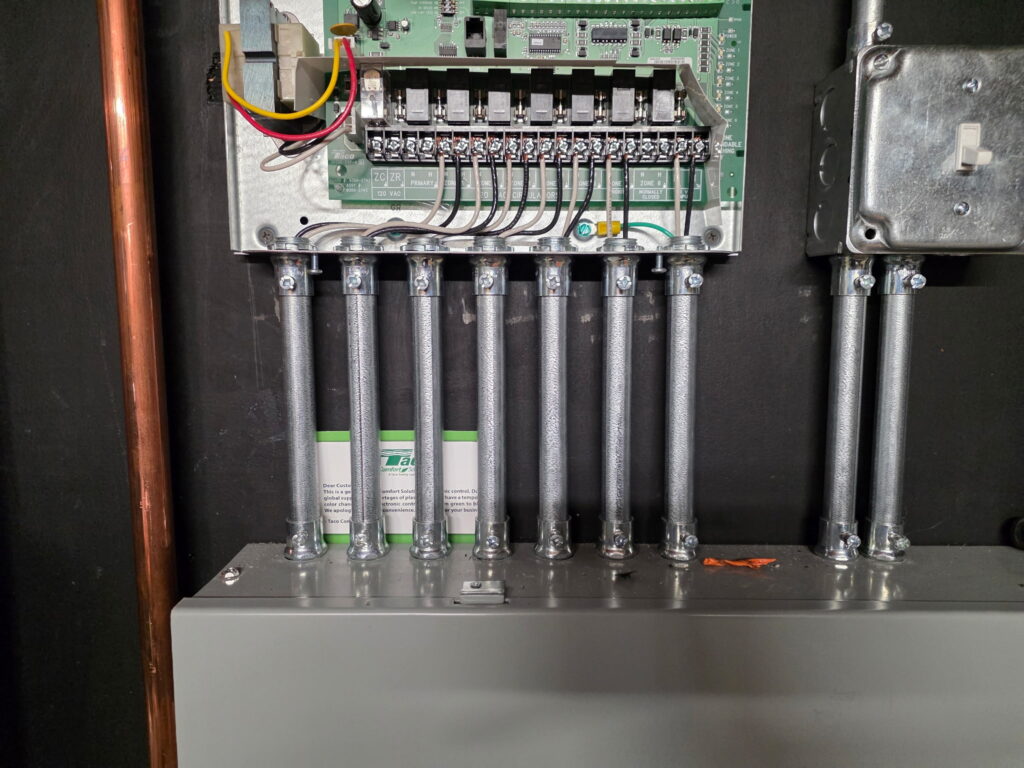
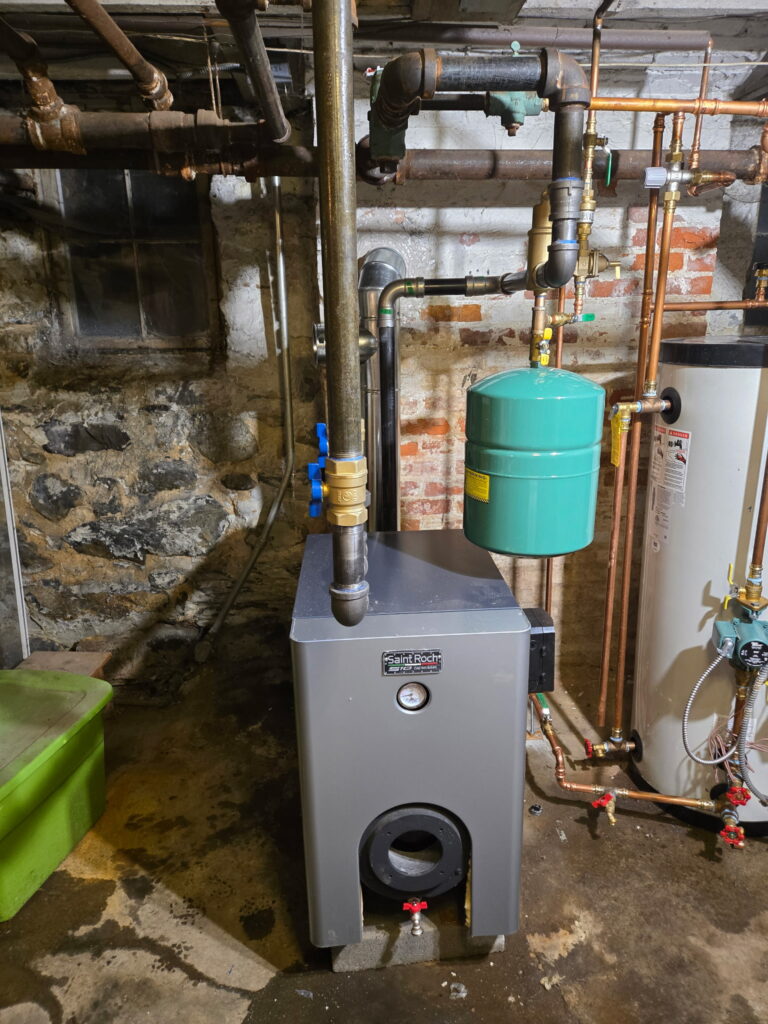
A boiler swap isn’t a bolt-in job. The old unit gets drained, disconnected, and removed, along with any near-boiler piping that’s undersized or corroded. If you’re switching from steam to hot water, or moving to a condensing boiler, the venting changes too, often from a chimney liner to PVC or CPVC venting straight through a sidewall. Gas line sizing gets checked against the new unit’s BTU input, since a lot of older services were sized for a smaller or less efficient boiler than what’s going in now. Chris typically has a straight swap done in a single day. Systems that need new piping, a vent conversion, or a gas line upsize usually run a day and a half to two days. You’ll be told upfront how long you’ll be without heat or hot water, not surprised by it halfway through.
Repair or replace
Not every boiler that’s acting up needs to come out. If your system is under ten years old and the problem is a bad zone valve, a failed circulator pump, or a thermostat issue, that’s a repair, and Chris will say so. Where replacement makes sense is when you’re dealing with a cracked heat exchanger, repeated pressure or leak issues on an old cast iron boiler, or a unit north of 20 years old where parts are getting harder to source and efficiency has dropped well below what a new boiler delivers. If your system is in that middle zone, ten to fifteen years old with one issue, it’s often worth fixing once and watching it. Nobody on this team gets paid more for talking you into a new boiler, so the advice you get is based on what the system actually needs.
What it costs
Boiler installation cost depends on the boiler type, the fuel source, and how much of the existing piping and venting can stay as-is. A straightforward gas-to-gas swap with existing venting reused costs less than a full steam-to-hot-water conversion or a switch that requires new gas line sizing. {PRICE} is a fair range to expect for a standard residential installation in a Danvers home, with conversions and larger systems running higher. You’ll get a written number before anything is torn out, not an estimate that changes once the old unit is already on the truck.
How long it takes
Most standard boiler replacements in Danvers homes are a one-day job, with the new system up and running by evening. Add venting changes, a gas line upsize, or a full conversion from steam to hot water, and you’re looking at closer to two days. Cold weather doesn’t stop the work, but it does mean scheduling matters, since nobody wants to be without heat longer than necessary in a North Shore winter. Chris builds the timeline around your specific system before the crew shows up, so you know what to expect and can plan around it.
Common Questions
How do I know if my Danvers home has a steam or hot water boiler?
Steam systems use single pipes to the radiators and you'll hear a distinct hiss or knock as they heat up. Hot water systems use two pipes per radiator or run baseboard, and they heat more quietly and evenly. If you're not sure, Chris can identify it in a few minutes on site.
Can I switch from oil to gas when I replace my boiler in Danvers?
In most parts of Danvers, yes, since gas service runs down most streets in town. It requires a new gas line and permit, and Chris can tell you during the visit whether your street has gas available and what the switch involves.
Will a new boiler actually lower my heating bills?
Often, yes, especially if you're replacing an old cast iron steam boiler with a modern condensing unit. The efficiency jump can be significant, though the exact savings depend on your current system's age and how well your house holds heat.
How long will my house be without heat during a boiler replacement?
A standard swap is usually done in one day, so you're without heat for that day. Jobs that involve venting changes or a system conversion can take a day and a half to two days, and Chris will tell you which one you're looking at before work starts.
Do you work on both steam and hot water systems in Danvers?
Reach Out for Boiler Installation and Replacement
Belfiore Home Services is a Salem-based, family-run plumbing and electrical company working across Danvers and the North Shore. Call {PHONE} to talk through your boiler, get a straight answer on repair versus replace, and get a real timeline before any work starts.
Contact information
Talk to Chris
Chris runs the plumbing and heating side of the business and has been in enough Danvers basements to know the difference between a boiler that needs a part and one that needs to go. If you’re staring at a system that’s leaking, banging, or just old, call and describe what you’re seeing. He’ll tell you straight whether it’s worth fixing or whether replacement is the better move, and why.