
Boiler Installation and Replacement in Beverly, MA
A lot of Beverly’s housing stock predates 1940, and that means a lot of original or second-generation steam and hot water boilers still doing the work. Some of these systems are on their third circulator pump and holding on. Others are quietly costing you money in gas or oil every month they keep running.
Boiler Installation and Replacement in Beverly
Chris runs the plumbing side at Belfiore, and boiler work is where the North Shore’s older housing shows up most. We install and replace steam boilers, hot water boilers, and combination systems across Beverly, from Ryal Side triple-deckers to Prides Crossing colonials. We size the new unit to the house, not to whatever was in the basement before, and we handle the permitting and gas or oil hookup as part of the job.
What Beverly homes typically have
Beverly’s older neighborhoods, especially closer to downtown and along the Bass River, run heavy on cast iron radiators fed by steam boilers that are original to the house or close to it. Farther out toward Montserrat and North Beverly you’ll find more hot water baseboard systems installed during 1960s and 70s renovations, along with a mix of oil and gas.
Gas service is available on most streets in central Beverly, but pockets still run on oil, particularly in older sections where the gas main never got extended to the house. That single fact changes the installation: gas boilers need proper line sizing and venting, oil units need tank access and a working flue. We check which one you actually have before we quote anything, not after.
Water is city-supplied through most of Beverly, so filtration questions are less common here than in wellwater towns nearby. Where they come up, it’s usually about boiler feed water quality on older cast iron systems, not whole-house treatment.
What the work involves
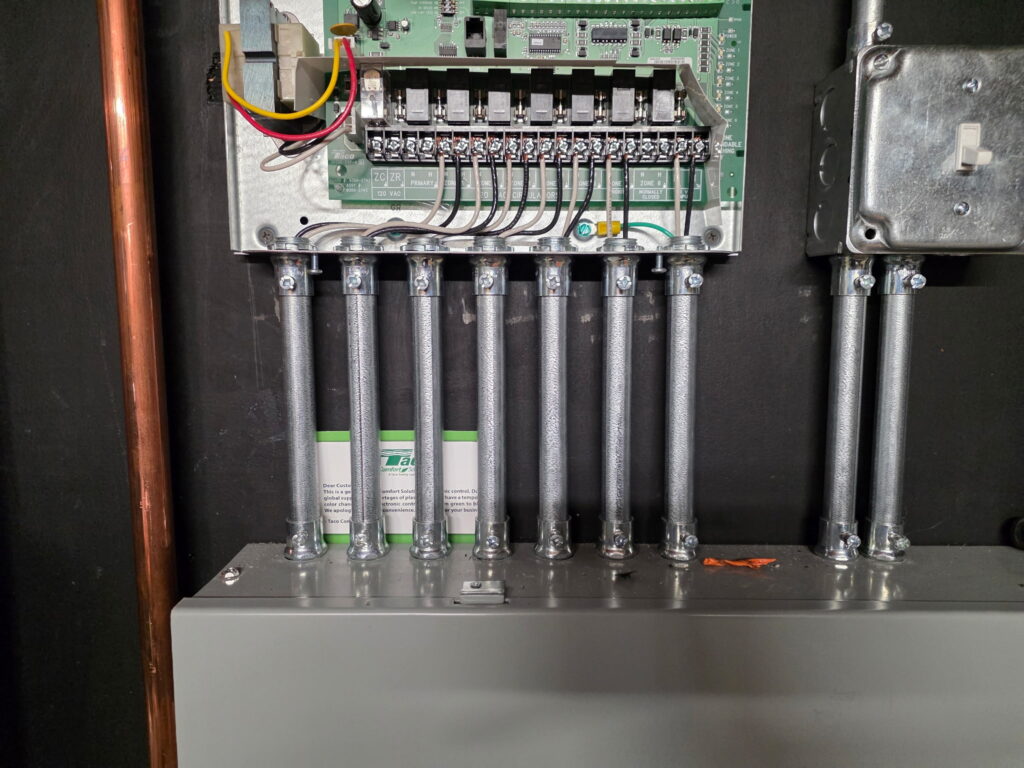
A full boiler swap starts with draining the existing system and disconnecting supply and return lines. On steam systems we check the near-boiler piping, the header, and the Hartford Loop, since a lot of comfort complaints trace back to piping that was never right, not the boiler itself. On hot water systems we check zone valves, circulators, and expansion tank sizing.
Gas boilers need the line sized correctly for the new unit’s BTU input, sometimes a full upsize from what was feeding the old one. Venting has to match the boiler category, whether that’s a traditional chimney liner or direct PVC venting on a high-efficiency condensing unit. We don’t reuse an old vent just because it’s there.
Most Beverly homes are without heat for the better part of a day during a boiler changeout, sometimes less on a straightforward hot water system, more on steam jobs where the piping needs rework. We tell you which one you’re looking at before we start, not partway through.
Repair or replace
Not every failing boiler needs to come out. If the heat exchanger is sound, the leak is a fitting or a valve, and the unit is under 15 years old, repair is usually the right call and the cheaper one. We’ll say that plainly, even if it means a smaller ticket for us that day.
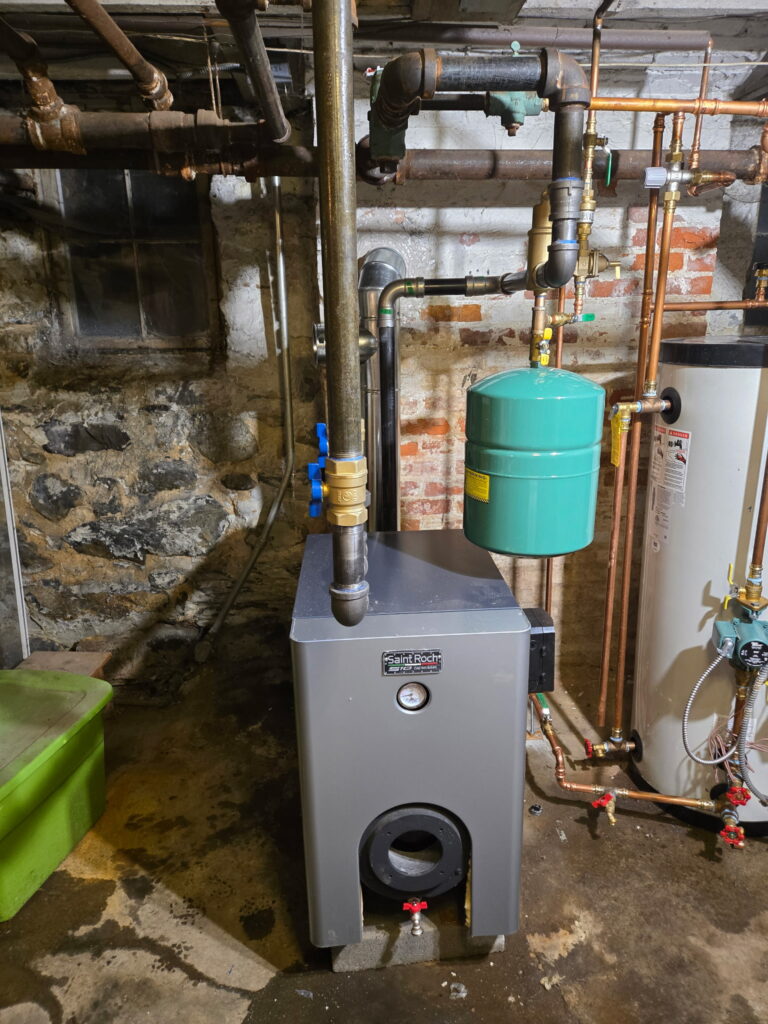
Replacement makes sense when the boiler is cycling short, the efficiency is clearly outdated (a lot of older cast iron steam boilers run in the 60 to 70 percent range, against 85 percent plus for a modern gas unit), or when repair costs start stacking up on a unit that’s already past 20 years old. We’ll walk the actual numbers with you at your kitchen table, not push a number over the phone.
What it costs
Boiler installation cost depends on fuel type, venting changes, and whether the near-boiler piping needs rework alongside the unit itself. Gas conversions from oil cost more upfront than a straight gas-to-gas swap because of the line and vent work involved. We give you a firm number after we’ve actually looked at the system, not a range pulled from a phone call, and we’ll tell you {PRICE} once we’ve seen the house.
How long it takes
A straightforward hot water boiler replacement, same fuel type and no venting changes, is usually a one-day job. Steam boiler jobs with piping rework, or any job that involves a fuel conversion or new venting, typically run one to two days. We’ll give you a real schedule before we start, and if the job’s going to run long because of something we find once the old unit’s out, you’ll hear that from us directly.
Common Questions
Is it cheaper to repair my boiler or replace it?
It depends on the age and the failure. A fitting leak or a bad valve on a boiler under 15 years old is usually worth repairing. A cracked heat exchanger, or a unit already past 20 years old with repeated repairs, usually points to replacement. We'll tell you honestly which one you're facing.
Does Beverly run on gas or oil?
Both, depending on the street. Central Beverly has gas service on most blocks, but older pockets and some outlying areas still run on oil. We confirm your fuel type and line size before quoting any installation.
How long will my house be without heat during a boiler replacement?
A same-fuel hot water boiler swap is usually done in a day. Steam systems or jobs that involve a fuel conversion or new venting can run into a second day. We tell you which one applies before work starts.
Can you convert my oil boiler to gas?
Yes, where gas service is available on the street. It's more involved than a straight swap since it requires a new gas line sized to the boiler and proper venting, but it's a common job in Beverly's older neighborhoods.
Do old steam systems need special attention during replacement?
Reach Out for Boiler Installation and Replacement
If your boiler is on its last winter, or you just want a second opinion before spending money on a repair, Belfiore is a Salem-based company working across Beverly and the rest of the North Shore. Reach us at {PHONE} to set up a look at your system.
Contact information
Talk to Chris
Chris has been through this conversation with enough Beverly homeowners to know the questions that matter: what fuel you’re on, how old the system actually is, and whether the piping behind the boiler is part of the problem. Call {PHONE} and he’ll walk through what you’ve got before anyone talks about a new unit.