
Bathroom Plumbing Remodeling in Nahant, MA
Nahant is a small peninsula with a lot of old house behind the new paint. Many bathrooms here still run on galvanized supply lines or a water heater that was sized for a smaller family decades ago, and salt air off the water does its own quiet damage to anything metal that isn’t protected. When you remodel a bathroom on this stretch of coast, the plumbing underneath the tile usually needs more thought than the fixtures on top of it.
Bathroom Plumbing Remodeling in Nahant
Chris handles the plumbing side of every remodel Belfiore takes on in Nahant, and this town has a pattern he sees often: a homeowner wants a new vanity, a walk-in shower, maybe a heated floor, and underneath it all is a house built long before any of that was standard. Nahant lots are tight and driveways are short, which means access for equipment and material staging takes planning most contractors skip. We plan for it up front instead of discovering it on demo day.
What Nahant homes typically have
Nahant’s housing stock skews older than most of the North Shore, with a mix of early twentieth century cottages and larger homes built up along the water. Heating is commonly steam or hot water baseboard fed by a boiler, and it’s not unusual to find one that’s original to a prior renovation rather than the house itself. Water heaters are frequently undersized for current household use, especially in homes that added a bathroom or two since they were built.
Town water reaches nearly all of Nahant, so well water and private filtration are less of an issue here than in some inland parts of the footprint. Gas availability is the bigger variable. Some streets have natural gas at the curb; others still rely on oil or propane, which changes what’s realistic for a tankless water heater or a gas-fed rough-in during a bathroom remodel. We check what’s actually running to your house before we quote anything, not what’s typical for the town in general.
What the work involves
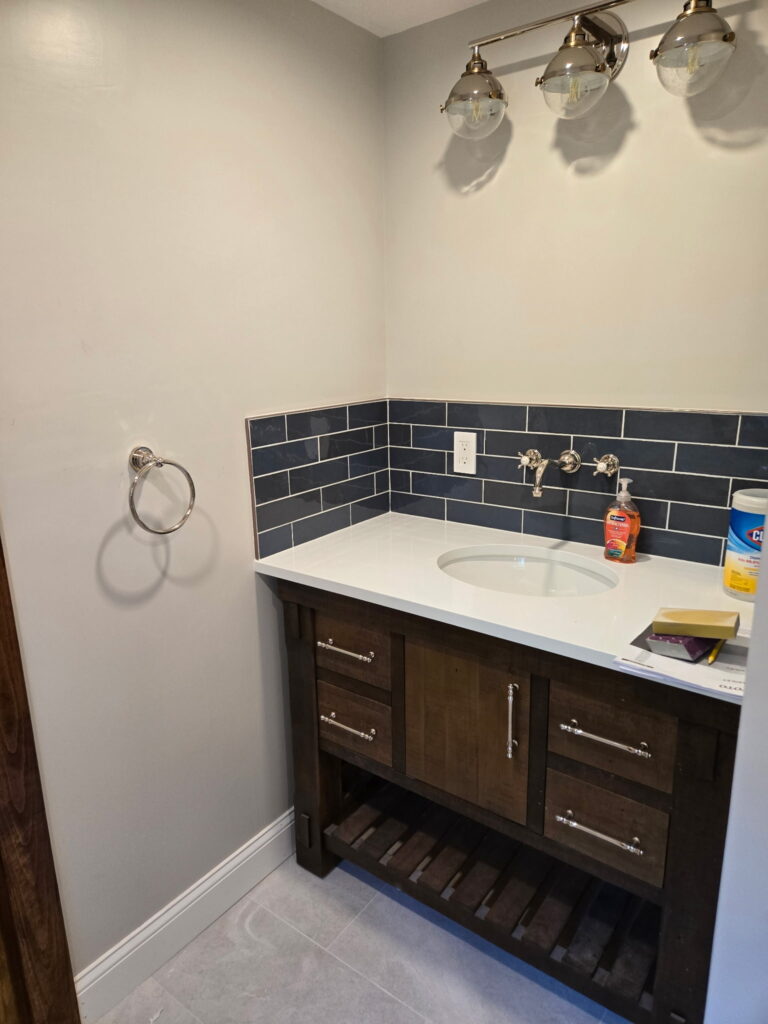
A bathroom plumbing remodel starts with shutting down and draining the supply lines feeding that room, then opening the wall or floor to see what’s actually there. In older Nahant homes that often means galvanized or early copper pipe that needs to come out rather than be tied into. We run new supply lines to the tub, shower, sink, and toilet, and we re-vent the drain stack if the existing venting doesn’t meet current code for the new fixture layout.
If you’re adding a gas-fired anything, a tankless unit or a heated towel system on a gas loop, we size the gas line to the BTU load of the new equipment, not just to whatever pipe happens to be there already. Undersized gas lines are a common finding in these older houses and it’s not something to guess at. Depending on scope, most bathrooms are without running water for one to three days during the rough-in phase, and we coordinate that window so you’re not caught off guard mid-week.
Repair or replace
Not every bathroom needs a full plumbing teardown, and Chris will tell you that straight if it’s true. If your supply lines are copper in reasonable shape and the layout of the room isn’t changing, we can often replace fixtures and valves without opening every wall. That keeps cost and disruption down and it’s the right call more often than people expect.
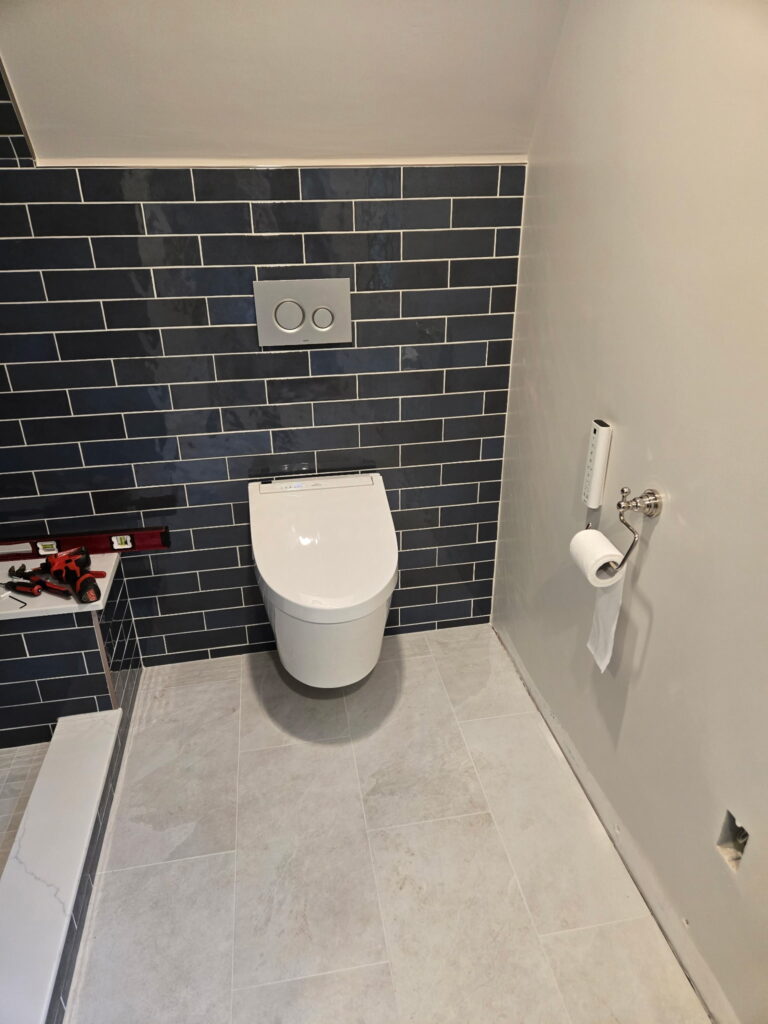
Where full replacement makes sense is when we find galvanized pipe, when the drain venting is undersized or missing for a new layout, or when you’re moving a toilet or shower to a different spot in the room, which almost always requires new drain and vent work regardless of pipe condition. We’ll walk you through what we find once the wall is open and give you the honest read, not the expensive one.
What it costs
Cost depends on how much of the existing plumbing has to come out, whether the fixture layout is moving, and what the gas and vent situation looks like once we’re inside the wall. A fixture swap with no layout change costs a lot less than a full re-pipe with a relocated shower and new venting. We give you a firm number after we’ve seen the space and opened up enough to know what’s actually behind the tile, not a phone estimate that changes once demo starts.
How long it takes
Plumbing rough-in for a single bathroom typically runs a few days to a week depending on how much of the existing system needs replacing and how accessible the walls and floor are. Nahant’s tight lots and older framing can add time compared to a more open, modern build, especially on the second floor of a house with plaster walls and lath. We build that into the schedule rather than treating it as a surprise.
Common Questions
Do I need to replace all the plumbing if I'm remodeling my bathroom?
Not always. If your supply lines are copper and in good condition and you're not moving fixtures, you may only need new valves and connections. Full replacement usually comes up when we find galvanized pipe or when the layout is changing.
Is natural gas available for a gas water heater in Nahant?
It depends on the street. Some parts of Nahant have gas service and others run on oil or propane. We check what's actually available at your house before recommending equipment.
How long will my bathroom be without water during a remodel?
Most single-bathroom rough-ins take one to three days without running water to that room, though the full project timeline is longer once framing, tile, and finish work are factored in.
Can you move my shower or toilet to a different spot in the bathroom?
Yes, but relocating fixtures usually requires new drain and vent lines regardless of what condition the existing pipe is in, since the drain path has to change to reach the new location.
Reach Out for Bathroom Plumbing Remodeling
Belfiore is a Salem-based company working across Nahant and the rest of the North Shore. Call {PHONE} to talk through your bathroom remodel with Chris directly, or send us a message and we’ll set up a time to look at the space.
Contact information
Talk to Chris
If you’re planning a bathroom remodel in Nahant, talk to Chris before you finalize the fixture list. Knowing what’s behind your walls changes what’s practical to install and what it’ll take to get there, and that conversation is worth having before the tile is picked out, not after.