
Outlet and GFCI Installation and Repair in North Andover, MA
A lot of North Andover homes near the town common were built with two-prong outlets and a fuse box that never expected a microwave, a hair dryer, and a phone charger running at the same time. Newer construction out toward Boxford Street has more capacity but often skipped GFCI protection in places the code now requires it. Either way, the fix is usually a straightforward outlet swap or a dedicated GFCI circuit, not a full rewire.
Outlet and GFCI Installation and Repair in North Andover
We handle outlet and GFCI work across North Andover the same way we handle it in Salem: as licensed electrical work, not a side job for whoever is doing the kitchen remodel. That means a permit when the work calls for one, a real inspection, and outlets that are rated for what you are actually plugging into them. North Andover is the far edge of where we regularly work, so we book these jobs rather than promise a same-hour arrival, but the work itself gets the same attention as anything closer to home.
Why North Andover homes need this
North Andover has two very different housing stocks living side by side, and both create outlet problems. The historic district around the common and Academy Road has homes with cloth-insulated wiring and, in some cases, knob and tube still feeding parts of the house. Those systems were never designed to be grounded, which means the outlets on them cannot legally or safely be upgraded to three-prong without addressing the circuit behind the wall first. A lot of these homes are also still running on 60 or 100 amp services, which limits how many new circuits you can add before something has to give.
Then there is the newer stock, from 1970s split-levels to the larger homes built in the last twenty years out near Sutton Pond and Boston Hill. These houses usually have adequate service size, but plenty were wired before GFCI requirements expanded to cover garages, unfinished basements, and outdoor outlets. If your bathroom or kitchen outlet has never once tripped a test button, it is worth checking whether it is even a GFCI outlet at all.
Remodel demand in North Andover is strong, and every kitchen or bathroom remodel touches outlets. New island counters need new circuits. New vanity lighting needs GFCI-protected receptacles nearby. Adding a home office or a finished basement almost always means adding outlets that were never part of the original plan.
What the work involves
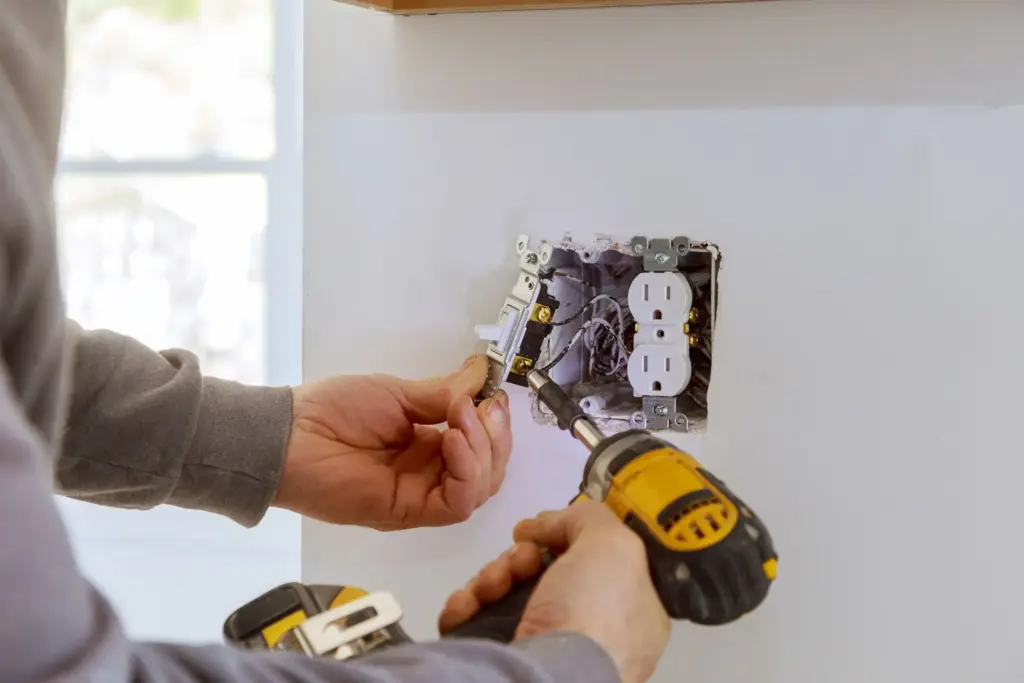
A basic outlet swap or GFCI installation is quick. Brandon shuts off the breaker feeding that circuit, confirms it is dead with a tester, pulls the old device, and installs the new one, matching wire gauge and terminal type to the amperage of the circuit. Power on that one circuit is out for the length of the swap, usually well under an hour, and nothing else in the house loses power.
Where it gets more involved is older wiring. If the outlet is fed by knob and tube or ungrounded cloth wiring, you cannot just drop in a grounded GFCI and call it done. The correct fix, and the one the code requires, is either running a new grounded circuit to that outlet or installing the GFCI with the proper labeling that identifies it as protected but not grounded. Brandon will tell you which situation you are in and what the real options are, including cost, before any wire gets cut.
Adding a new outlet where none exists means running new cable, usually through a wall or basement ceiling, tying into an existing circuit or a new breaker, and patching the access point. National Grid or Eversource involvement only comes into play if the work requires more capacity than your current service can deliver, in which case that is a separate conversation about panel or service upgrades.

What It Costs
A straightforward outlet or GFCI replacement runs {PRICE_LOW} to {PRICE_HIGH}. What moves the number is what is behind the wall: a simple swap on a modern grounded circuit is the low end. Extending a circuit, working around knob and tube, or adding a new outlet where there is no existing wire to tie into costs more, because it is more labor and more material, not because of where the house sits. We will always look at the outlet and the panel before quoting a number, since guessing on older North Andover wiring usually guesses wrong.
How long it takes
A single outlet or GFCI swap is typically a same-visit job, done in under an hour once Brandon is on site. Adding a new outlet or dealing with knob and tube wiring behind an existing one takes longer, often two to four hours depending on how far the new run has to travel and whether he is fishing wire through finished walls. Multi-outlet jobs, like bringing a whole kitchen or bathroom up to GFCI code during a remodel, are usually scheduled as a half-day visit.
Permits and inspection
Outlet and GFCI work in Massachusetts is licensed electrical work, and depending on scope it requires a permit from the North Andover building department and a follow-up inspection. That is true whether you are adding one outlet or a dozen. A permit is not paperwork for its own sake. It means an inspector who does not work for us checks that the circuit is protected correctly, grounded correctly where required, and sized correctly for the load. If a contractor tells you a permit is not needed for outlet work in an older home, that is worth a second opinion. [EXTERNAL LINK: Massachusetts Electrical Code (527 CMR 12) requirements for receptacle and GFCI protection, published by the state Board of Fire Prevention Regulations]
Common Questions
Do all outlets near sinks and outdoors need to be GFCI protected?
Under current Massachusetts electrical code, yes. Kitchens, bathrooms, garages, unfinished basements, and outdoor outlets all require GFCI protection. Many older North Andover homes have outlets in these spots that predate that requirement and were never upgraded.
Can you just replace an ungrounded outlet with a grounded one?
Not safely, and not to code, if there is no ground wire in the box. Brandon can either run a properly grounded circuit or install a GFCI outlet labeled for use on an ungrounded circuit, which is the code-compliant alternative.
How do I know if my North Andover home still has knob and tube wiring?
It is common in homes built before the 1950s, especially in the historic district near the common. Signs include ceramic knobs and tubes visible in an unfinished basement or attic, and outlets that are only two-prong throughout the house. Brandon can confirm it during a visit.
Will a GFCI that keeps tripping fix itself over time?
No. A GFCI that trips repeatedly is detecting a real ground fault or a failing device on that circuit. It needs to be diagnosed, not reset repeatedly and ignored.
Do you serve all of North Andover?
Reach Out for Outlet and GFCI Installation and Repair
Call {PHONE} to describe what you are dealing with, a dead outlet, a GFCI that will not reset, or a remodel that needs new circuits added. We will get a visit scheduled and give you a straight answer on what it involves before any work starts.
Contact information
Talk to Brandon
Brandon is the licensed electrician at Belfiore. He looks at the outlet, the wiring behind it, and the panel it comes from before he tells you what it will take to fix or add it. On a lot of North Andover jobs, especially in the older sections of town, what looks like a bad outlet turns out to be a wiring issue worth knowing about regardless of whether you fix it today.