
Outlet and GFCI Installation and Repair in Newburyport, MA
A lot of the housing stock downtown near the waterfront went up before anyone plugged in more than a lamp and a radio. Those federal-era homes were wired for candlelight-era expectations, then patched decade after decade to keep up with window units, space heaters and kitchens full of countertop appliances. If you are still finding two-prong outlets or a GFCI that trips every time you run a hair dryer, the wiring behind the wall is telling you something about the whole system, not just that one outlet.
Outlet and GFCI Installation and Repair in Newburyport
We install, replace and troubleshoot outlets and GFCI devices across Newburyport, from South End triple-deckers to the brick sidewalks around the historic district and out toward the industrial park and Route 1 corridor. Some jobs are a single kitchen GFCI that has stopped resetting. Others turn into a room-by-room walk-through once we open the first outlet and see what the wiring actually looks like behind it. Either way, the work is done by a licensed electrician, not a handyman with a tester, and it gets closed out the way Massachusetts requires.
Why Newburyport homes need this
Newburyport’s downtown grid is dense and old enough that we still find knob-and-tube branch circuits feeding rooms that now run a microwave, a window AC and a phone charger off the same two-slot receptacle. Cloth-insulated wiring from the early-to-mid 1900s is common behind plaster walls, and it does not like being spliced into modern devices without care. We also see a fair number of 60-amp services still in place on smaller homes near the center of town, which was fine for a house with a furnace and a radio and is not fine for a house with central air, an electric range and a couple of EVs in the driveway.
Panel age matters too. If your home still has a Federal Pacific or Zinsco panel, we flag it every time, because those brands have a documented history of breakers that fail to trip when they should. Adding GFCI protection downstream of a panel like that is still worth doing, but it is a band-aid, not a fix, and we will tell you that plainly instead of quoting a job that ignores the bigger problem.
What the work involves
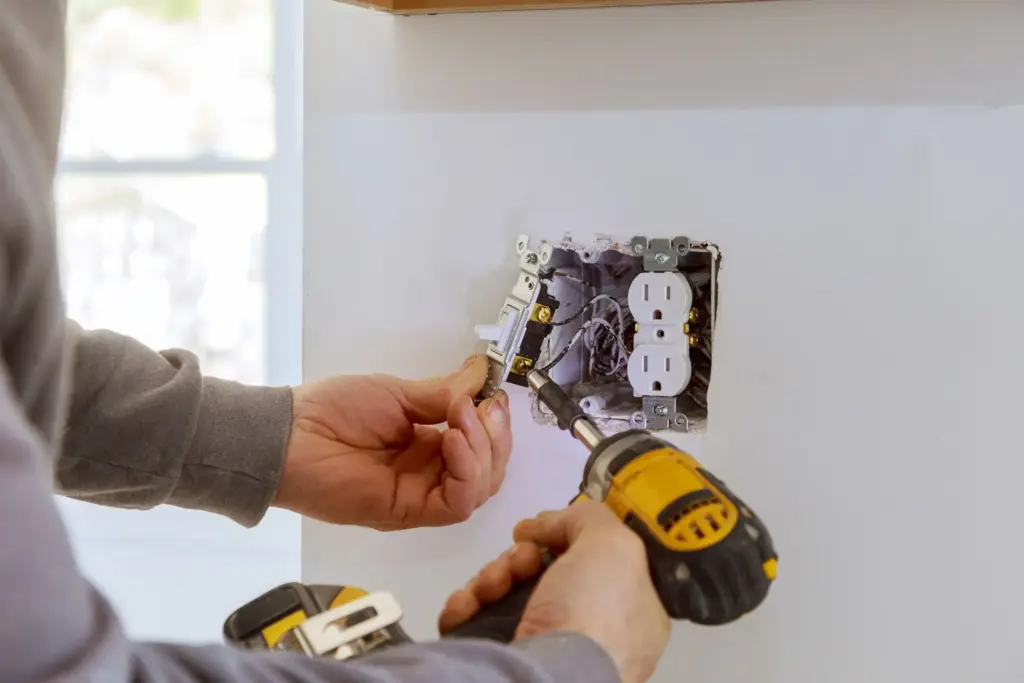
For a straightforward outlet swap or GFCI upgrade, we kill power at the breaker, confirm it is dead with a meter, then pull the old device and inspect the box and the wire behind it. Cloth or brittle wiring gets handled differently than modern NM cable, sometimes with a pigtail and wire nuts rated for the conductor, sometimes with a recommendation to extend the circuit instead of trusting a fifty-year-old splice. New GFCI or AFCI-GFCI combo devices get torqued to spec and tested with the trip button before we close the cover plate.
The power is out only on the circuit we are working on, usually for under an hour per outlet unless we find something that needs tracing back to the panel. If the job requires a new circuit or a service change, the utility handles the meter and service drop while we handle everything from the meter base inward, including the panel work and final connections. Anything involving the panel or a new circuit gets tested for proper polarity, grounding and trip time before we call it done.

What It Costs
A single GFCI replacement in an easy location runs toward the lower end of the range, roughly {PRICE_LOW}. Multiple outlets, a kitchen or bath circuit that needs GFCI protection added where there was none, or an outlet buried behind old cloth wiring that needs extra care pushes toward {PRICE_HIGH}. What moves the number is access, wire condition, and whether we are replacing a device or actually extending or repairing the circuit behind it. We will always tell you before we start cutting into a wall, not after.
How long it takes
Most single-outlet or single-GFCI jobs are done same visit, often in under two hours including testing. A whole-house sweep to bring every wet-location outlet up to current GFCI protection, or a job that uncovers knob-and-tube needing rework, can run a full day or spread across a couple of visits if we need to order parts sized to an odd, older box. We will scope it honestly on the first visit rather than guessing.
Permits and inspection
Electrical work in Massachusetts requires a permit and a final inspection by the local wiring inspector, and outlet or GFCI work tied to a new circuit or panel change is no exception. We pull the permit, schedule the inspection, and stand behind the work when the inspector walks through. That is the difference between hiring a licensed electrician and hiring someone with a truck and a business card. [EXTERNAL LINK: Massachusetts Electrical Code (527 CMR 12) amendments to NFPA 70, for homeowners who want to see the actual code language governing GFCI and AFCI requirements]
Common Questions
Is it legal to replace my own outlets in Newburyport?
Massachusetts requires electrical work to be done by a licensed electrician and, for most circuit-level work, permitted and inspected. Simple like-for-like device swaps are a gray area homeowners sometimes handle, but anything involving grounding, GFCI protection, or older wiring is worth having a licensed electrician confirm.
Do all bathrooms and kitchens need GFCI outlets?
Current code requires GFCI protection in kitchens, bathrooms, garages, unfinished basements, and outdoor outlets. Many older Newburyport homes were never updated when these rules changed, so it is common to find zero GFCI protection in a house built before the requirement existed.
What does it mean if my GFCI keeps tripping?
It usually means either a ground fault somewhere on that circuit, a failing appliance, or in older homes, degraded insulation on cloth or knob-and-tube wiring reacting to humidity. A repeated trip is worth having checked rather than just resetting it again.
Can you add GFCI protection without rewiring the whole room?
Often yes. A GFCI breaker at the panel or a GFCI outlet installed at the first device in the circuit can protect every downstream outlet on that run, without opening every wall.
Reach Out for Outlet and GFCI Installation and Repair
If an outlet is warm to the touch, a GFCI will not reset, or you are simply tired of two-prong receptacles in a house full of modern electronics, call {PHONE}. We will ask a few questions about the panel and the age of the home before we ever step through the door, so we show up with the right parts the first time.
Contact information
Talk to Brandon
Brandon is the licensed electrician on the Belfiore side of the business. He is the one who will walk your panel, tell you honestly whether a GFCI swap solves the problem or just covers it up, and pull the permit when the job calls for one. No upsell script, just a straight answer about what your house needs.