
Outlet and GFCI Installation and Repair in Hamilton, MA
A lot of Hamilton houses were wired for a different life. A farmhouse built in the 1920s or a colonial expanded in the 1970s was never wired to run a well pump, a chest freezer in the barn, and a bathroom vanity with a hair dryer and a space heater all at once. When one circuit is doing the work of three, outlets warm up, GFCIs trip, and eventually something stops working entirely.
Outlet and GFCI Installation and Repair in Hamilton
This is one of the most common calls we get out here, and it is usually simple to fix once we are on site. We add outlets where a room never had enough, swap tired two-prong receptacles for grounded ones, and install or replace GFCI protection in kitchens, bathrooms, garages, and anywhere near water or a well head. It is low-drama work, but it has to be done to code, and on a property with an older panel or long wire runs, it is not always as quick as it looks on paper.
Why Hamilton homes need this
Hamilton is low density with big lots and long driveways, and a good number of homes are on well and septic. That changes the electrical picture in a few ways. Well pumps need dedicated, properly protected circuits. Outbuildings, barns, and detached garages often got wired later, sometimes by whoever was cheapest at the time, and that work does not always meet current GFCI and grounding rules.
Age matters too. We still find knob and tube wiring in ceilings and walls of older farmhouses, cloth-insulated conductors that have gone brittle, and 60 amp services that were fine for a house with an oil furnace and a couple of lamps but cannot support a modern kitchen, a hot tub, and a home office. Some properties still have Federal Pacific or Zinsco panels, both of which have documented breaker failures and get flagged by home inspectors and insurance carriers alike. If your outlets keep tripping or you have never seen a GFCI button on your bathroom receptacle, that is worth a look before it becomes a bigger job.
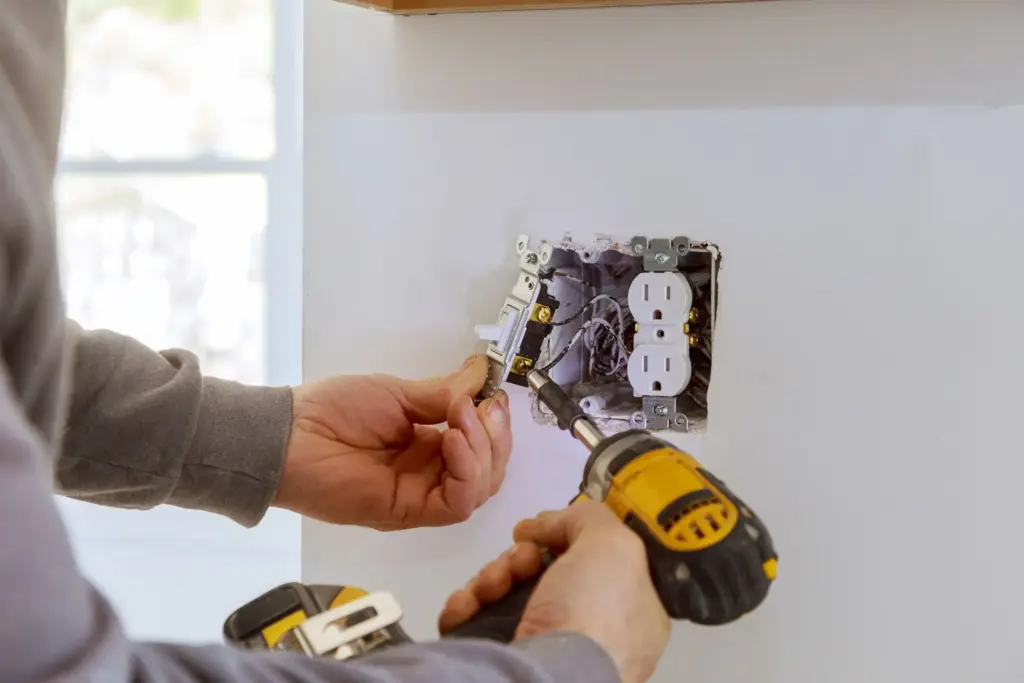
What the work involves
For a straightforward outlet add or GFCI swap, Brandon kills power at the breaker, confirms it is dead with a meter, and works on one circuit at a time so the rest of the house stays live. A single outlet swap might take fifteen minutes. Running a new circuit to a room that never had one means opening a wall or running through the basement or attic, which takes longer and depends on how the house was framed.
GFCI protection can be handled two ways: a GFCI receptacle at the first outlet in the circuit, which protects everything downstream, or a GFCI breaker at the panel, which protects the whole circuit from the source. Which one makes sense depends on your panel, the age of the wiring, and how the circuit is laid out. On older services, we also check the panel itself, because a new GFCI outlet does not help much if the breaker feeding it is original to a 1960s installation and undersized for what you are actually running.
The utility, National Grid in most of Hamilton, is only involved if we need to upgrade your service size or disconnect and reconnect power at the meter. Everything downstream of the meter, the panel, the circuits, the outlets, is our work.

What It Costs
A single GFCI receptacle replacement usually runs toward the lower end, in the range of {PRICE_LOW}. Adding a new outlet or circuit where none exists, especially if we have to fish wire through finished walls or run a longer distance from the panel, moves toward {PRICE_HIGH}. What actually moves the number: how far the new run is from the panel, whether we are opening drywall or plaster, whether the circuit needs to be dedicated (like a well pump or a garage sub-panel), and whether your existing panel has room and capacity for another breaker. We will not quote a firm number over the phone for anything beyond a simple swap. We want to see the panel and the run first.
How long it takes
Most single outlet or GFCI jobs are done in under an hour, and the power interruption is limited to that one circuit, not the whole house. Adding a new circuit for a well pump, a workshop, or a barn is typically a half-day job. If we find knob and tube in the wall cavity or a panel that needs attention before we can safely add load, we will tell you before we start cutting into anything, not after.
Permits and inspection
Electrical work in Massachusetts requires a permit pulled by a licensed electrician, and outlet and circuit work is no exception. Brandon pulls the permit, does the work, and the local inspector signs off before the job is closed out. This is not paperwork for its own sake. It is the difference between work that is documented and traceable and work that a handyman did off the books, which shows up as a problem later when you sell the house or file an insurance claim. You can review the state’s electrical code requirements directly through the Massachusetts Board of State Examiners of Electricians. [EXTERNAL LINK: Massachusetts electrical licensing and code board, for homeowners who want to verify permit and inspection requirements]
Common Questions
Why does my GFCI outlet keep tripping?
Usually it is moisture, a failing appliance on that circuit, or a GFCI device that has simply worn out after years of use. Sometimes it is a wiring fault further down the circuit. We test the circuit to find the actual cause instead of just swapping the outlet and hoping.
Do I need a GFCI in my kitchen and bathroom?
Yes. Current code requires GFCI protection in kitchens, bathrooms, garages, unfinished basements, and outdoor outlets. If your house has never been updated, there is a good chance those areas are not protected yet.
Can you add an outlet without opening up my whole wall?
Often yes, especially if there is an accessible basement, crawlspace, or attic to run wire through. Some jobs do require a small cut in drywall or plaster, which we patch access points for as part of the work.
What is the difference between a GFCI outlet and a GFCI breaker?
A GFCI outlet protects itself and anything wired downstream of it on the same circuit. A GFCI breaker protects the entire circuit from the panel. We will tell you which one fits your situation based on your panel and existing wiring.
My house still has knob and tube wiring. Is that a problem for adding outlets?
Reach Out for Outlet and GFCI Installation and Repair
If an outlet is dead, a GFCI will not reset, or you are finally wiring that barn or workshop the way it should have been done originally, call {PHONE}. We work across Hamilton and know the mix of old farmhouses and newer builds well enough to tell you what you are actually dealing with before we open a wall.
Contact information
Talk to Brandon
Brandon is the electrician here, licensed and doing this work directly rather than dispatching it out. If you describe what is tripping, where the outlet is, and roughly how old the house is, he can usually tell you over the phone whether this is a quick fix or something tied to a bigger issue in the panel.