
Home Rewiring in Peabody, MA
Home Rewiring in Peabody
A lot of Peabody’s housing stock went up before 1940, back when a house ran on a couple of lighting circuits and maybe an outlet or two per room. Those homes were wired for lamps and a radio, not a microwave, a window AC, and three phone chargers in the same room. If your Peabody house still has cloth-insulated wiring behind the walls or a 60 amp panel feeding the whole place, you’re not dealing with an appliance problem when something trips or a plug feels warm. You’re dealing with a wiring system that was never built for how the house is actually used now.
Why Peabody Homes Need This
Peabody has a mix of old single-families, converted two and three families near Central and West Peabody, and older colonials and capes scattered through the rest of town. In houses from that era we still find knob and tube wiring in attics and wall cavities, cloth-jacketed copper that’s brittle and ungrounded, and original 60 amp or early 100 amp services that were adequate in 1955 and are not adequate now. Some of those old services still run through Federal Pacific or Zinsco panels, both of which have known breaker failure issues that make them a real safety concern, not just an inconvenience.
Add central air, an electric range, a finished basement, or a home office with real equipment in it, and a 60 amp service is out of headroom fast. In two and three family conversions specifically, we regularly find wiring that was patched over decades by different owners rather than replaced, which means splices in odd places and circuits that don’t match what the panel labels say. That’s the profile of a Peabody house that needs a rewire, not a repair.
What the Work Involves
A whole-home rewire means new copper conductors run to every circuit, new device boxes where needed, and a panel sized for what the house actually draws today, typically 150 or 200 amp depending on square footage and what’s installed. Knob and tube and cloth wiring get pulled out, not just capped and left in the walls. Ungrounded two-prong outlets get replaced with properly grounded three-prong circuits, which also matters if you ever want AFCI or GFCI protection, since neither works correctly without a ground.
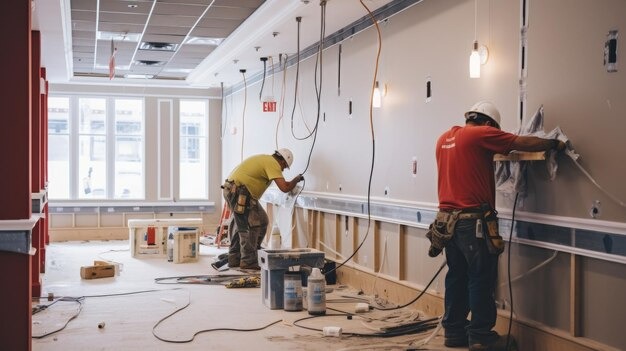
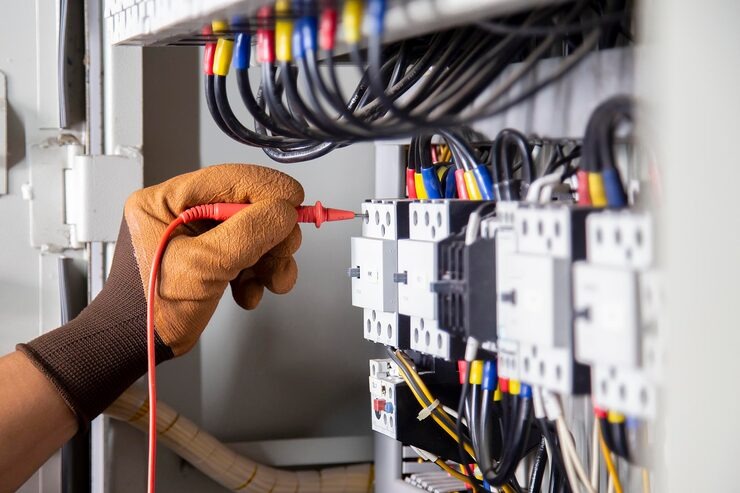
Power has to be shut down at the panel while the new service conductors get connected, and if the service size is changing, the utility has to disconnect and reconnect at the meter, which is on their schedule, not ours. Expect the house to be without power for part of a day during the changeover, though we sequence the interior work so most of the rough-in happens before that shutdown, not during it. On occupied homes we work room by room where possible so you’re not living without power or walls for the whole job. Every new circuit gets tested for proper voltage, ground continuity, and correct breaker sizing before we close anything up.
What It Costs
A full home rewire in Peabody generally runs {PRICE_LOW} to {PRICE_HIGH}. Square footage is the biggest driver, along with how many floors and how finished the walls already are. A house with open framing in an unfinished basement or attic is faster and cheaper to rewire than one where every wall is finished plaster and lath, since access drives labor time more than wire itself does.
Panel size is the other variable. If you’re going from a 60 amp service to 200 amp to support central air, an EV charger, or an electric range, that’s a bigger scope than a straight wire swap at the existing amperage. We’ll walk the house room by room, tell you what we’re replacing and why, and give you a written number before anything gets opened up. No moving target once the job starts.
How Long It Takes
A single-family rewire typically takes several days to a week and a half depending on size and wall access. Two and three family conversions run longer since each unit needs its own circuits mapped and tested separately, and older conversions often have wiring shared across units that has to get properly separated as part of the job. Finished walls with plaster or lath and horsehair add time because we’re fishing wire through cavities instead of running it open, and any patching of drywall or plaster afterward is scheduled once the electrical is signed off.
Permits and Inspection
Rewiring a home is permitted work in Massachusetts, full stop. Brandon pulls the permit, the Peabody electrical inspector reviews the rough-in before walls close up, and there’s a final inspection once everything’s connected and tested. That inspection step is not paperwork for its own sake. It’s a second set of eyes confirming the grounding, the breaker sizing, and the panel work meet code before you’re living with it. Unlicensed wiring work skips that check entirely, which is exactly how you end up with the kind of hazards we find when we open up an older Peabody wall. [EXTERNAL LINK: Massachusetts Electrical Code (527 CMR 12) reference for residential wiring requirements]
Common Questions
How do I know if my Peabody home has knob and tube wiring?
The giveaway is ceramic knobs and tubes visible in an unfinished attic or basement, running alongside dark cloth-covered wire. If your house was built before the 1940s and hasn't been fully rewired, there's a good chance some of it is still there even if outlets look modern from the room side.
Can I insulate my attic if I still have knob and tube wiring?
Most insurance carriers and the electrical code don't allow insulation to be packed directly around active knob and tube wiring because it can't dissipate heat properly. That's often the trigger that gets homeowners to finally rewire before an energy upgrade.
Do I need a full rewire or just a panel upgrade?
If the wiring itself is copper and in good shape and the only issue is an undersized panel, a panel upgrade alone may be enough. If there's knob and tube, cloth insulation, or ungrounded circuits throughout the house, a full rewire is the honest answer. Brandon can tell you which situation you're in after a walkthrough.
Will I lose power during a rewire?
Yes, for part of the job. Interior rough-in can often happen with power still on in unaffected areas, but the final changeover at the panel and any utility-side service work means the house is without power for at least part of a day.
Is a Federal Pacific or Zinsco panel actually dangerous?
Both brands have documented histories of breakers failing to trip during an overload, which is the panel's entire job. If you have one of these panels in a Peabody home, it's worth having it evaluated regardless of whether you're planning a full rewire.
Reach Out for Home Rewiring
If your Peabody home still has its original wiring or you’re not sure what’s behind the walls, call {PHONE} and get Brandon out to take a look. We work across Peabody and the rest of the North Shore, and we’ll give you a straight read on what your house needs and what it’ll take to get it done right.
Contact information
Talk to Brandon
Brandon’s the licensed electrician in the family. He’s the one who’ll walk your Peabody house, tell you honestly whether you’re looking at a full rewire or something more targeted like a panel upgrade, and explain what he’s seeing in plain terms, not code citations. If there’s knob and tube in the attic or a Federal Pacific panel in the basement, he’ll say so and explain why it matters, not just quote a job.