
Home Rewiring in Middleton, MA
Home Rewiring in Middleton
A lot of Middleton’s housing stock sits on lots big enough that the original electrical service never had to work hard. That’s changed. Homes built with a 60 amp or 100 amp panel are now expected to run central air, a finished basement, maybe an EV charger in the driveway and a heat pump out back. The wire behind the walls usually hasn’t been touched since the house was built, and it wasn’t sized for any of that.
Belfiore rewires homes across Middleton to bring the electrical system up to what the house actually needs now, not what it needed in 1965 or 1925.
Why Middleton Homes Need This
Middleton has a mix of older farmhouse-era homes near the town center and larger mid-century and later suburban construction spread across its bigger lots. Both bring their own wiring problems.
In the older homes, knob and tube wiring and cloth-insulated cable are still in the walls in plenty of cases. That wiring has no ground, the insulation gets brittle with age, and most insurance carriers either won’t cover a home that still has it or charge more until it’s replaced. Some of those same houses were upgraded decades ago with a panel that’s now considered obsolete in its own right – Federal Pacific and Zinsco panels both have documented breaker failures where the breaker doesn’t trip under a fault the way it should. If you’ve got one, it’s worth having Brandon look at it regardless of whether you’re planning a full rewire.
In the newer suburban stock, the wiring itself is usually in decent shape but the service size is the problem. A 100 amp panel installed for a house with a furnace and a stove has nothing left over for a Level 2 EV charger, a heat pump, and a finished basement with its own circuits. That’s the more common call we get in Middleton now – not failed wiring, just a service that was never built for what the house is asking it to do.
What the Work Involves
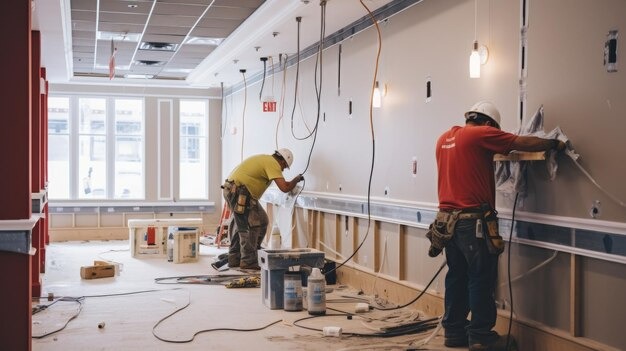
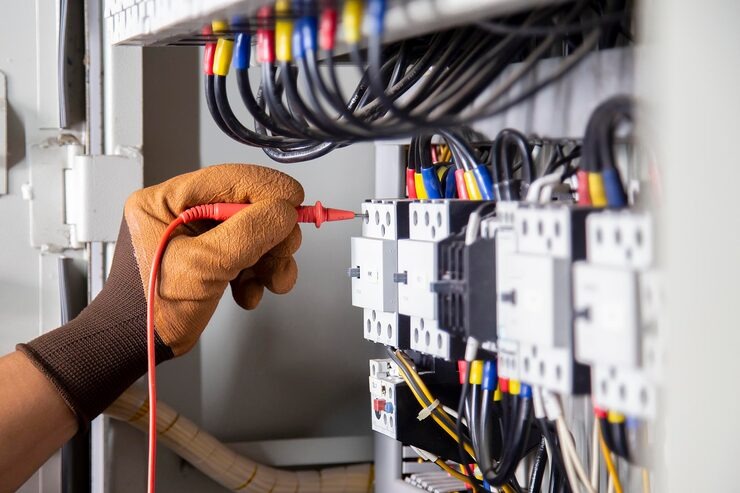
A full rewire means running new copper wire to every circuit in the house, replacing ungrounded wiring with grounded, code-compliant cable, and installing a panel sized for what you’re actually running. Depending on the house, that’s often a jump to 150 or 200 amps.
Power gets shut off for the work, and how long it stays off depends on scope. A single-panel swap can be back on the same day. A full rewire of an occupied home is usually staged room by room so you’re not without power for days at a stretch, though there will be a period with no power while the main connection is transferred.
The utility company handles the service drop or underground feed to the meter and any coordination needed for the disconnect and reconnect at the pole or transformer. Brandon’s crew handles everything from the meter inward: panel, wire, devices, and grounding. Walls get opened where wiring needs to be pulled, and in finished spaces we work through what that looks like before anything gets cut.
What It Costs
Home rewiring costs in Middleton typically run {PRICE_LOW} to {PRICE_HIGH}, and the spread is wide because the scope varies so much house to house. A ranch with an accessible basement and attic costs less to rewire than a colonial with finished walls on every floor and knob and tube tucked into places that are hard to reach.
What moves the number: square footage, how many circuits and outlets you’re adding versus just replacing, whether you’re upgrading the panel size at the same time, and how much of the house is finished versus open framing. Adding an EV charger circuit or a dedicated circuit for a heat pump condenser during the same job is usually cheaper than doing it as a separate visit later, since the panel work overlaps.
How Long It Takes
A full rewire of an average Middleton single-family home generally runs several days to a couple of weeks, depending on square footage and how much of the house is finished. Open basements and attics speed things up. Plaster walls and finished ceilings slow it down because of the patching involved after wire is pulled.
A panel upgrade without a full rewire is usually a one-day job. If you’re only adding a few circuits – a dedicated line for a range or an EV charger – that’s typically done in a single visit as well.
Permits and Inspection
Rewiring work in Massachusetts requires a permit, and it gets inspected by the local electrical inspector before the walls close up and again at final. That’s not paperwork for its own sake – it’s the check that confirms the grounding is correct, the panel is labeled properly, and the circuits are sized to code. [EXTERNAL LINK: Massachusetts electrical code amendments, mass.gov – for homeowners who want to see the actual code requirements behind the inspection]
Brandon pulls the permit and coordinates the inspection as part of the job. If you’ve had electrical work done by someone unlicensed in the past, an inspector can flag it during a rewire or a panel upgrade, and that’s a good reason to have a licensed electrician handle it the first time.
Common Questions
How do I know if my Middleton home has knob and tube wiring?
If your house was built before the 1950s and hasn't had a documented rewire, it's worth assuming it might until an electrician confirms otherwise. Knob and tube is usually visible in an unfinished basement or attic as ceramic knobs and tubes with individual black wires running through them, not modern sheathed cable.
Will my insurance company make me rewire an old house?
Many insurers in Massachusetts either decline to write a policy or charge a higher premium on a home with active knob and tube wiring or a Federal Pacific panel. It's worth checking with your carrier directly, since policies vary.
Can I rewire just part of the house instead of the whole thing?
Yes. Some homeowners rewire a single problem area – an old addition, a basement being finished – and leave sound, modern wiring elsewhere alone. Brandon will tell you honestly if partial work makes sense or if it's better to do the whole house at once.
Does a rewire include a new panel?
Not automatically, but it's common to upgrade the panel at the same time since you're already opening up the electrical system. If your existing panel is a Federal Pacific or Zinsco unit, replacing it is usually recommended regardless of whether you're doing a full rewire.
Do I need to be out of the house during a rewire?
Most homeowners stay in the house during a rewire since the work is staged room by room. There will be stretches without power in the areas being worked on, and a short window with no power at all during the panel changeover.
Reach Out for Home Rewiring
Call {PHONE} to talk through what your Middleton home has and what it needs. Brandon can usually tell from a description of your panel and its age whether you’re looking at a full rewire, a panel upgrade, or just a handful of new circuits.
Contact information
Talk to Brandon
Brandon is the electrician behind this work. He left union work to come back and run the electrical side of the family business alongside his brother Chris, who handles plumbing and heating. If you’ve got a Federal Pacific panel you’re not sure about, or you’re planning an EV charger and want to know if your service can handle it without a full rewire, that’s a conversation worth having before any work is scheduled.