
Home Rewiring in Lynnfield, MA
Home Rewiring in Lynnfield
A lot of Lynnfield’s housing stock was built with a 60 amp or 100 amp service and two-wire cloth or rubber-insulated cable, back when a house ran a furnace, a fridge, and maybe a window unit. Now those same houses are getting central air, finished basements, EV chargers, and heat pump water heaters, and the original wiring was never sized for any of it. That gap between what the house has and what the house needs is the reason home rewiring comes up so often out here.
Belfiore is a Salem-based company, and Brandon handles the electrical side for homeowners across Lynnfield and the rest of the North Shore. He looks at the whole picture before he talks about a rewire: panel capacity, wire condition, what circuits are already maxed out, and what the next ten years of the house look like.
Why Lynnfield Homes Need This
Lynnfield’s mix runs from older center-entrance colonials near the town common to mid-century capes and ranches on the larger lots further out. In the older section of that mix, it is common to still find knob and tube wiring in attics and wall cavities, or cloth-insulated cable that has gone brittle with age. Both were fine for their era. Neither is rated for the load a modern kitchen or a heat pump puts on a circuit, and insurance carriers are increasingly asking about it directly before they renew a policy.
On the newer end of Lynnfield’s housing stock, the issue is different but just as real. A lot of these homes were built with a 100 amp or 150 amp service that covered the house as built. Add an EV charger, a heat pump system, and a finished basement with its own circuits, and that panel is out of headroom. This is some of the cleanest ground in our whole service area for EV charger installs and dedicated circuits, because the lots and the garages support it. The panel just has to be able to feed it.
If your panel is a Federal Pacific Stab-Lok or an older Zinsco, that is a separate conversation from a straightforward capacity upgrade. Both brands have documented breaker failure issues, and a rewire project is the right time to deal with the panel at the same time as the wiring.
What the Work Involves
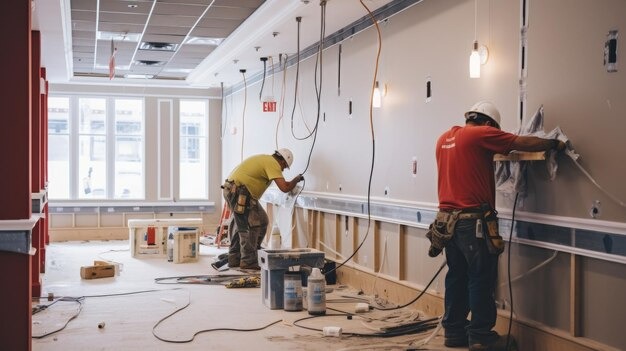
A full rewire means replacing the branch circuit wiring throughout the house with modern copper cable rated to current code, run through walls, floors, and attic spaces back to a new or upgraded panel. Brandon typically works room by room, cutting minimal access points in drywall or plaster, fishing new cable, and making up connections at the panel and at every device: outlets, switches, fixtures, smoke detectors.
Power to the affected circuits is off while that section is being worked on, not the whole house for the whole job in most cases, though a panel swap does mean a full shutdown for that portion of the day. If the service itself is being upgraded, the utility has to disconnect and reconnect the service drop or lateral, which is scheduled separately from the electrician’s work and is out of Brandon’s hands for timing.
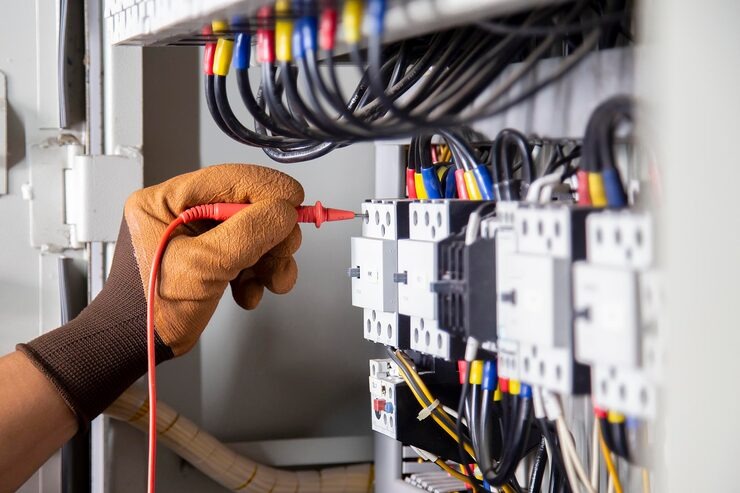
At the end of the job, every new circuit gets tested for proper voltage, grounding, and breaker sizing, and the panel is labeled accurately, which sounds minor until you have lived in a house where nothing on the panel is labeled correctly.
What It Costs
A whole-home rewire in a Lynnfield house runs roughly {PRICE_LOW} to {PRICE_HIGH}, and the spread is wide because the variables are wide. Square footage matters, but so does construction type. Plaster and lath takes longer to open and patch than drywall. A finished basement or finished attic adds access work. Knob and tube removal in an occupied, insulated wall cavity is slower and more careful work than an open attic run.
Panel work changes the number too. If the existing service is adequate and just needs the interior wiring redone, that is a different scope than a rewire paired with a panel upgrade to support an EV charger and a heat pump. Brandon prices these after he has actually looked at the panel, the attic, and the basement, not off a phone call, because guessing on a job like this helps nobody.
How Long It Takes
A single-family home rewire generally runs anywhere from three days to two weeks depending on size and how much of the house is finished versus open framing. A cape with an unfinished attic and basement goes faster because there is easy access to run new cable. A colonial with plaster walls and finished living space on every floor takes longer, since every run means opening and patching drywall or plaster.
Some homeowners split the job into phases, doing the attic and one floor at a time, so the house stays livable throughout. That stretches the calendar but keeps daily disruption smaller. Brandon lays out both options during the walkthrough so you can decide what fits your household.
Permits and Inspection
Home rewiring requires an electrical permit in Massachusetts, full stop. Belfiore pulls the permit, and the completed work is inspected by the Lynnfield electrical inspector before anything is closed up behind walls. This isn’t paperwork for its own sake. It’s the difference between a licensed electrician’s work and a handyman’s, and it’s what protects you at resale and with your insurance carrier when they ask whether the wiring was updated to code.
For homeowners who want the underlying rules, the [EXTERNAL LINK: Massachusetts Electrical Code (based on the NEC) as published by the state Board of Fire Prevention Regulations] lays out the wiring methods and capacity requirements that govern this kind of work.
Common Questions
How do I know if my Lynnfield home has knob and tube wiring?
The easiest place to check is an unfinished attic or basement, where you'll see ceramic knobs holding wire away from framing and ceramic tubes where wire passes through joists. If your house was built before the 1950s and hasn't been fully rewired, there's a good chance at least some circuits are still knob and tube, even if outlets have been updated over the years.
Can I just rewire part of the house instead of the whole thing?
Yes. Partial rewires are common, especially when only certain rooms or the attic still have old wiring. Brandon can assess which circuits are outdated or undersized and rewire those while leaving newer, code-compliant circuits alone.
Will a rewire let me add an EV charger later?
It can, if the panel and service size are upgraded as part of the project. A rewire addresses the wiring inside the walls, but EV charger capacity depends on the panel having open breaker slots and enough total amperage. Brandon accounts for future loads like this when sizing the panel.
Does insurance actually require rewiring old wiring?
Many carriers will decline to write or renew a homeowner's policy if they find active knob and tube wiring or a Federal Pacific panel during an inspection. Requirements vary by insurer, but it's a common enough issue in older North Shore homes that it's worth checking your policy language before you need to file a claim.
Reach Out for Home Rewiring
If your Lynnfield home still has knob and tube wiring, a 60 amp service, or a panel brand that makes your insurance agent nervous, it’s worth an actual look rather than a guess. Call {PHONE} and Brandon will set up a time to walk the house and give you a straight answer on scope and cost.
Contact information
Talk to Brandon
Brandon is the licensed electrician at Belfiore, and rewiring is one of the jobs he spends the most time on across the North Shore. He’ll walk your attic, your basement, and your panel before quoting anything, because a knob and tube house and a 1990s colonial with an undersized panel are not the same job even if they both get called a rewire.