
Home Rewiring in Lynn, MA
Home Rewiring in Lynn, MA
A lot of Lynn’s housing stock went up between the 1900s and the 1940s, back when a house was wired for a few lights and maybe a radio. Three-deckers across Ward 1 and Ward 3 still carry their original knob and tube in the attic or a 60 amp service that was never meant to run a refrigerator, a window AC unit, and a laptop charger in every room at once. If you’re renovating, adding central air, or your insurance company just asked you to update the electrical, you’re looking at rewiring, not a patch job.
Why Lynn Homes Need This
Lynn has one of the older and denser housing stocks on the North Shore, and that shapes what we run into on almost every service call. Knob and tube wiring is still live in a good number of attics and wall cavities here, especially in homes that haven’t been touched since a previous owner did a partial update decades ago. Cloth-insulated wiring from the 1940s and 50s shows up constantly in the two- and three-family homes near the Common and along the Route 129 corridor, and the insulation is often brittle enough that it cracks the moment you move it.
Panels are the other piece. A 60 amp fused service was standard for a single-family build in this era, and it was never sized for anything close to modern demand. We also still find Federal Pacific Stab-Lok panels in some of the older triple-deckers, which is a panel type most insurers now flag directly because the breakers have a documented history of failing to trip under overload. Between the old cloth wiring, the undersized services, and the panel types involved, a whole-home rewire in Lynn is rarely optional once you start digging into what’s actually behind the walls.
What the Work Involves
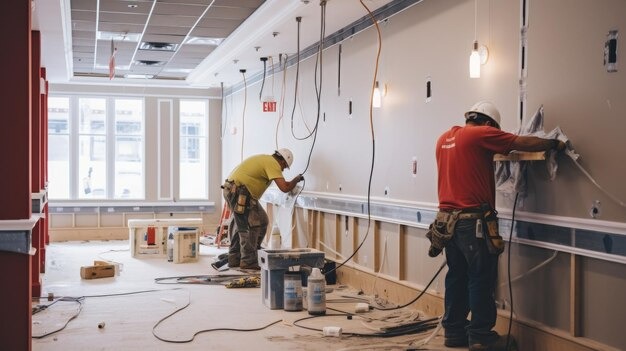
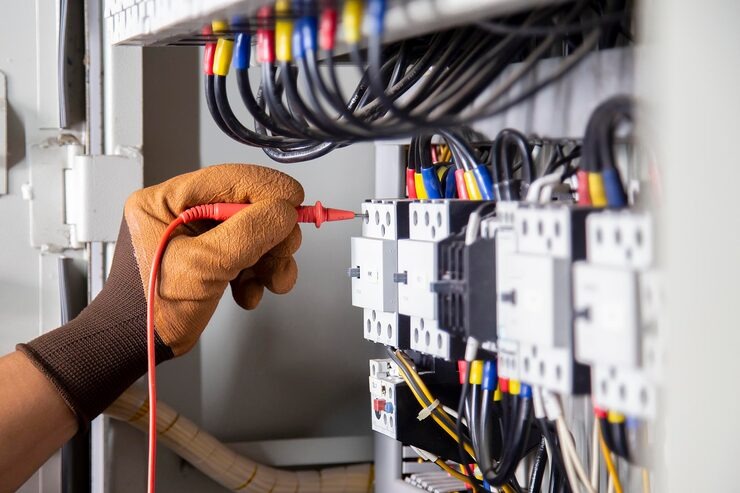
Brandon starts by mapping the house: where the service enters, what’s fed from the panel now, and which circuits are knob and tube versus cloth-insulated versus anything newer that’s already up to code. From there the plan is usually to run new copper branch circuits in modern NM cable or conduit, sized to the actual load – 15 amp for general lighting, 20 amp for kitchen and bath receptacles, dedicated 20 amp or larger circuits for anything that draws heavy, like a dryer or an electric range.
The power has to come off while we’re working in a given section, and for a full rewire that typically means the whole house is without power for stretches across more than one day, coordinated so you’re not left without lights or a working fridge overnight. National Grid or Eversource, whichever serves your part of Lynn, handles the service drop and meter if the service size is changing – that’s utility-owned equipment, not something an electrician touches. Everything from the meter socket inward, including the panel, breakers, and every outlet and switch in the house, is our end of the job.
Old cloth wiring and knob and tube get pulled out of accessible runs entirely rather than left dead behind the wall, and every new circuit gets labeled at the panel so the next person who opens that panel isn’t guessing.
What It Costs
A whole-home rewire in a Lynn three-decker unit runs {PRICE_LOW} to {PRICE_HIGH} on average, and a single-family colonial or cape can land in a similar range depending on square footage. What moves the number: how many floors and units are involved, whether walls and ceilings are open already from a renovation or need to be opened for access, how much of the existing wiring is knob and tube that has to be fully removed versus abandoned in place where code allows, and whether the panel itself needs to be upgraded alongside the wiring. A multi-unit building with separate meters for each unit adds time because each unit’s circuits have to be traced and kept isolated from the others.
Brandon walks the whole house before quoting anything, because a number given over the phone without seeing the attic, the basement, and the panel isn’t a real number. You get a written estimate that breaks out labor, material, and any panel work separately, so you can see exactly where the cost is going.
How Long It Takes
A single-family rewire typically takes three to five working days from the first circuit pulled to the final devices going back in. A two- or three-unit building runs longer, often a week to ten days, since each unit’s circuits get run and tested separately and access between floors takes more coordination. Homes with finished plaster ceilings and walls that need to stay intact take longer than homes already opened up for a renovation, since fishing wire through finished cavities is slower than running it through exposed framing.
Permits and Inspection
Rewiring is permitted work in Massachusetts, full stop. Brandon pulls an electrical permit through the City of Lynn’s Inspectional Services Department before any work starts, and the job gets a rough inspection once new wiring is run but before walls close up, then a final inspection once everything’s terminated and the panel is live. That two-stage inspection is what separates a licensed job from someone working off the books – an inspector who never sees rough wiring behind a finished wall has no way to verify it was done to code, and neither do you.
[EXTERNAL LINK: Massachusetts electrical code amendments (Mass.gov, Board of State Examiners of Electricians) – useful for homeowners who want to see the actual code a rewire is inspected against]
Common Questions
Do I have to rewire the whole house at once, or can it be done in phases?
It can be phased, and a lot of Lynn homeowners do it that way – starting with the kitchen and panel, then finishing bedrooms and common areas later. The tradeoff is some duplicated setup cost each time, since walls have to be opened and closed more than once total.
Is knob and tube wiring actually dangerous, or just old?
It's not inherently dangerous if it's untouched and unmodified, but it has no ground, its insulation is often brittle after 70-plus years, and it can't be safely covered with insulation, which matters if you're planning attic insulation upgrades. Most insurers in Massachusetts will also decline or surcharge a policy if knob and tube is still active.
Will my power really be off for days?
Not continuously. We schedule around your routine so the fridge and essential circuits are back on overnight where possible, and only the section actively being worked on is dead during the day.
Does a rewire mean I also need a panel upgrade?
Often yes, especially if you're still on a 60 amp service. It doesn't make sense to run modern circuits into an undersized panel, so Brandon will tell you upfront if the panel needs to be part of the scope.
Can I stay in the house during the work?
For most single-family rewires, yes. For multi-unit buildings we usually coordinate unit by unit so occupied units keep power while we work in the one that's being rewired.
Reach Out for Home Rewiring
Call {PHONE} to set up a walkthrough. Brandon looks at the panel, the attic, and however much of the existing wiring is accessible, then gives you a written plan and a real number before anything gets opened up.
Contact information
Talk to Brandon
Brandon is the electrician here – he left union work to run electrical for the family business, and rewiring old Lynn housing stock is a big part of what he does week to week. If you’ve got knob and tube in the attic, a panel you’re not sure about, or you just want an honest read on what a renovation is going to require electrically, he’ll walk the house with you and tell you straight what’s needed and what isn’t.