
Home Rewiring in Georgetown, MA
Home Rewiring in Georgetown
A lot of Georgetown’s housing stock goes back to a time when a house needed a stove, a few lights, and not much else. That original service was often sized at 60 amps, run with cloth-insulated conductors or knob and tube in the older sections. Now those same houses are running central air, an electric range, a heat pump, and a couple of EVs off wiring that was never built for it. Rewiring brings the house up to what it actually needs to run today, safely.
Why Georgetown Homes Need This
Georgetown sits in that stretch of the North Shore where the housing is old enough to have real electrical history behind the walls. It’s rural to semi-rural out here, plenty of well and septic systems, and plenty of houses on private roads where the nearest utility pole is a long way from the panel. That matters two ways. First, a lot of these homes still have knob and tube in the attic or walls, cloth-insulated branch circuits from a 1930s to 1950s renovation, or a 60 amp fuse panel that was never upgraded when the house changed hands. Second, well pumps depend on power. When the grid goes down out here, it tends to stay down longer than it does closer to Salem, and a house without power has no water either. That’s the same generator conversation we have with homeowners across the estate towns, and in Georgetown it’s just as real.
Some of these houses also still have Federal Pacific or Zinsco panels installed decades ago. Both brands have a documented history of breakers that don’t trip when they should. If Brandon finds one of those panels during an inspection, it gets flagged, because that’s not wiring, that’s the panel itself failing to do its one job.
What the Work Involves
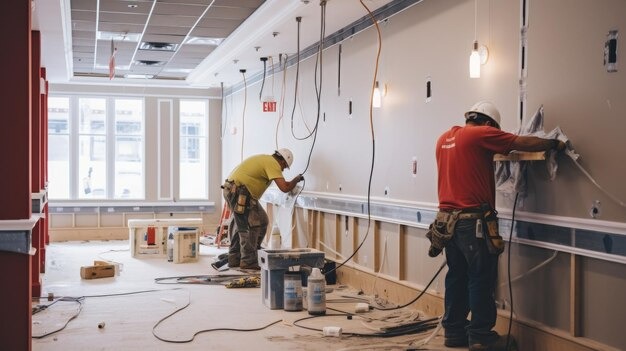
A rewire starts with a walk-through of the whole house, not just the panel. Brandon traces what’s actually there, room by room, circuit by circuit, because what’s on paper (if there’s paper at all) rarely matches what’s in the walls of a 19th or early 20th century house. From there it comes down to whether you need a full rewire or a partial one.
Full rewires mean pulling new copper conductors, sized correctly per circuit, from a new panel out to every outlet, switch, and fixture. Old cloth wiring and knob and tube come out. Walls and ceilings get opened where needed to fish new wire; in some houses that’s minimal, in others, especially where there’s old plaster and no accessible chases, it’s more involved. Partial rewires target specific problem circuits, like an ungrounded kitchen circuit or a bedroom still running on knob and tube, while leaving sound, code-compliant wiring alone.
The power has to come off for parts of this. On a full rewire, expect the house to be without power for stretches during the day while the old panel is disconnected and the new one goes in. Georgetown’s utility handles the service drop and the meter; Brandon and his crew handle everything from the meter socket inward, including coordinating the disconnect and reconnect with the utility.
What It Costs
There’s no flat number for a rewire because the variables are real. A partial rewire on two or three circuits in an easily accessible ranch is a different job than a full rewire on a three-story colonial with plaster walls and no attic access. As a rough range, Georgetown rewires typically run between {PRICE_LOW} and {PRICE_HIGH}. What moves that number: the size of the house, how many stories, whether walls need to be opened and patched, the condition and age of the existing wiring, and whether the panel itself also needs to be replaced or upsized at the same time. Brandon walks the house first and gives you a number based on what he actually finds, not a phone estimate.
How Long It Takes
A partial rewire on a handful of circuits can often be done in a day or two. A full rewire on an older, larger home is closer to a week, sometimes more if walls need to be opened, fished, and patched, or if the house has multiple additions built at different times with their own quirks. Brandon gives you a realistic timeline once he’s seen the scope, not a generic estimate.
Permits and Inspection
Rewiring work is permitted and inspected under the Massachusetts Electrical Code. That’s not paperwork for its own sake. A licensed electrician pulls the permit, the local inspector checks the work before walls get closed up, and there’s a record that the job was done to code. A lot of older-home electrical trouble in this area traces back to work someone’s uncle did in the 1980s with no permit and no inspection. Belfiore pulls permits on every rewire. [EXTERNAL LINK: Massachusetts Board of State Examiners of Electricians – licensing and code information, useful for homeowners verifying who’s allowed to do this work].
Common Questions
How do I know if my Georgetown home has knob and tube wiring?
If your house was built before the 1950s and hasn't had a documented full rewire, there's a good chance some knob and tube remains, often in the attic or behind walls that haven't been opened. Brandon can usually spot it during a panel and attic inspection.
Does my homeowners insurance care about knob and tube or a 60 amp panel?
Many insurers in Massachusetts will flag knob and tube wiring or an undersized fuse panel, and some require it to be addressed before renewing or writing a policy. It's worth checking with your carrier alongside getting an electrical assessment.
Can I stay in the house during a rewire?
Usually yes for a partial rewire. A full rewire with significant wall opening is more disruptive, and some homeowners choose to be out of the house, especially during patch and paint work, though the electrical portion itself doesn't always require that.
Do I need to upgrade my panel at the same time as a rewire?
Often yes, especially if you're still on a 60 or 100 amp panel and adding loads like a heat pump, electric range, or EV charger. Brandon will tell you plainly if your existing panel can handle the new circuits or if it needs to go up in size.
Reach Out for Home Rewiring
Call {PHONE} to get Brandon out to your Georgetown property. He’ll assess the panel, trace the existing wiring, and give you a clear picture of what a rewire involves for your specific house, along with a real number, not a guess over the phone.
Contact information
Talk to Brandon
Brandon is the licensed electrician at Belfiore. He left union work to run the electrical side of the family business, and rewiring older North Shore homes is a regular part of that work, not a rare specialty. If you’ve got knob and tube in the attic, a panel you’re not sure about, or you’re just tired of tripped breakers every time the microwave and toaster run together, he’ll walk the house and tell you straight what it needs.