
Generator Installation and Connection in Marblehead, MA
Generator Installation and Connection in Marblehead
A lot of Marblehead’s housing stock predates the electric meter. Many of these houses were wired decades after they were built, then rewired again in the 1960s or 70s with a 100 amp service that seemed like plenty at the time. Now the same panel is running central air, an electric range, and a heat pump water heater, and a storm off the water knocks the power out for two days. That is the gap a properly installed standby generator closes.
Why Marblehead Homes Need This
Marblehead sits on a peninsula, and peninsulas lose power first and get it back last. Salt air off the harbor corrodes exposed connections and outdoor equipment faster than it does further inland, which matters for anything mounted outside, including the generator itself and its transfer switch enclosure. Old Town and the Neck have narrow lots, stone walls, and tight setbacks that limit where a generator can physically sit and still meet clearance rules.
Then there is the wiring itself. In houses built before 1950, it is common to find knob and tube in the attic or walls that was never bonded to a grounding system, 60 amp fused services that predate circuit breakers entirely, and in some post-war additions, Federal Pacific Stab-Lok panels that are a known fire risk and are no longer considered safe to leave in service. Brandon has to evaluate all of that before a generator conversation even starts, because you cannot safely add standby power to a service that cannot support what is already on it.
What the Work Involves
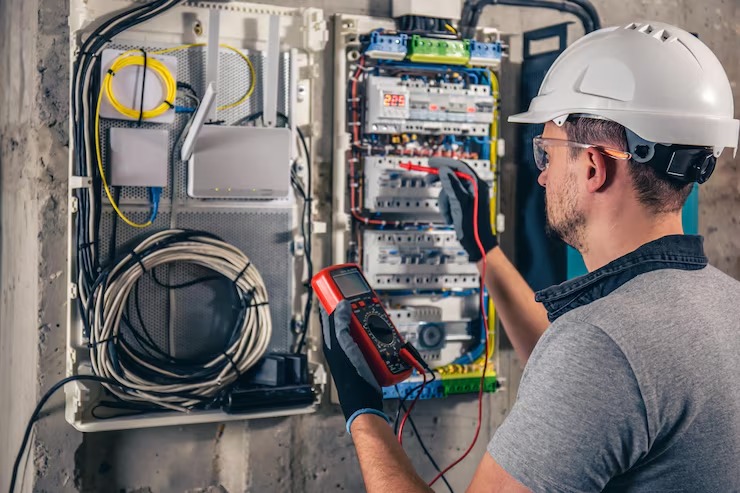
The generator itself sits outside on a concrete or composite pad, set back from windows and doors per the manufacturer’s clearance specs and away from where it will sit in salt spray or runoff. From there, a dedicated circuit runs to an automatic transfer switch installed next to your main panel. The transfer switch is the piece that actually does the work: it senses a utility outage, disconnects you from the grid, and starts the generator, then reverses the process when utility power comes back.
On the day of the tie-in, the utility or Brandon’s crew kills power to the house for a short window, usually under an hour, while the transfer switch gets connected ahead of the meter. Gas-fired units need a line sized correctly for the generator’s BTU draw, which on older homes with smaller gas services sometimes means upsizing that line as part of the job. Everything gets tested under a simulated outage before we call it done, so you see the transfer happen once with us standing there, not the first time you actually need it.
What It Costs
Most Marblehead installations run {PRICE_LOW} to {PRICE_HIGH}, and the spread comes down to a few specific variables: the size of the unit, whether your existing panel needs upgrading first, how far the generator has to sit from the house given lot constraints, and whether the gas line needs to be resized. A house on a tight Neck lot with a 60 amp panel that needs replacing before any of this happens is a different job than a newer place on Beacon Street with a 200 amp service already in place. We give you a number after we have actually looked at the panel and the gas meter, not before.
How Long It Takes
The installation itself, from pad to transfer switch to gas hookup, usually takes one to two days depending on panel condition and site access. Add time on either end for the permit to be pulled and for the inspection to be scheduled, which in Marblehead typically adds another week or two depending on the inspector’s schedule. If your panel needs replacing first, plan for that as a separate stage before the generator goes in.
Permits and Inspection
Generator installation is permitted electrical work in Massachusetts, full stop. Brandon pulls the permit, the gas line gets its own permit if it is being resized, and the town’s electrical inspector signs off on the transfer switch tie-in before it goes live. This is not paperwork for its own sake. It means someone other than the installer confirmed the grounding, the disconnect, and the transfer switch wiring are correct before your house is relying on it during an outage. Unlicensed installs skip this step, and it is exactly the step that catches a wiring mistake before it becomes a fire.
For homeowners who want to see the underlying requirements, the [EXTERNAL LINK: Massachusetts electrical code reference, for homeowners who want the underlying permit and inspection requirements] covers what licensed work has to meet.
Common Questions
Can a generator be installed on a house with a 60 amp service?
Not safely as a standalone add-on. A 60 amp fused service usually needs to be upgraded to at least 100 or 200 amps before a standby generator and transfer switch can be added, because the existing panel has no room and no capacity for it.
Do I need a permit for a generator in Marblehead?
Yes. The electrical work requires a permit and inspection, and if the gas line is being resized, that gets a separate permit as well. This applies regardless of the size of the unit.
What size generator does a typical Marblehead house need?
It depends on what you want to keep running during an outage. A unit sized to cover just heat, refrigeration, and a few circuits is smaller and less expensive than one sized to run central air and an electric range at the same time. Brandon calculates load based on your panel, not a generic size chart.
How long is the power actually off during installation?
Typically under an hour, during the window when the transfer switch is tied in ahead of the meter. The rest of the installation, including the pad and gas line, does not require the power to be off.
Can the generator go anywhere on a tight lot?
No. Manufacturer clearance rules govern distance from windows, doors, and property lines, and Marblehead's older, tighter lots sometimes limit placement options more than the house itself does. This gets checked on-site before any quote.
Reach Out for Generator Installation
If you are ready to stop losing power every time a nor’easter comes through, call {PHONE}. Tell us what panel you have if you know it, roughly where the house sits on the lot, and whether you are on natural gas or propane, and we can start narrowing down what the job will actually look like.
Contact information
Talk to Brandon
Brandon is the licensed electrician at Belfiore, and generator tie-ins on older Marblehead homes are exactly the kind of job where that license matters. He will walk your panel, your gas meter, and your lot before quoting anything, because on a house this age the wiring behind the cover plate usually tells a different story than the age of the house alone.