Generator Installation and Connection in Ipswich, MA
Generator Installation and Connection in Ipswich
A lot of Ipswich houses date back to the First Period, and even the newer ones on the outskirts of town were mostly built before anyone planned for central air, an EV, and a house full of chargers running off the same panel. Add in a nor’easter that knocks the lines down on Argilla Road or County Street for two days, and a standby generator stops being a luxury item and starts being the thing that keeps your well pump, your sump pump, and your heat running.
Brandon handles generator installation and connection across Ipswich as part of Belfiore’s electrical work. This page covers what actually happens, what it costs in a real range, and why the permit and inspection step is not optional if you want the job done right.
Why Ipswich Homes Need This
Ipswich has one of the largest concentrations of First Period and colonial housing on the North Shore, and that history shows up in the electrical panel just as much as it does in the wide-plank floors. It is common to find a home here that started with a 60 amp service, got bumped to 100 amp sometime in the ’70s or ’80s, and never went further. Some of these houses still have cloth-insulated wiring or knob and tube in sections that were never touched during a renovation. A few still have Federal Pacific or Zinsco panels, both of which have known breaker failure issues that matter a lot when you are talking about connecting a generator to the system.
The outage argument here is the same one you hear across the coastal North Shore, but Ipswich adds its own wrinkle: a lot of properties run on private wells and septic systems, not town water and sewer. When the power goes out, the well pump stops, which means no water at all, not just no lights. That is a different level of urgency than a house on municipal water losing power for a day. If you are on a well in Ipswich, a generator is not just about keeping the refrigerator cold.
What the Work Involves
Standby generator installation is an electrical job and a gas or propane job at the same time, and the two have to line up. Brandon starts by sizing the unit to what you actually want backed up: just the essentials like the well pump, furnace, and refrigerator, or the whole panel. That decision changes the generator size, the transfer switch, and the wire gauge running between them.
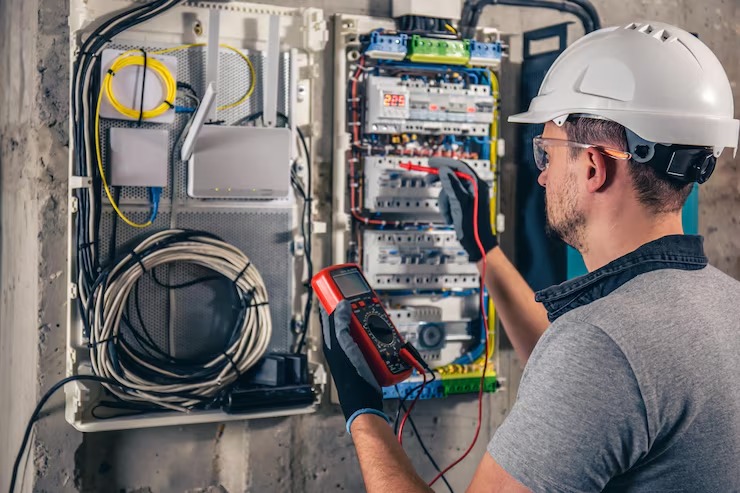
The core pieces are a standby generator sited outside on a concrete pad or composite base, an automatic or manual transfer switch installed next to your main panel, and a dedicated feeder circuit sized for the generator’s output, often 6 or 8 AWG copper depending on amperage. For older Ipswich homes still running a 100 amp service, this is frequently the point where a panel upgrade gets discussed too, since a tired panel is a weak link for a new automatic transfer switch.
The utility company owns the meter and the service drop, so National Grid has to be notified and, in some cases, has to inspect or approve the interconnection before the transfer switch goes live. Your power gets shut off briefly during the transfer switch tie-in, usually well under a day, not the multi-day outage a storm would cause. Gas or propane line work, if the generator runs on either, gets coordinated with a licensed gas fitter so the BTU load and pipe sizing match the generator’s demand.
What It Costs
A generator installation in Ipswich typically runs {PRICE_LOW} to {PRICE_HIGH}. The spread comes down to a few real variables: the size of the generator (a 14kW unit backing up the essentials costs a lot less than a 22kW whole-house unit), whether your existing panel can accept a new transfer switch as-is or needs an upgrade first, how far the generator has to sit from the house and the gas meter, and whether the gas line needs to be upsized to feed it. A well pump and septic pump add electrical load that has to be accounted for in the sizing, which is common enough in Ipswich that it is worth mentioning up front rather than finding out mid-job.
Brandon gives you a number after seeing the panel, the proposed generator location, and the gas or propane setup, not before. Anyone quoting a generator installation over the phone without looking at your panel is guessing.
How Long It Takes
Most generator installations take one to two days of on-site work once the equipment is on hand: setting the pad, running the feeder and gas line, mounting the transfer switch, and testing the automatic start sequence. The part that takes longer is usually not the install itself. Ordering the specific generator model, getting the gas fitter scheduled, and waiting on the utility company’s response can stretch the whole project to a few weeks from first call to final test run, especially in the fall when everyone on the North Shore has the same idea before winter storms start.
Permits and Inspection
Generator installation is permitted electrical and gas work in Massachusetts, not a weekend project. A permit gets pulled with the Town of Ipswich before work starts, and the finished installation is inspected before the transfer switch is signed off and turned over to you. This matters for two reasons: an uninspected interconnection can backfeed the utility lines and put line workers at risk, and an unpermitted generator installation can complicate a home sale or an insurance claim down the road. [EXTERNAL LINK: Massachusetts electrical code (527 CMR) reference for generator interconnection and transfer switch requirements] Brandon is licensed for this work and pulls the permit as a standard part of the job, not an upsell.
Common Questions
Can a generator be connected to a 100 amp electrical service?
Yes, in most cases. A 100 amp service can typically support a properly sized transfer switch and generator, but Brandon checks the panel's condition and remaining capacity first. If the panel is an older Federal Pacific or Zinsco unit, replacing it often makes sense before adding a generator connection.
Do I need a permit for a generator in Ipswich?
Yes. Generator installation involves both electrical and often gas or propane work, and both require permits through the Town of Ipswich along with a final inspection before the system is put into service.
What size generator does a well and septic system need?
It depends on the pump horsepower, but well pumps and septic pumps add meaningful electrical load that has to be included in generator sizing. Brandon accounts for both when recommending a unit so the generator does not come up short during an actual outage.
How long does my power stay off during the installation?
The final tie-in to your panel usually takes a few hours, not days. Most of the project timeline is the equipment order and utility company coordination, not the on-site electrical outage.
Can an older colonial or First Period home in Ipswich handle a generator installation?
Generally yes, but the wiring and panel need to be evaluated first. Homes with knob and tube wiring or original cloth-insulated circuits often need some upgrades alongside the generator work to make the connection safe and code-compliant.
Reach Out for Generator Installation
If your Ipswich home is on a well, has an older panel, or just spends too many hours dark every time a storm rolls off the water, a generator conversation is worth having before next winter, not during it. Call {PHONE} to set up a look at your panel and talk through what size unit actually fits your house.
Contact information
Talk to Brandon
Brandon left union electrical work to run the electrical side of his brother’s plumbing and heating business, and generator installation is one of the jobs he gets called out for most on the North Shore, particularly in older towns like Ipswich where the panel and the wiring need a real look before anyone talks about a generator. If you want a straight answer on whether your panel can support a transfer switch as-is, call {PHONE} and describe the house. He can usually tell you what to expect before he ever sees it.