Generator Installation and Connection in Andover, MA
Generator Installation and Connection in Andover
Homes around the historic center of Andover were mostly wired for a furnace, a fridge, and a handful of lights. Now those same houses run central air, a home office, an EV charger in the garage, and a sump pump that can’t fail during a nor’easter. When the power drops, the panel that made sense in 1955 has nowhere near the capacity to run any of it, let alone all of it at once.
A properly installed standby or transfer-switch generator setup solves that gap. It’s not a plug-in box you wheel out to the driveway. It’s a permitted electrical installation, tied into your panel, sized to your actual house, and inspected before it’s signed off.
Why Andover Homes Need This
Andover sits at the western edge of the North Shore footprint we cover, and the housing stock reflects it. You’ve got the older colonials and capes near the center of town still running on 60 or 100 amp services, some with the original cloth-insulated wiring behind the walls. Mixed in are the larger post-war and newer builds out toward the reservoir and the golf course neighborhoods, many mid-renovation with kitchens, additions, and finished basements added onto a panel that was never upsized to match.
That combination matters for generator work. A 60 amp panel can’t support a whole-house generator without an upgrade first. Older homes may still have a Federal Pacific Stab-Lok or Zinsco panel, both of which are known failure points and are not something we’ll tie new circuits into without addressing the panel itself. Storm outages here aren’t rare – the tree cover that makes these neighborhoods attractive is the same tree cover that takes down lines during a wind event or heavy wet snow. Losing power for two or three days in January is a real planning problem, not a hypothetical one.
Because Andover is on the far edge of our service area from Salem, we’re upfront about it: this isn’t a same-day emergency callout town for us. Generator work here gets scheduled properly, planned around the utility’s timeline, and done right the first time.
What the Work Involves
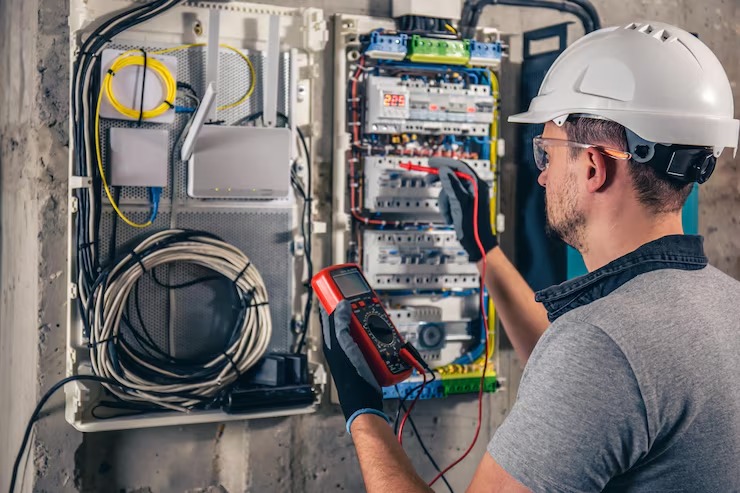
Brandon starts with a load calculation, not a guess. That means going through your panel and figuring out what actually needs to run during an outage – furnace and boiler circulators, sump pump, refrigerator, some lighting and outlets, maybe the well pump if you’re on one. That number determines whether you need a 22kW unit or something smaller, and whether your existing service size can even support it.
From there the work is a mix of trades. The generator pad and unit itself gets set outside, typically on a concrete or composite pad, positioned to meet clearance requirements from windows, doors, and property lines. Brandon runs the electrical connection: a transfer switch installed at your panel, either a full automatic switch that senses an outage and starts the generator on its own, or a manual switch depending on the unit and your budget. Wiring runs from the transfer switch to the generator, along with the control wiring that lets the two communicate.
A separate gas line is required for a natural gas or propane unit, and that’s coordinated with a plumber – Chris handles that side when it’s part of the same job, so gas sizing and electrical scheduling stay on one timeline instead of two contractors chasing each other.
Power to the house is off for a short window during the transfer switch tie-in, usually under an hour, scheduled at a time that works for you. The utility company has its own role here too: if your service needs upsizing to support the new load, that’s a separate coordination with National Grid, and it’s their crew, not ours, that handles the actual service drop.
What It Costs
Generator installation in Andover typically runs {PRICE_LOW} to {PRICE_HIGH}. The spread comes down to a few things: the size of the unit, whether your existing panel and service size can handle it as-is or need an upgrade first, whether it’s an automatic or manual transfer switch, and how far the generator has to sit from the gas meter and the panel.
A whole-house unit on a home with a modern 200 amp panel is a more straightforward job than the same unit on a house still running 100 amp service with an aging panel that needs replacing before anything else can happen. Brandon will tell you which situation you’re in during the estimate, not after the work starts.
How Long It Takes
Most straightforward installs – modern panel, no service upgrade needed – take one to two days of on-site work: pad setup, electrical connection, gas line coordination, and startup testing. If a panel replacement or service upgrade is part of the job, add another day, plus the lead time for the utility to schedule its portion if the service size is changing.
Permitting adds time on the front end. Expect the town’s inspection process to add several days to a couple of weeks depending on scheduling, which is one more reason to start this conversation before storm season, not during it.
Permits and Inspection
Generator installation is permitted work in Massachusetts. Brandon pulls the electrical permit, and the gas connection is permitted separately if it’s part of the job. Andover’s inspector reviews the transfer switch installation, the panel connection, grounding, and clearances before it’s signed off as complete.
This is the part that separates a licensed job from a generator sold and dropped off by a big-box installer with a subcontracted crew. An inspected installation means the transfer switch is wired correctly, the generator can’t backfeed the utility lines during an outage, and the whole system is documented with the town. [EXTERNAL LINK: Massachusetts Board of State Examiners of Electricians – state electrical code reference, to show the regulatory standard this work is held to]
Common Questions
Do I need a permit for a generator in Andover?
Yes. Generator installation requires an electrical permit, and a gas connection requires its own permit if the unit runs on natural gas or propane. Both are inspected before the system is considered complete.
Can my current electrical panel handle a whole-house generator?
It depends on the panel and service size. A 60 or 100 amp service, or an older Federal Pacific or Zinsco panel, often needs to be upgraded before a transfer switch can be added safely. Brandon checks this during the estimate.
What's the difference between automatic and manual transfer switches?
An automatic switch senses a power outage and starts the generator on its own within seconds. A manual switch requires someone to start the generator and flip the transfer switch by hand. Automatic costs more but means no one has to be home when the power goes out.
How long is the power out during installation?
The tie-in at your panel typically takes under an hour. The rest of the install – running the generator, gas line, and pad work – doesn't require the power to be off.
Does Belfiore install both the electrical and gas connection?
Brandon handles the electrical side – transfer switch, panel connection, and wiring. Chris coordinates the gas line sizing and connection on the plumbing side when it's part of the same project.
Reach Out for Generator Installation
If you’re in Andover and thinking about a generator before the next outage takes the decision out of your hands, call {PHONE}. Tell us what’s in your panel now if you know it, and we’ll go from there.
Contact information
Talk to Brandon
Brandon is the licensed electrician here, and generator work is one of the jobs he spends the most time on this time of year. If you want a straight answer on whether your panel can support a standby unit, or whether you’re better off with a smaller portable-transfer setup for now, that’s a conversation, not a sales pitch. He’ll look at your actual panel and your actual house before recommending a size.