
Electrical Troubleshooting and Repair in Peabody, MA
A lot of Peabody homes went up before 1940, back when a house ran on two circuits and a fuse box, not a 200 amp panel. Add central air, a hot tub, an EV, and a finished basement to a system built for a radio and a few lamps, and something has to give. That’s the call we get most – lights that dim when the fridge kicks on, a breaker that trips every time two things run at once, an outlet that’s warm to the touch.
Why Peabody Homes Need This
Peabody’s housing stock skews old, and old wiring doesn’t fail gracefully – it fails a little at a time until something forces the issue. We still find knob and tube in attics and wall cavities around the Square and in the older neighborhoods off Lowell Street, especially in homes that were converted from single to two or three family use decades ago and never got a full rewire. Cloth-insulated wiring from the 1950s and 60s shows up almost as often, brittle at the joints and unforgiving when a DIY splice was made somewhere behind a wall.
Service size is the other recurring issue. A 60 amp service was standard when these houses were built, and plenty are still running on it, or on a 100 amp upgrade that was adequate in 1985 and isn’t now. If your panel is a Federal Pacific Stab-Lok or an older Zinsco, that’s not a maintenance item – those panels have a documented history of breakers that don’t trip when they should, and we’ll flag it every time we see one, whether or not that’s the reason you called.
What the Work Involves
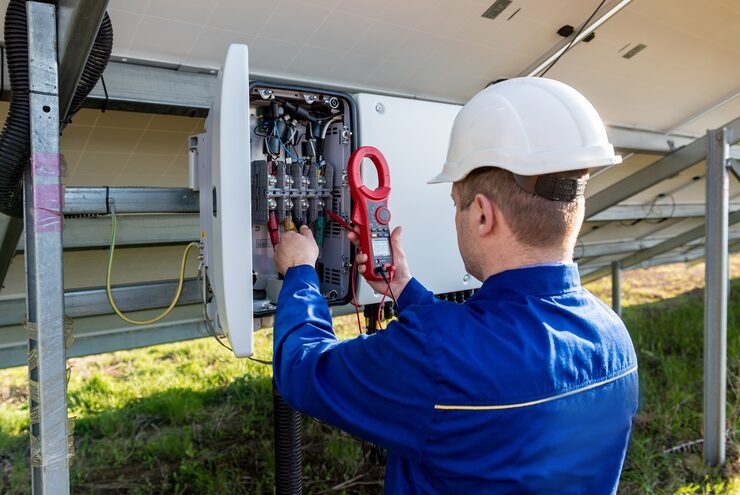
Troubleshooting starts with a real diagnosis, not a guess. Brandon traces the circuit, checks load at the panel, and tests the devices in question – outlets, switches, fixtures – with a meter before anything gets opened up. Sometimes it’s a loose neutral. Sometimes it’s a connection that’s been arcing quietly inside a junction box for years.
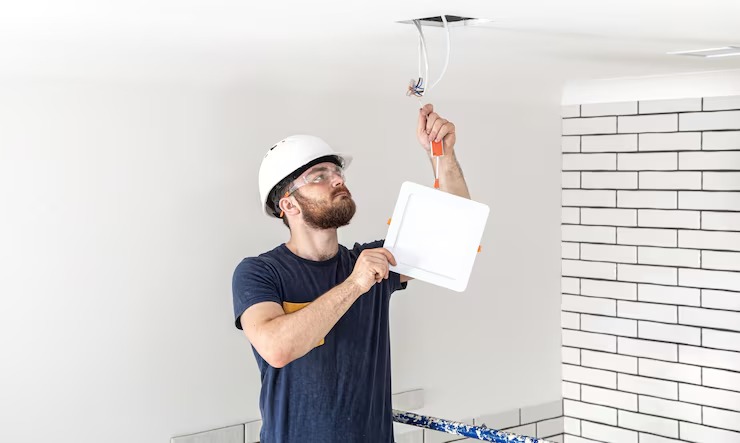
For repair work, power to the affected circuit gets shut off at the breaker, not the whole house, unless we’re working at the panel itself. Most troubleshooting and single-circuit repairs keep the rest of your home running normally. Panel-level work is different – that requires a utility disconnect, which National Grid schedules and performs, and the house is without power for that window, typically a few hours, not a full day. We handle everything on our side: the panel work, the grounding, the connections. The utility only handles the meter and service drop.
What It Costs
A straightforward diagnostic and single-circuit repair – a bad switch, a failed outlet, a tripped GFCI that won’t reset – runs {PRICE_LOW} to {PRICE_HIGH} in most Peabody homes. That range moves with what we find once the wall is open. A loose connection is a quick fix. Knob and tube that needs to be cut back and spliced into modern wire, or a circuit that’s been overloaded for years and needs to be split into two, takes longer and costs more. We give you the number before we start, not after.
How Long It Takes
Most troubleshooting calls are diagnosed and repaired the same visit, usually within two to three hours. If the fix requires a part we don’t carry on the truck, or if we find something bigger once we’re inside the wall – old wiring that needs to be extended further than expected, a panel that’s undersized for the load you actually want – we’ll tell you before we go further, not after the fact.
Permits and Inspection
Electrical work in Massachusetts is permitted and inspected, and that’s true whether it’s a full panel swap or a single circuit repair that touches the panel. Brandon pulls the permit, the town inspector signs off, and you get a paper trail that shows the work was done to code. That inspection step is the difference between a licensed electrician and someone working out of a truck with no license number to put on the permit. It matters at resale, and it matters for your homeowner’s insurance if there’s ever a fire claim.
Common Questions
Is it normal for an older Peabody home to still have knob and tube wiring?
It's common, not normal in the sense of being fine to leave alone. Knob and tube was standard decades ago and can still be functional, but it wasn't designed for today's loads and most insurers ask about it directly. We'll tell you what's active, what's abandoned, and what actually needs attention.
How do I know if my panel is undersized?
Frequent breaker trips when running two appliances at once, dimming lights when something large kicks on, and a panel rated 60 or 100 amp are the main signs. Brandon can check your panel's rated capacity against your actual household load in one visit.
Do I need a permit for a simple outlet or switch repair?
Not always – it depends on whether the repair touches the panel or existing branch circuit wiring. Panel work, rewiring, and new circuits always require a permit and inspection in Massachusetts. We'll tell you upfront if your repair needs one.
What's the difference between a repair and a full rewire?
A repair fixes the specific problem – a bad connection, a failed device, a damaged section of wire. A rewire replaces the wiring for a whole circuit or the house. Most calls start as a repair, and we only recommend a rewire when the wiring itself is the recurring cause of the problem.
Can you work around my schedule if the power needs to be shut off?
For single-circuit repairs, yes, since only that circuit goes dark. Panel-level work requires a utility disconnect scheduled through National Grid, and we coordinate that window with you in advance.
Reach Out for Electrical Repair
If something in your Peabody home is tripping, buzzing, warm, or just not right, call {PHONE}. We’ll ask what you’re seeing, get a sense of the house and its age, and get someone out to look at it properly.
Contact information
Talk to Brandon
Brandon left union electrical work to run the electrical side of this company, and he’s the one who’ll walk your panel and tell you straight what’s wiring, what’s overdue, and what can wait. No upsell script, no vague warnings meant to scare you into a bigger job than you need.