Electrical Troubleshooting and Repair in North Reading, MA
Most of North Reading was built up from the 1950s through the 1980s, on lots big enough that additions and finished basements have been going in for decades. That original electrical service was sized for a smaller house with a smaller appetite – no dryer on its own 30 amp circuit next to a hot tub, no EV charger in the garage, no heat pump air handler drawing power year-round. When something trips, flickers, or just stops working, it’s usually that gap between what the house has and what the house is now being asked to run.
Why North Reading Homes Need This
A lot of North Reading’s housing stock sits right in that window where you’ll still find 60 amp services, some cloth-insulated branch wiring in the older sections near town center, and panels that were perfectly normal decades ago but are now a real concern. Federal Pacific Stab-Lok panels and Zinsco panels both turn up in this part of the North Shore, and both have documented breaker failures where the breaker doesn’t trip when it should. That’s not a scare tactic, it’s a known issue electricians deal with regularly.
On the newer end, North Reading’s larger lots and post-war-and-later construction make it one of the more active markets in our service area for EV chargers, dedicated circuits for hot tubs and workshops, and finished basement wiring. All three of those loads need a panel with actual room and capacity – amperage the original 100 amp service, or worse the older 60 amp service, was never built to carry.
What the Work Involves
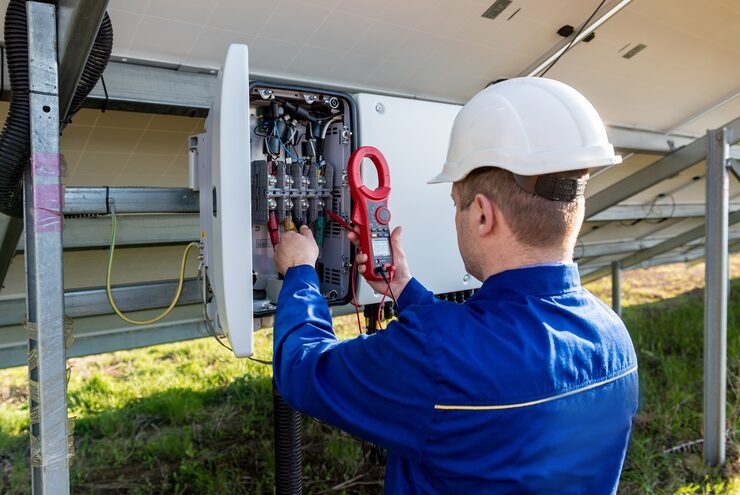
Troubleshooting starts with figuring out where the fault actually is, not just where the symptom shows up. A flickering light in the kitchen can trace back to a loose neutral in the panel. A breaker that won’t stay on might be a bad breaker, or it might be a legitimate overload telling you the circuit is doing too much. Brandon checks connections, tests for voltage drop, and traces circuits back to source before opening anything up.
For repairs that touch the panel or the service itself, the power to that panel has to be shut off. Depending on the job, that’s anywhere from twenty minutes to a few hours. If the work involves the service drop or the meter, the utility has to be involved – they own the meter and the wires up to it, and they’ll pull or reset it as needed. Everything downstream of the meter, the panel, the breakers, the branch wiring, is the electrician’s work and the electrician’s responsibility.
Wire gauge and breaker type matter here. A 20 amp circuit needs 12 gauge wire, not 14. A dedicated circuit for an EV charger or a heat pump condenser needs to be sized to the equipment’s actual draw, not guessed at. Getting this wrong isn’t a cosmetic issue, it’s a fire risk, which is exactly why this work is inspected.
What It Costs
Straightforward troubleshooting and minor repair work in North Reading generally runs {PRICE_LOW} to {PRICE_HIGH}. What moves that number is whether the problem is a single bad device or breaker versus something further back in the wiring, whether the panel itself needs work, and how much of the house has to be opened up to trace the fault. An old cloth-wiring circuit with a hidden splice takes longer to sort out than a modern circuit with a clear layout. We’ll walk you through what we find before any repair work starts, not after.
How Long It Takes
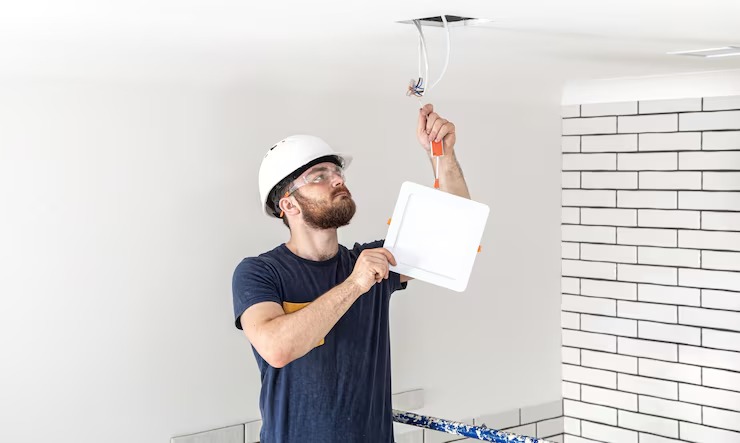
A single diagnostic visit with a straightforward fix, like a bad outlet or a failed breaker, is usually done in one visit, often a couple of hours. If the troubleshooting points to something bigger, like a panel that’s undersized or a run of old wiring that needs replacing, that becomes its own project and gets scoped separately. We’d rather give you an honest two-visit plan than rush a patch that doesn’t hold.
Permits and Inspection
Electrical repair work in Massachusetts is permitted and inspected, and panel or service work always requires a permit pulled by a licensed electrician. That inspection isn’t paperwork for its own sake – it’s a second set of eyes confirming the wire gauge, breaker sizing, and grounding are correct before the wall closes back up. Unlicensed electrical work is common enough on the North Shore that homeowners run into it during renovations and home sales, usually when an inspector flags something that was never permitted in the first place. Brandon pulls permits on panel and service work as a matter of course. [EXTERNAL LINK: Massachusetts electrical permit process, mass.gov – shows homeowners the state requirement directly]
Common Questions
Is it safe to keep using a Federal Pacific or Zinsco panel?
Both brands have documented histories of breakers failing to trip during an overload, which defeats the panel's main safety function. Many electricians recommend replacement rather than repair once one of these panels is identified, and insurance companies sometimes flag them during underwriting. Brandon can take a look and tell you plainly what condition yours is in.
Can my current panel handle an EV charger or heat pump?
It depends on the panel's rated amperage and how much of that capacity is already spoken for by existing circuits. A lot of North Reading homes with 100 amp services are close to full once you add central air, an electric dryer, and a range. We check the actual load before recommending anything.
Do I need a permit for a simple repair like replacing an outlet?
Minor like-for-like repairs sometimes fall outside permit requirements, but anything touching the panel, adding a circuit, or upgrading service size needs a permit and inspection under Massachusetts code. We'll tell you upfront which category your job falls into.
How long will my power be out during a repair?
For work isolated to one circuit, the rest of the house usually stays powered. If the main panel has to be shut down, expect anywhere from twenty minutes to a few hours depending on the scope, and we'll tell you the estimate before starting.
Reach Out for Electrical Repair
Belfiore is a Salem-based company working across North Reading and the rest of the North Shore. Call {PHONE} to describe what’s going on with your electrical system, and we’ll get Brandon out to take a look and give you a clear read on what’s next.
Contact information
Talk to Brandon
Brandon is the electrician side of Belfiore. He left union work to run electrical for the family business, and he’s the one who’ll actually be tracing the circuit or opening the panel at your house, not a dispatcher reading off a script. If you’re dealing with a breaker that won’t stay reset, an outlet that’s gone dead, or a panel you’re not sure is still safe, tell him what’s happening and he’ll tell you straight what it likely is and what it takes to fix it right.