
Electrical Remodeling in Middleton, MA
Most of Middleton was built out from the 1960s through the 1990s, on lots big enough for a garage bay, a pool, or a finished basement down the line. Those houses came with 100 amp services that were plenty for a fridge, a washer and a few lamps. They were never sized for a heat pump, an EV charger and a home office running two monitors, and that’s exactly what a lot of Middleton remodels are asking them to carry now.

Why Middleton Homes Need This
Middleton’s housing stock splits into two problems. The newer suburban colonials and split-levels have 100 amp panels that are tapped out the moment you add a kitchen island with a microwave, a range, and under-cabinet lighting all on one run. The older farmhouses and capes scattered around town, some dating back well before the postwar boom, can still have cloth-insulated wiring, knob and tube in the attic, or a 60 amp fused service feeding the whole house. Some of those older properties never got past a Federal Pacific or Zinsco panel from a mid-century upgrade, both of which have known breaker failure issues that insurance carriers flag during underwriting.
A kitchen or bath remodel is usually the moment this all surfaces. You open a wall, the electrician looks at what’s actually feeding that room, and the plan changes from swapping a few outlets to a real capacity conversation. It’s the right time to deal with it. You’re not paying to open the wall twice.
What the Work Involves
Every remodel job starts with a load calculation, not a guess. Brandon adds up what the new kitchen, bath, addition or finished space will actually draw, then checks that against what the existing service can deliver. A 100 amp panel running a new electric range, a tankless water heater, and central air is usually maxed out before you’ve touched the lighting.
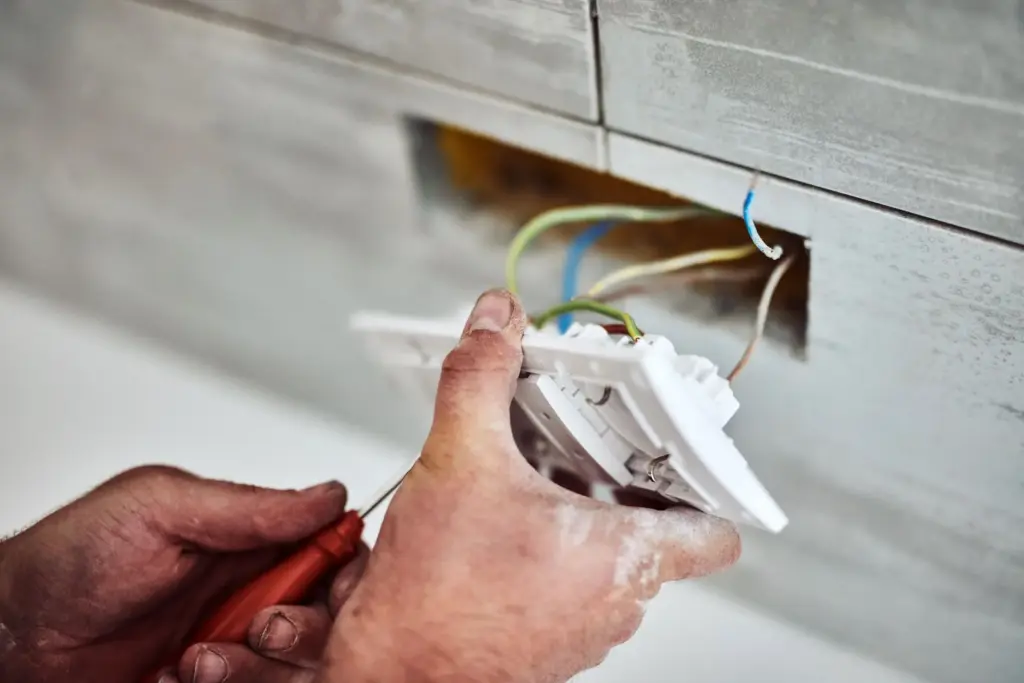
From there the work typically includes new dedicated circuits for major appliances (ranges, dishwashers, microwaves, and any 240 volt equipment like an EV charger or hot tub), GFCI and AFCI protection in kitchens, baths, and bedrooms as current code requires, and either a panel upgrade or a full service upgrade if the existing capacity can’t cover the new load.
Power gets shut off at the panel for the duration of any panel or service work, usually a matter of hours, not days. If the service size itself is changing, National Grid has to disconnect and reconnect the utility side. That scheduling is handled as part of the job, not left for you to coordinate. Once wiring is in the walls, everything gets inspected before it’s covered up. That inspection isn’t optional and it isn’t a formality. It’s the difference between work you can trust and work you can’t verify once the drywall goes back up.
What It Costs
Remodel electrical in Middleton generally runs {PRICE_LOW} to {PRICE_HIGH}, and the spread is wide because the scope varies so much. A kitchen remodel adding four or five dedicated circuits and updated GFCI protection sits toward the lower end. A project that also requires a panel upgrade from 100 to 200 amps, or a full service upgrade because the existing 60 amp feed can’t support the new load, sits toward the higher end.
What moves the number: how many new circuits you need, whether the panel has room for new breakers or needs to be replaced outright, whether the meter and service line need upgrading, and how much of the existing wiring in that part of the house is still safe to reuse versus needing replacement. Brandon walks the space, looks at the panel, and gives you a number for your job before anything starts. Nobody gets a phone quote for this kind of work.
How Long It Takes
A straightforward kitchen or bath remodel with new dedicated circuits and updated devices usually takes one to two days of electrical work, scheduled around the rest of the renovation. A panel upgrade adds a day. A full service upgrade, where National Grid has to disconnect and reconnect, depends on their scheduling window as much as ours, but the electrical side of that work is typically done in a day once the utility has been out.
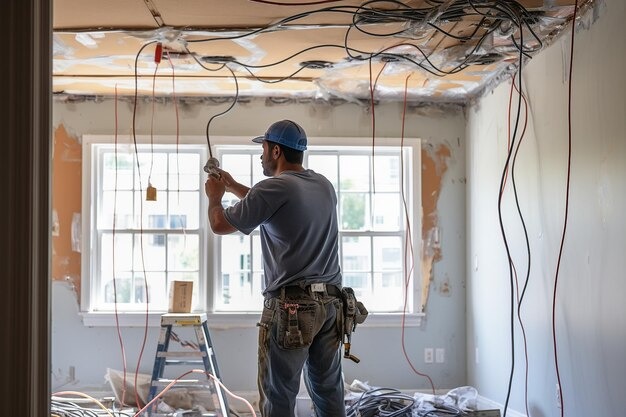
The bigger factor is sequencing with your general contractor. Rough-in electrical happens before insulation and drywall go in, and that inspection has to pass before the walls close up. Building that step into the renovation timeline early avoids the most common delay on remodel jobs.
Permits and Inspection
Electrical remodeling work in Massachusetts requires a permit, and it gets inspected by the local building department before the walls close. That’s true whether you’re adding one circuit or rewiring a whole floor. Brandon pulls the permit, schedules the inspection, and is on site for it. This isn’t a formality tacked onto the invoice. It’s a licensed electrician’s work getting checked by a third party, which is exactly what protects you if something ever comes into question at resale or with an insurance claim.
Unpermitted electrical work is common in older homes around the North Shore, usually from a previous owner or a handyman doing a favor. A remodel is often the point where that gets discovered, and it’s better to know before you close up new drywall over it. For more on the state’s requirements, see the Massachusetts electrical code [EXTERNAL LINK: state code reference, establishes that permitting and inspection are a legal requirement, not a sales pitch].
Common Questions
Do I need a permit for electrical work during a kitchen remodel?
Yes. Any new circuits, panel changes, or rewiring require a permit and inspection under Massachusetts electrical code, regardless of project size.
Will a remodel force a panel upgrade?
Not always. If your existing panel has open breaker slots and enough amperage for the new load, you may just need new circuits. If it's a 100 amp panel already near capacity, or an older 60 amp service, an upgrade is usually part of the plan.
How long is the power off during a panel upgrade?
Typically a few hours for the panel swap itself. If the service size is changing, National Grid also has to disconnect and reconnect on their schedule, which is coordinated as part of the job.
Can I add an EV charger during the same remodel?
Yes, and it's often the most efficient time to do it. Adding the dedicated 240 volt circuit while walls are already open avoids a second opening later.
What if my house still has knob and tube wiring?
It's common enough in Middleton's older homes. A remodel is usually the point where it gets identified and replaced in the affected area, since it can't be reused safely behind new drywall.
Reach Out for Electrical Remodeling
If you’re at the planning stage of a remodel, or your contractor has already flagged that the panel needs a look, call {PHONE}. Belfiore is a Salem-based company working across Middleton and the rest of the North Shore, and we’ll tell you plainly what your project needs before any wall gets opened.
Contact information
Talk to Brandon
Brandon left union electrical work to run the electrical side of a family business alongside his twin brother Chris, who handles plumbing and heating. If you’re planning a kitchen, bath, addition or basement remodel in Middleton, he’ll look at your panel, your existing wiring and what you’re actually planning to run before giving you a plan. No load guesswork, no upsell on capacity you don’t need.