
Electrical Panel Upgrades in North Andover, MA
A lot of North Andover’s housing stock was wired for a house that didn’t have central air, an EV in the driveway, or a kitchen full of countertop appliances running at once. Whether it’s a colonial off Academy Road built with a 60 amp fuse panel or a 1980s split-level that’s since had two additions and a finished basement tacked on, the electrical panel is often the one piece of the house nobody thought to touch during the remodel. That’s usually where we come in.
Why North Andover Homes Need This
North Andover’s mix is part of what makes this town interesting to wire. You’ve got the historic center with homes old enough to still have knob and tube segments and cloth-insulated branch wiring behind the walls, and you’ve got the post-war and modern stock further out that was often built with 60 or 100 amp service – fine for the 1960s, tight for a household running central air, an electric range, and a couple of EVs.
The other thing we see a lot in this part of the North Shore is older panel brands that are no longer considered safe by any modern standard – Federal Pacific Stab-Lok and Zinsco panels turn up regularly in homes that haven’t been updated since they were built. If your panel is one of those, that’s a separate conversation from a straightforward capacity upgrade, and Brandon will tell you plainly which situation you’re in.
North Andover’s remodel activity is real – kitchen additions, finished basements, garage conversions, heat pump installs – and every one of those projects puts new load on a panel that was never sized for it. That’s the capacity problem this page is about: not a failing panel, but one that’s simply out of room.
What the Work Involves
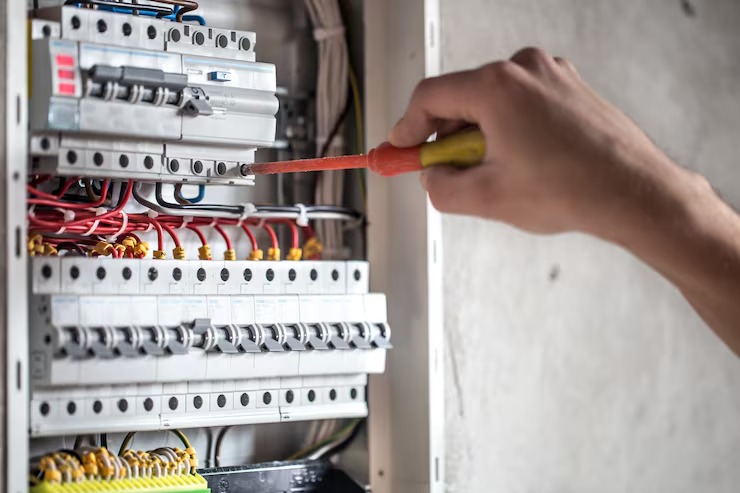
A panel upgrade means swapping your existing breaker box for one with more capacity – typically going from 100 amp to 150 or 200 amp service, sometimes higher if you’re planning an EV charger and a heat pump on the same property. Brandon pulls the permit, coordinates with National Grid or Unitil depending on which utility serves your street, and schedules the outage window.
The utility owns the drop and the meter equipment. Brandon’s crew handles everything on your side of the meter – the panel itself, the breakers, the grounding, and the wiring that feeds it. Power to the house is off for the swap, usually a few hours, not a full day. Everything gets labeled, breaker sizes get matched to the wire gauge actually feeding each circuit, and any obviously undersized or double-tapped breakers get flagged and corrected while the panel’s open.
Once the new panel is in, the local inspector comes out to sign off before the utility reconnects and energizes the new equipment. That inspection is not optional and it’s not a formality – it’s the check that confirms the work was done to code.
What It Costs
A straightforward 100 to 200 amp panel upgrade in North Andover typically runs {PRICE_LOW} to {PRICE_HIGH}. What moves that number: whether the service entrance cable needs upsizing along with the panel, how far the panel is from the meter, whether the utility’s charging anything on their end for the tie-in, and whether we find old wiring behind the panel that needs correcting while it’s open. A detached garage or a finished basement sub-panel adds to it. Brandon gives you a number after he’s actually looked at the panel and the service drop, not off a phone call.
How Long It Takes
Most panel upgrades are a one-day job start to finish, including the permit paperwork filed ahead of time. The power outage itself is short – typically two to four hours while the old panel comes out and the new one goes in and gets tested. Inspection scheduling is the variable: depending on the local building department’s calendar, that can add a few days between the physical work and final sign-off, though the power is back on well before then.
Permits and Inspection
Panel work is permitted and inspected in Massachusetts, full stop. Brandon pulls the permit before the job starts, the wiring gets installed to the current Massachusetts Electrical Code, and the local inspector reviews it before the utility will energize the new panel. If a contractor offers to skip that step, that’s a sign to walk away – it’s not a shortcut, it’s a liability you’d be inheriting. [EXTERNAL LINK: Massachusetts Board of State Examiners of Electricians – licensing and code reference, to show homeowners what licensed, inspected work actually requires]
Common Questions
How do I know if my panel needs an upgrade versus a replacement?
If your panel is working fine but doesn't have enough capacity for what you're adding – an EV charger, a heat pump, a kitchen remodel – that's a capacity upgrade. If the panel itself is failing, obsolete, or a recalled brand like Federal Pacific Stab-Lok or Zinsco, that's a different problem regardless of how much amperage you need. Brandon can tell you which situation you're in during the initial look.
Will I lose power during a panel upgrade?
Yes, for a few hours while the old panel comes out and the new one is installed and tested. We schedule around your day and let you know the window in advance.
Do I need a permit for a panel upgrade in North Andover?
Yes. This work is permitted and inspected under Massachusetts Electrical Code. Brandon pulls the permit and schedules the inspection as part of the job.
What size panel do most North Andover homes need?
Does the utility company need to be involved?
Reach Out for Electrical Panel Upgrades
If your panel’s maxed out, or you’re planning a project that’s going to need more amps than you’ve got, call {PHONE} and describe what’s going on – what’s in the panel now, what you’re adding. Brandon can usually tell you over the phone whether you’re looking at a simple upgrade or something more involved, and get a firm quote scheduled from there.
Contact information
Talk to Brandon
Brandon’s the licensed electrician here – he left union work to run the electrical side of his brother’s plumbing and heating business, and panel work is a big part of what he does across the North Shore. North Andover is on the western edge of the area we cover out of Salem, so we’re straightforward about scheduling rather than pretending we’re five minutes away – we’ll give you a real appointment window and stick to it.