Electrical Panel Upgrades in Georgetown, MA
A lot of Georgetown houses still carry the electrical service they were built with decades ago, back when a house ran a furnace, a fridge, and a few lamps. Now those same 60 or 100 amp panels are being asked to run central air, an electric range, a hot tub, and a car charger in the garage. That gap between what the panel was sized for and what the house actually uses is where an upgrade earns its keep.
Why Georgetown Homes Need This
Georgetown sits on the rural end of the North Shore, and that shows up in the housing stock. Plenty of homes here are on well and septic systems, set back from the road on a lot of land, and built long before anyone was thinking about heat pumps or EV chargers. Some of that older wiring is knob and tube or early cloth-insulated cable, still functional in places but never designed to share a circuit with modern loads.
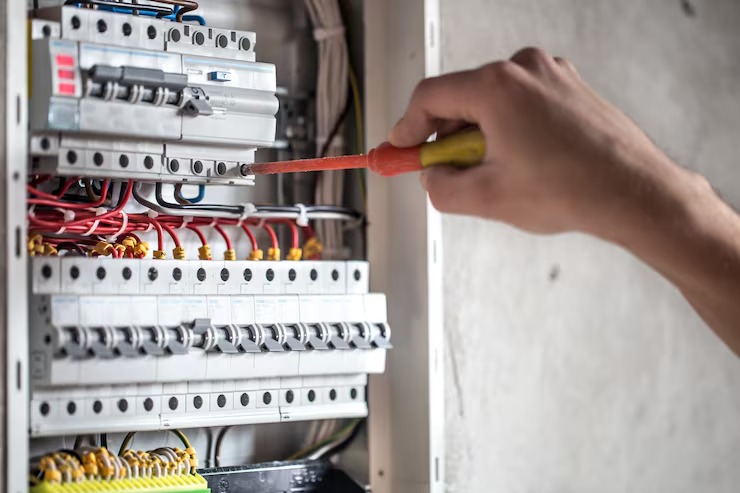
It’s also common to find a 60 amp panel behind an older Georgetown home, sometimes a Federal Pacific Stab-Lok or a Zinsco unit installed decades back. Both brands have a documented history of breakers that don’t trip when they should, and both are past due for replacement in any home that still has one. If Brandon opens your panel cover and finds either name on the breakers, that changes the conversation from upgrade to full replacement, and he’ll tell you straight which one you’re actually looking at.
There’s a generator angle here too. Georgetown loses power for stretches during nor’easters and summer thunderstorms, and a lot of homeowners are adding standby generators as a result. A generator interlock or transfer switch needs a panel with the capacity and the physical space to support it, which an old 60 amp box usually doesn’t have.
What the Work Involves
A panel upgrade replaces the main panel with a larger one, usually stepping from 60 or 100 amps up to 150 or 200 amps, and it means running new panel guts, new breakers, and often a heavier feeder cable from the meter. Brandon will size the new panel to what the house actually needs, factoring in the range, the water heater if it’s electric, the HVAC equipment, and anything you’re planning to add in the next few years, like an EV charger or a heat pump.
Power to the house is shut off for the work, typically for a few hours while the old panel comes out and the new one goes in and gets wired. If the service size itself is changing, the utility has to coordinate the disconnect and reconnect at the meter, since that part of the system belongs to them and not to Brandon. He handles everything inside the meter socket. The utility handles the drop and the meter itself.
Once the new panel is in, every circuit gets landed, labeled, and tested before power goes back on. Georgetown’s older homes sometimes turn up surprises once the old panel comes off the wall, like double-tapped breakers or wiring that was never run to code the first time, and Brandon will flag anything like that before it gets buried behind a new cover.
What It Costs
A straightforward panel upgrade in Georgetown generally runs {PRICE_LOW} to {PRICE_HIGH}. Where you land in that range depends on the amperage jump, whether the feeder cable and meter socket need to be replaced along with the panel, how much rework the existing wiring needs, and whether the job also includes a generator interlock or dedicated circuits for new equipment. A 60 amp to 200 amp jump on a home with dated wiring costs more than a 100 to 150 amp upgrade on a panel that’s otherwise in decent shape. Brandon gives you the number after he’s actually looked at your panel and your service, not before.
How Long It Takes
Most panel upgrades are a single day of on-site work, start to finish, assuming the permit is already in hand and the utility coordination has been scheduled ahead of time. The power outage itself is usually a few hours in the middle of that day, not the whole day. Jobs that also involve rewiring sections of the house, moving the panel location, or troubleshooting old knob and tube that’s tangled into the new circuits can run longer. Georgetown’s rural lots sometimes mean a longer run from the utility pole to the house, which can add time if that feeder cable needs upgrading too.
Permits and Inspection
Panel work is permitted and inspected in Massachusetts, no exceptions. Brandon pulls the permit, the town’s electrical inspector signs off on the finished work, and the utility won’t reconnect a new service until that inspection is passed. This isn’t paperwork for its own sake. It’s the mechanism that keeps unlicensed work out of your walls, and it’s the reason to be skeptical of anyone offering to do a panel job off the books. If you want to see how Massachusetts structures this, the state’s electrical code is public. [EXTERNAL LINK: Massachusetts Electrical Code (527 CMR 12), for homeowners who want to see the permitting and inspection requirements directly from the source]
Common Questions
How do I know if my panel needs an upgrade instead of a repair?
If your panel is tripping breakers under normal loads, you're relying on extension cords because you don't have enough circuits, or you're planning to add an EV charger, hot tub, or heat pump, that's a capacity problem an upgrade solves. If the panel itself is a known problem brand or is physically damaged, that's a replacement conversation, not an upgrade one.
Is a Federal Pacific or Zinsco panel dangerous?
Both brands have a documented history of breakers failing to trip during overloads, which is the exact failure a breaker is supposed to prevent. If Brandon finds either one in your Georgetown home, he'll walk you through why replacement is the recommended path rather than working around it.
Will I be without power during the upgrade?
Yes, for part of the day. The main panel has to be de-energized to be swapped, so expect a few hours without power on the day of the work, timed around when the utility can coordinate the meter disconnect and reconnect.
Do I need a permit for a panel upgrade in Georgetown?
Can a panel upgrade support a generator or EV charger later?
Reach Out for Electrical Panel Upgrades
If your Georgetown home is still running on a 60 or 100 amp panel, or you’re planning an EV charger, a generator, or an addition that the current service can’t support, call {PHONE}. Belfiore is a Salem-based company working across Georgetown and the rest of the North Shore, and Brandon can walk you through what your panel can and can’t handle.
Contact information
Talk to Brandon
Brandon is the electrician side of Belfiore. He left union work to run the electrical half of a two-brother company, and panel upgrades are a job he does often enough in towns like Georgetown to know what an old cloth-wired colonial or a converted farmhouse is likely to throw at him before he even opens the panel. If you’re not sure whether your house needs an upgrade or a full replacement, describe what you’re seeing and he’ll tell you which one you’re actually dealing with.