
Electrical Panel Replacement in Newburyport, MA
Walk through most downtown Newburyport neighborhoods and you’re looking at federal-era and Victorian homes that had their first real electrical work done decades after they were built, then patched again in the 1960s and 70s. A lot of those patches are still live today: a panel that was already dated when it went in, feeding a house that now runs central air, a range, and a couple of space heaters it was never sized for.
Why Newburyport Homes Need This
Newburyport’s housing stock is old enough that the panel problems here aren’t hypothetical. Brandon still finds Federal Pacific Stab-Lok panels in South End and downtown homes, boxes with a documented history of breakers that don’t trip when they should. Zinsco panels show up too, with breakers that fuse to the bus bar instead of tripping cleanly. Both were installed by the thousands across Massachusetts before anyone understood the failure pattern, and neither one is something we recommend living with once you know what’s inside the box.
Layered on top of that is a service size problem. A lot of these homes were originally wired for 60 amps, sometimes fed by cloth-insulated wiring or old knob-and-tube runs upstream of the panel. That was fine for a house with a furnace and a few lamps. It’s not fine for a house with central air, an electric dryer, and a home office running two monitors and a space heater. Newburyport and Salisbury have a similar age spread but more mixed construction, ranches and capes alongside the older farmhouses, so the panel problems tend to be less uniform. In Newburyport, because so much of the housing dates from the same period, the same handful of panel and wiring issues turn up house after house.
What the Work Involves
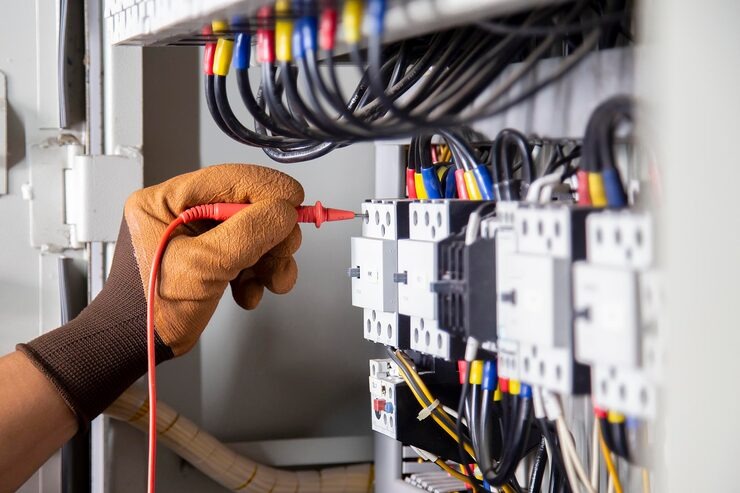
A panel replacement starts with Brandon opening up the existing panel and tracing every circuit before anything gets disconnected. That step matters more than people expect, because old panels are rarely labeled accurately and some circuits have been added or moved over the years without any record of it.
Once the circuits are mapped, the utility has to pull the meter or the service is de-energized at the point of connection, depending on the setup. Power to the house is out for the duration of the swap, typically a matter of hours, not a full day. The old panel comes out, the new one goes in, and every circuit gets reconnected and labeled correctly this time. Breaker types get matched to what each circuit actually needs, standard, GFCI, or AFCI where code requires it. If the service wire itself is undersized for the new panel’s rating, that gets addressed as part of the same job rather than left as a mismatch.
Grounding is checked and upgraded if it doesn’t meet current code, since a lot of older Newburyport homes were grounded to a water pipe that’s since been partially replaced with plastic, which breaks the ground path without anyone noticing.
What It Costs
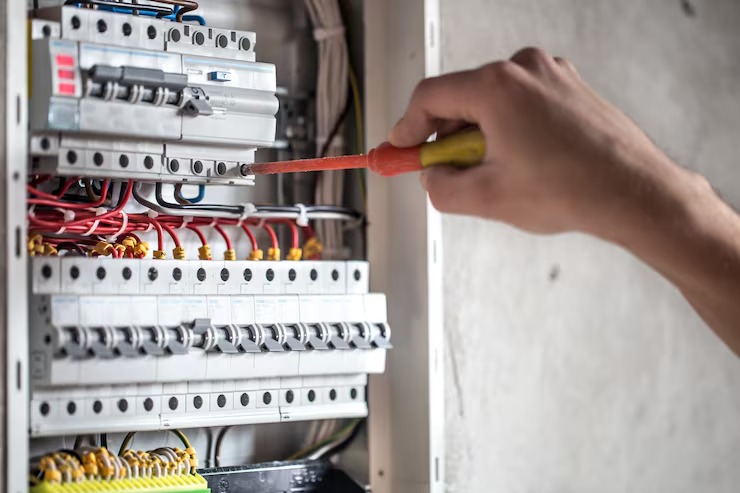
Panel replacement in Newburyport generally runs between {PRICE_LOW} and {PRICE_HIGH}. Where you land in that range depends on the panel’s amperage, whether the service wire needs to be upgraded alongside it, how many circuits need to be remapped and relabeled, and how accessible the panel is in your particular house. A panel in a dry, accessible basement is a different job than one wedged into a tight closet in a 200-year-old building with plaster walls on every side. We’ll give you a firm number after Brandon looks at the actual panel and service, not a phone estimate based on square footage.
How Long It Takes
Most straightforward panel replacements are a one-day job from start to finish, including the utility coordination. Older Newburyport homes with hidden wiring problems, non-standard grounding, or access issues can push that closer to a day and a half. The power outage itself, the part that actually affects your day, is usually just a few hours in the middle of that.
Permits and Inspection
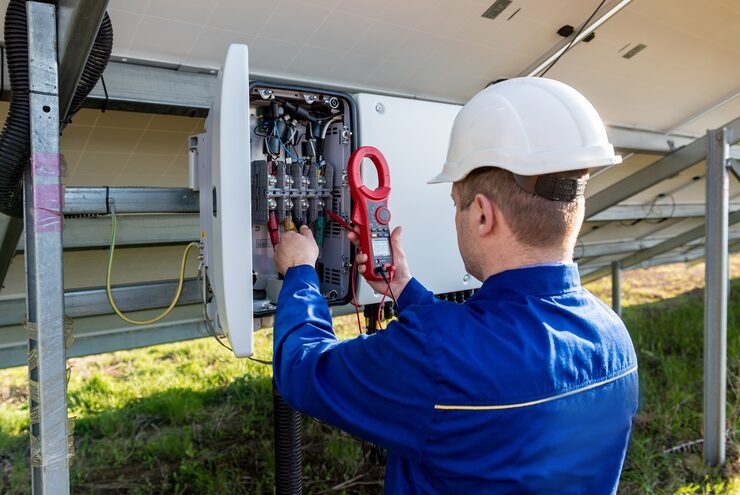
Panel replacement is permitted work in Massachusetts. It has to be pulled by a licensed electrician, inspected by the local electrical inspector, and signed off before the job is considered closed. That’s not paperwork for its own sake. It’s the difference between a job that gets checked by someone with no financial stake in the outcome and a job that doesn’t. Anyone doing panel work without pulling a permit is either unlicensed or skipping a required step, and either one should tell you something. [EXTERNAL LINK: Massachusetts electrical code amendments (527 CMR 12), for homeowners who want to see the actual requirements around panel and service work]
Common Questions
How do I know if I have a Federal Pacific or Zinsco panel?
Check the label inside the panel door. Federal Pacific panels usually say "Federal Pacific Electric" or "FPE" with a Stab-Lok breaker design. Zinsco panels often say "Zinsco" or later "GTE-Sylvania." If you're not sure, send us a photo and Brandon can tell you.
Do I have to replace my panel just because it's old?
Age alone isn't automatically a problem. Condition and brand are what matter. A well-maintained 25-year-old panel from a reputable manufacturer can be fine. A Federal Pacific or Zinsco panel of any age is a different conversation because of the documented failure modes.
Will my homeowners insurance care about my panel?
Some insurers ask about panel brand and will decline coverage or require replacement of Federal Pacific and Zinsco panels. It's worth checking with your carrier if you're not sure what you have.
Can I stay in the house during the replacement?
What's the difference between this and a panel upgrade?
Reach Out for Electrical Panel Replacement
If you’re in Newburyport and dealing with an old panel, a breaker that won’t stay reset, or a service that can’t keep up with what the house actually runs, call {PHONE}. We’ll walk through what you’re seeing, take a look at the panel, and lay out what it would take to fix it properly.
Contact information
Talk to Brandon
Brandon is the electrician on the Belfiore team, and panel work is where he spends a lot of his time. If you’ve got a Federal Pacific or Zinsco panel, if breakers trip for no obvious reason, or if you’re just not sure what’s behind that cover in your basement, he can look at it and tell you plainly whether it needs to be replaced now or whether it’s holding on fine for another few years.