EV Charger Installation in Topsfield, MA
A lot of Topsfield homes were built long before anyone plugged a car in at night. Farmhouses and estate lots on Boston Street, Perkins Row, and out toward the Ipswich River line were wired for lamps, a well pump, and maybe a window AC unit, not a 40 or 60 amp charger running for hours in the garage or under the barn overhang. Add a long gravel driveway and a panel that’s already carrying a well pump and a generator transfer switch, and the question isn’t just “can we install a charger,” it’s “does this service have the room.”
Why Topsfield Homes Need This
Topsfield is low density with big lots, long driveways, and a real share of homes on private well and septic. That combination changes what an EV charger job actually looks like. A house on town water with a 200 amp service is a straightforward add. A house on a well, with a pressure tank pump, a sump pump, maybe a sub-panel for a barn or detached garage, is a different conversation. We have to add up the existing load before we talk charger.
Age matters just as much. Plenty of Topsfield properties still have parts of their original electrical system: knob and tube segments in the attic or basement joists, cloth-insulated branch circuits nobody has touched since the 1960s, and in some cases a Federal Pacific or Zinsco panel that was never a good design to begin with and is now decades past its intended service life. None of that is unique to Topsfield, but the concentration of older farmhouses and estate-era properties here means we run into it more often than in a subdivision built in the 2000s. If your panel is one of those, the charger conversation usually starts with a panel conversation.
There’s also the generator angle. End-of-line rural service means outages here tend to run longer than in denser parts of the North Shore, and a lot of homeowners are already thinking about backup power, or already have a generator and transfer switch installed. When we’re in your panel for a charger circuit, we look at the whole picture: what’s already there, what you’re planning to add next, and whether the panel can carry both an EV charger and a future generator load without a rebuild in a year.
What the Work Involves
Brandon starts with a load calculation, not a quote. That means checking your panel’s rated amperage, what’s currently connected, and how much headroom is left for a dedicated 240 volt circuit. Most Level 2 chargers pull 32 to 48 amps continuous, which needs its own breaker sized to code, dedicated wire run to the charger location, and in a lot of Topsfield installs, a run from the panel out to a detached garage or barn, which means conduit, possibly trenching, and weatherproof fittings.
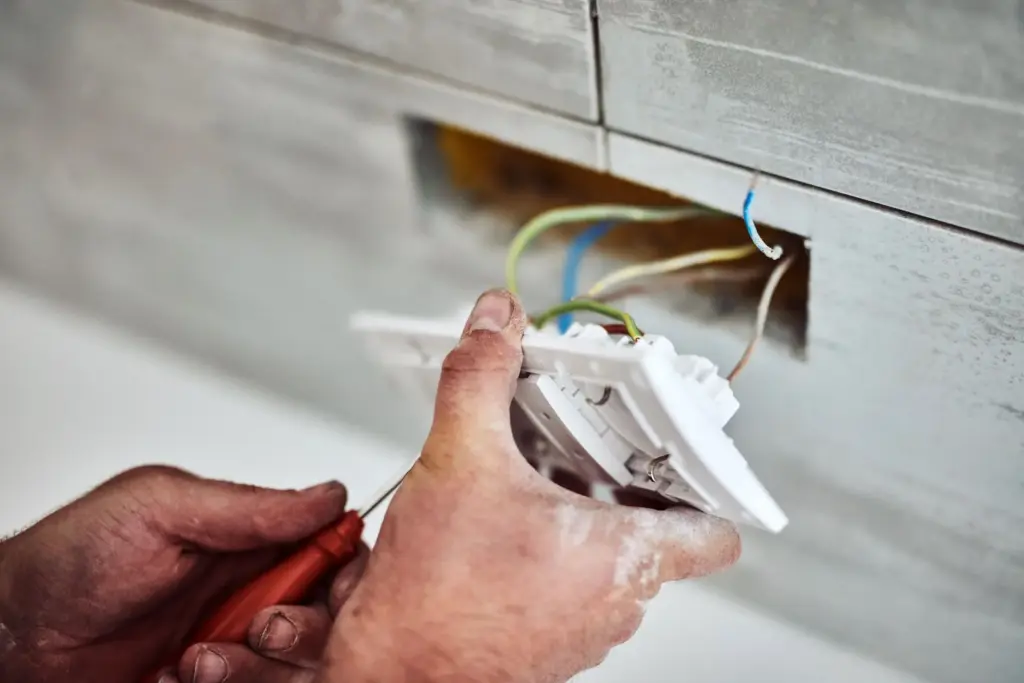
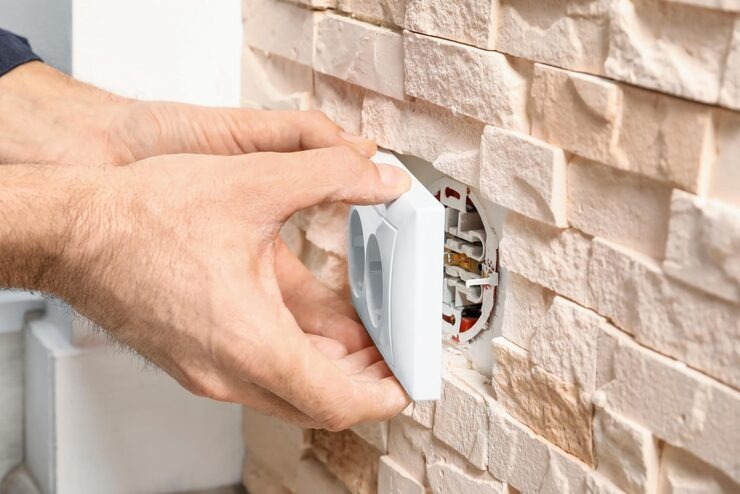
If the panel has the capacity, the job is a dedicated circuit: new breaker, appropriately sized copper conductor (commonly 6 AWG or 8 AWG depending on amperage and run length), a hardwired connection or a NEMA 14-50 outlet depending on the charger you’ve bought, and a disconnect if code or the manufacturer requires one at that distance from the panel. Power to your house typically only needs to be shut off for the final connection at the panel, usually well under an hour, not for the whole job.
If the panel doesn’t have capacity, the scope grows to a panel upgrade or a full service upgrade, which is a different project with the utility involved on their end for the service drop or meter work. We tell you which situation you’re in before any wire gets pulled, not after.
What It Costs
A straightforward dedicated circuit for a Level 2 charger, with an existing panel that has room, generally runs in the {PRICE_LOW} to {PRICE_HIGH} range. What moves that number: distance from the panel to the charger location, whether the run goes through finished walls or an open basement, whether it’s an indoor garage or a detached barn requiring trenching and conduit, and whether the panel needs any upgrade work first. A property with an older 100 amp service and a full panel is a different estimate than a house with a modern 200 amp panel and open capacity. We give you the real number after the load calculation, not before.
How Long It Takes
A standard dedicated circuit install, panel to garage, typically takes half a day to a full day depending on wire run length and whether we’re going through finished space or open framing. Detached garage and barn runs with trenching add time for the outdoor work. If a panel upgrade is part of the job, plan on a separate day for that, plus scheduling around the utility if the service itself needs to change.
Permits and Inspection
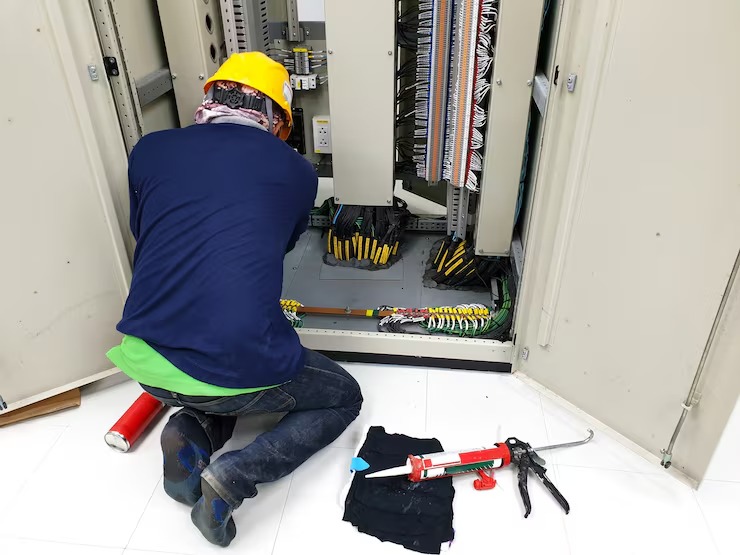
EV charger circuits are electrical work under the Massachusetts electrical code, and they get permitted and inspected like any other new circuit. Brandon pulls the permit, the town inspector signs off on the finished work, and you get a record that the installation meets code. That matters for insurance, for resale, and honestly for safety given the amperage and duration these circuits run. Unlicensed EV charger installs are common enough that it’s worth asking directly whether the person doing your work is pulling a permit. [EXTERNAL LINK: Massachusetts Board of State Examiners of Electricians, for licensing verification and state electrical code requirements]
Common Questions
Do I need a permit for an EV charger installation in Topsfield?
Yes. Installing a dedicated EV charger circuit is electrical work under Massachusetts code and requires a permit and inspection. Brandon handles the permit and schedules the town inspection as part of the job.
Will an EV charger overload my panel?
It can, if the panel is already near capacity. That's why the first step is always a load calculation, not a quote. Older 100 amp services and full panels are the most likely to need an upgrade before a charger circuit is added.
What amperage charger do I need?
Most Level 2 home chargers run 32 to 48 amps continuous on a 240 volt circuit. The exact number depends on the charger you buy and your vehicle's onboard charging rate, and it directly affects the wire gauge and breaker size we install.
Can you run a circuit to a detached garage or barn?
Does my power get shut off during the installation?
Reach Out for EV Charger Installation
If you’re in Topsfield and looking at a Level 2 charger for a Tesla, Rivian, Ford, or any other EV, call {PHONE} and we’ll get a look at your panel scheduled. We work across Topsfield and the rest of the North Shore, and we’re a Salem-based company that shows up, checks the actual capacity of your electrical service, and gives you a straight answer before any work starts.
Contact information
Talk to Brandon
Brandon is the electrician on the Belfiore side of the business, and he’s the one who’ll look at your panel, run the load calculation, and tell you straight whether your existing service can take a charger or needs work first. He’s licensed, he pulls permits, and he’d rather tell you upfront that a panel upgrade is part of the job than surprise you with it halfway through.