
EV Charger Installation in Salisbury, MA
Most houses off Beach Road and around the Salisbury town center were built for baseboard heat, a stove, and not much else. A lot of that housing got its electrical service sized decades before anyone parked a car in the driveway that needed 40 amps overnight. Now you’re pricing a Level 2 charger for a Tesla, an ID.4, or an F-150 Lightning, and the panel you have was never built with that load in mind.
Why Salisbury Homes Need This
Salisbury is a mix of older beach cottages, ranch-style homes from the 60s and 70s, and newer construction closer to the highway. The older stock is where the problems show up. A lot of it still runs on 100-amp service, and some of the beach-area cottages haven’t been touched since they were converted from seasonal to year-round use. That means aluminum branch wiring in some cases, undersized panels, and breaker boxes that are already full before you add a 240-volt EV circuit.
We still run into Federal Pacific panels in this town, and those need to be flagged regardless of what else is going on, because they’re a known fire risk and most licensed electricians won’t add a circuit to one without addressing the panel first. Zinsco panels turn up less often here but they carry the same concern. If your house still has knob and tube in any part of the original wiring, that’s a separate conversation from the charger, but it needs to happen before or alongside it.
The honest answer for a lot of Salisbury homes is that the charger install starts with a service capacity question, not a charger question. Can your panel take a 40 or 50 amp two-pole breaker and still have room, or does the service need to go to 150 or 200 amps first. Brandon will tell you which situation you’re in before any conduit gets run.
What the Work Involves
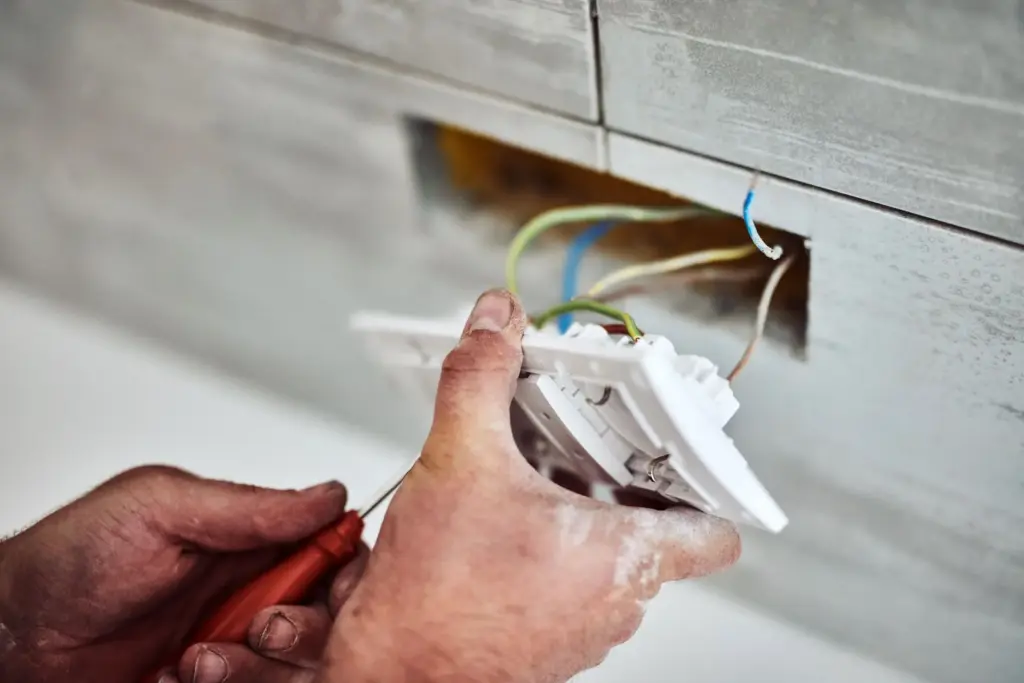
The first step is a load calculation. This isn’t a guess, it’s a required part of doing the job to code. Brandon adds up your existing loads, heating, water heater, range, dryer, and figures out what headroom is left on your service. If the math works, the charger circuit gets added directly. If it doesn’t, the conversation shifts to a panel upgrade before we can safely proceed.
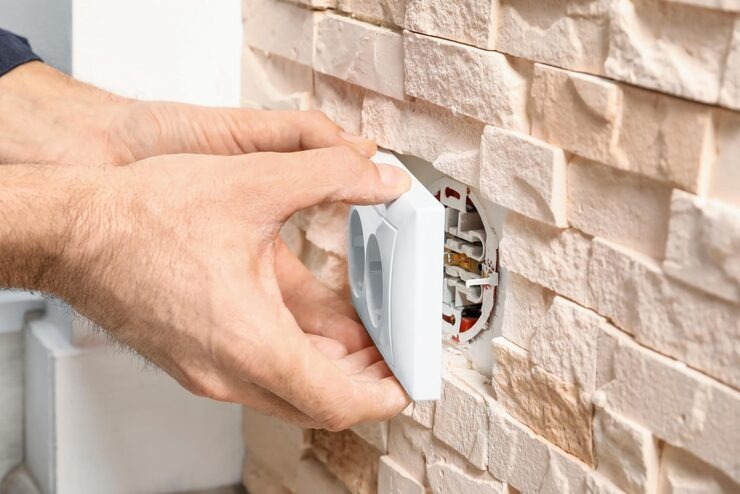
Assuming the panel has room, the job itself is a dedicated 240-volt circuit run from the panel to wherever the charger mounts, garage wall, exterior wall near the driveway, or carport post. Wire gauge depends on the breaker size, typically 6 AWG copper for a 50-amp circuit or 8 AWG for 40 amps, sized to the charger manufacturer’s spec. We install either a NEMA 14-50 outlet if you’re supplying your own portable unit or a hardwired connection if the charger calls for it.
The power to your house does need to come off during the panel connection. On a straightforward job that’s usually under an hour, done at a point in the day that doesn’t leave you without power overnight. If the service itself needs upgrading, National Grid or your utility has to schedule the service drop work on their end, and that timeline is theirs to set, not ours. Everything downstream of the meter, the panel, the breaker, the wire run, the charger mount, is our scope.
What It Costs
A dedicated circuit for an EV charger in Salisbury, on a panel with available capacity, generally runs {PRICE_LOW} to {PRICE_HIGH}. What moves that number: distance from the panel to the charger location, whether we’re going through finished walls or an accessible basement and garage ceiling, whether the charger is hardwired or plugs into an outlet, and whether trenching is needed for a detached garage.
If the load calculation comes back short and you need a service upgrade first, that’s priced separately and depends on whether you’re going from 100 to 150 amps or up to 200. Brandon will give you both numbers up front, the circuit alone and the upgrade if it’s needed, so you’re not surprised partway through the job.
How Long It Takes
A straight-forward dedicated circuit install, panel has room, garage or driveway is close to the panel, usually takes half a day. Longer runs, finished wall repairs, or hardwired chargers with manufacturer-specific mounting can push that to a full day.
If a service upgrade is part of the job, add the utility’s scheduling window on top of our install time. That part is out of our hands once we submit the request, but we’ll tell you what to expect based on what we’re seeing from the utility right now.
Permits and Inspection
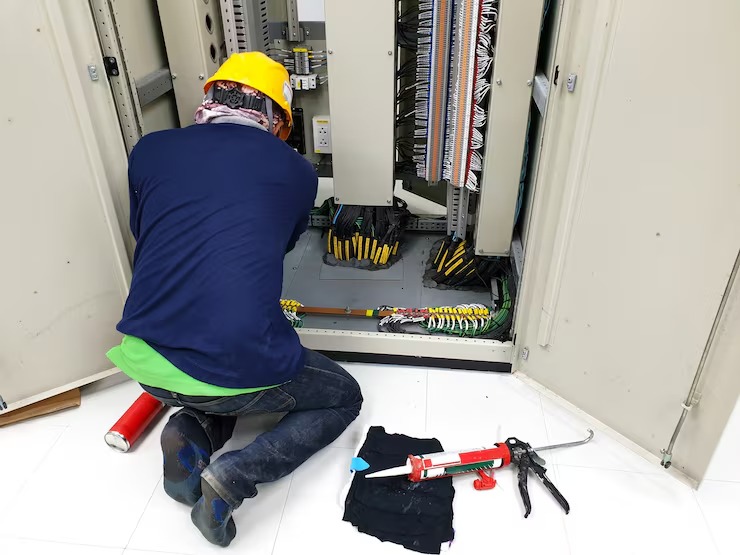
This work gets permitted. Massachusetts requires an electrical permit for a new circuit like this, and the local inspector signs off on it once it’s done. That inspection checks the breaker sizing, the wire gauge, the grounding, and the charger’s mounting and clearance. It’s a short visit, but it’s the difference between a job a licensed electrician stands behind and one that a homeowner finds out about the hard way when they try to sell the house.
Brandon pulls the permit as part of the job. You don’t have to chase it down or deal with the town yourself. For the code basis behind panel and circuit sizing, the [EXTERNAL LINK: Massachusetts amendments to the National Electrical Code, published by the state Board of State Examiners of Electricians, for homeowners who want to see the underlying requirement] lay out what inspectors are checking against.
Common Questions
Can my 100-amp panel handle an EV charger circuit?
Sometimes. It depends on what else is running off that panel. Brandon runs a load calculation that adds up your existing heating, water heater, range, and dryer loads against what the 100-amp service can carry. If there's headroom, the circuit goes in directly. If not, the panel needs to be upgraded to 150 or 200 amps first.
Do I need a permit for a home EV charger in Salisbury?
Yes. This is treated as a new electrical circuit under Massachusetts code, which means it requires a permit and a final inspection by the local building department. Brandon pulls the permit as part of the job.
What size breaker does a Level 2 charger need?
Most residential Level 2 chargers call for a 40 or 50 amp two-pole breaker, wired with 8 or 6 AWG copper respectively. The exact size depends on the charger manufacturer's continuous load rating, which Brandon checks against your specific unit before running the circuit.
How long will my power be off during the install?
What if my house still has an old Federal Pacific panel?
Reach Out for EV Charger Installation
If you’re in Salisbury and thinking about a home charger, whether you already bought it or you’re still deciding between brands, call {PHONE}. We’ll walk through what your panel can support and give you a straight answer before any work is scheduled.
Contact information
Talk to Brandon
Brandon is the licensed electrician on the Belfiore side of the business. He left union work to run electrical for his brother’s plumbing and heating company, so this is a two-brother operation, not a dispatch center. If you call about a Salisbury EV charger job, you’re talking to the person who will actually do the load calculation and pull the permit, not someone reading a script off a screen.
Tell him the charger brand and amperage you’re looking at, and roughly where the panel sits relative to where you park. That’s usually enough for him to tell you, before he’s even out to the house, whether you’re looking at a straightforward circuit or a panel conversation first.