
EV Charger Installation in Middleton, MA
Most of Middleton was built out on quarter-acre-and-up lots from the 1960s through the 1990s, with a run of newer colonials and capes on the roads off Route 62 and near Middleton Pond. Those houses came with 100 or 150 amp electrical services that were sized for a furnace, a dryer, and window units, not for a Level 2 charger pulling 40 to 50 amps for hours every night.
Now the same houses are adding heat pumps, finished basements with home theaters, and a car that plugs in every evening. The panel that was fine in 1985 is often the thing standing between you and a charger that actually works.
Why Middleton Homes Need This
Middleton’s housing stock is newer than Salem or Marblehead on average, but it’s not new. You still find 100 amp panels as the standard in split-levels and ranches built before the mid-1980s, and it’s common for those panels to already be carrying a well pump, central air, and an electric dryer with no spare capacity left for a 240-volt EV circuit. Some of the older farmhouse-era properties scattered near town center and out toward the Danvers line still have knob and tube segments in the walls or a 60 amp service that predates any of this. Those need more than a new circuit.
What makes Middleton a strong fit for this work is the lot size. Bigger lots mean detached garages, longer conduit runs to a garage sub-panel, and driveways where people actually want the charger mounted away from the house. It also means the same electrical work that supports a charger – a panel upgrade, a new 200 amp service – is exactly what a heat pump install or a finished basement project needs next. Homeowners here are doing all three within a couple of years of each other, which is worth planning around instead of paying for twice.
What the Work Involves
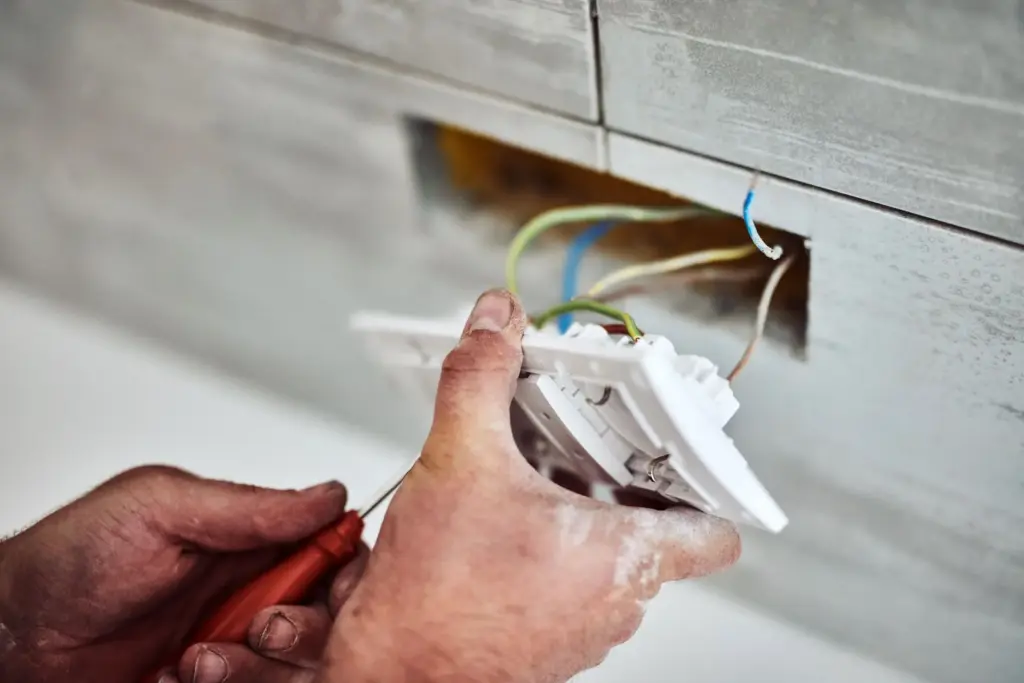
A straightforward install starts with load calculation. Brandon checks your panel’s rated capacity against what’s already connected – HVAC, water heater, kitchen circuits, any existing 240-volt loads – to confirm there’s room for a new 40 or 50 amp breaker without overloading the service. If there’s room, the job is a dedicated circuit: new breaker, correctly sized copper wire (typically 6 or 8 AWG depending on charger amperage and run length), conduit or cable run to the charger location, and a hardwired connection or NEMA 14-50 outlet depending on what the charger manufacturer specifies.
If the panel is already maxed out, at 100 amps with no spare slots, or one of the older Federal Pacific or Zinsco panels that don’t hold up well to inspection anyway, the job becomes a panel upgrade first. That’s a bigger project: the utility has to disconnect service at the meter, Brandon swaps the panel and re-terminates every circuit, and the utility reconnects once the new panel passes inspection. Power is out for the house during that window, usually a matter of hours, not days, and it gets scheduled around your day, not the utility’s convenience.
Either way, the electrician’s side covers everything from the meter inward. The utility owns the wire from the street to the meter and the reconnection itself.
What It Costs
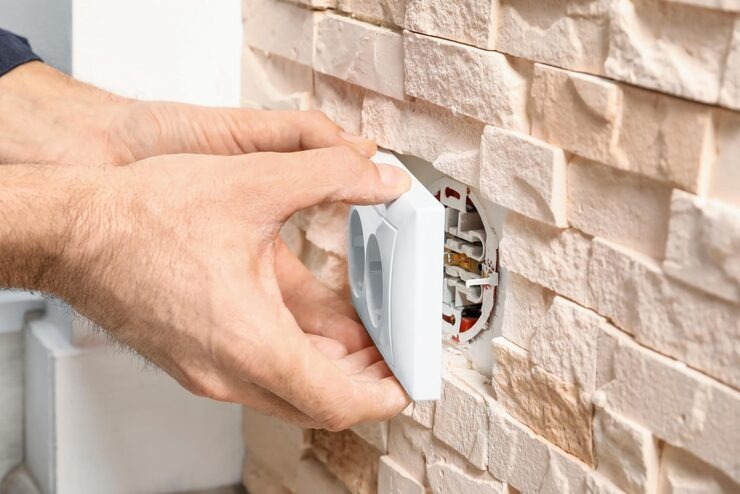
A dedicated 240-volt circuit for an EV charger, with an existing panel that has capacity, typically runs {PRICE_LOW} to {PRICE_HIGH}. What moves that number: distance from the panel to the charger location, whether the run is through finished walls or an open basement ceiling, whether you’re going hardwired or outlet-mounted, and the amperage of the charger itself.
If your panel doesn’t have room and needs a full upgrade before the circuit can go in, that’s a separate, larger cost on top of the circuit itself. Brandon will tell you upfront during the load calculation whether you’re looking at a circuit alone or a circuit plus a panel upgrade, and price each piece separately so you know what you’re paying for.
How Long It Takes
A dedicated circuit install with an existing panel that has room is usually a single day, start to finish, including a final walk-through of the breaker and charger connection. A panel upgrade adds time: the utility disconnect and reconnect has to be scheduled, and depending on their queue that can add a few days between the panel swap and full power restoration, though the actual work window itself is short. Middleton’s inspection department turnaround is generally quick, but permitted work always waits on that inspection before the charger goes live.
Permits and Inspection
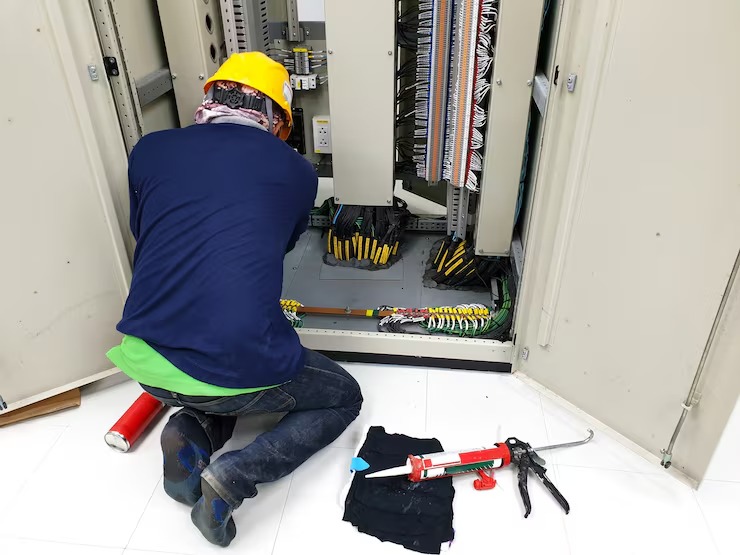
This work gets permitted and inspected. Massachusetts requires an electrical permit for new circuits and panel work, and the town’s inspector has to sign off before the installation is considered complete. That’s not paperwork for its own sake. A permit means a licensed electrician pulled the job, the wire gauge and breaker match the load, and someone other than the person doing the work checked it. A lot of EV charger installs get done by handymen or the homeowner off a YouTube video with no permit at all, which is how you end up with an undersized wire behind a wall or a breaker that trips every time the charger ramps up. Brandon pulls the permit as part of the job and schedules the inspection so you’re not the one chasing it down.
Common Questions
Do I need a panel upgrade for an EV charger in Middleton?
Only if your existing panel doesn't have spare capacity. Many Middleton homes built before the mid-1980s have 100 amp services that are already near capacity with HVAC, a dryer, and other 240-volt loads. Brandon checks this with a load calculation before recommending anything.
Which chargers does Belfiore install?
Any Level 2 charger that requires a dedicated 240-volt circuit, including Tesla Wall Connectors, ChargePoint, JuiceBox, and other NEMA 14-50 or hardwired units. The wire gauge and breaker size are matched to the specific charger's amperage rating.
Is a permit really required for a home EV charger?
Yes. Massachusetts requires an electrical permit for new circuits and any panel work, and the installation has to pass town inspection before it's considered complete. This is standard for licensed electrical work.
How do I know if my panel is a Federal Pacific or Zinsco?
Can the charger go on a detached garage?
Reach Out for EV Charger Installation
If you’re planning a Level 2 charger for a Tesla, a Rivian, an Ioniq, or anything else with a 240-volt requirement, call {PHONE} and describe your panel and where you want the charger mounted. Brandon can usually tell you over the phone whether it’s a straightforward circuit or a bigger job, and get you scheduled from there.
Contact information
Talk to Brandon
Brandon is the licensed electrician at Belfiore. He handles the load calculation, the panel work when it’s needed, and the charger install itself, and he’ll tell you straight whether your existing service can take a new circuit or whether the panel needs attention first. No guessing, no upsell you don’t need.