EV Charger Installation in Lynnfield, MA
Most of Lynnfield went up from the 1950s through the 1980s, on lots big enough for a two-car driveway and a detached garage. Those houses were wired for window units and a dryer, not for a Level 2 charger pulling 40 or 50 amps for six to eight hours a night. If you just bought a home here with an EV on order, or you’re staring at a 100 amp panel that’s already full, the wiring needs a real look before the charger goes on the wall.
Why Lynnfield Homes Need This
Lynnfield’s housing stock is newer than Salem or Marblehead, so you’re less likely to find knob and tube here. What you will find is a lot of 100 amp services, some 150 amp, installed at a time when central air, an electric dryer, and maybe a hot tub were the biggest draws on the panel. Add a Level 2 EV charger, a heat pump, and a finished basement with a home theater or office, and that 100 amp service is doing math it was never built for.
This is also a town where people finish basements and build additions more than they gut-renovate old knob and tube, so the panel itself is often the bottleneck, not the branch wiring. Brandon sees the same pattern on most Lynnfield service calls: solid house, tight panel. The lots are big enough that garage and driveway chargers are common, which means longer conduit runs from the panel than you’d see on a tighter urban lot – that’s a real line item, not a guess.
What the Work Involves
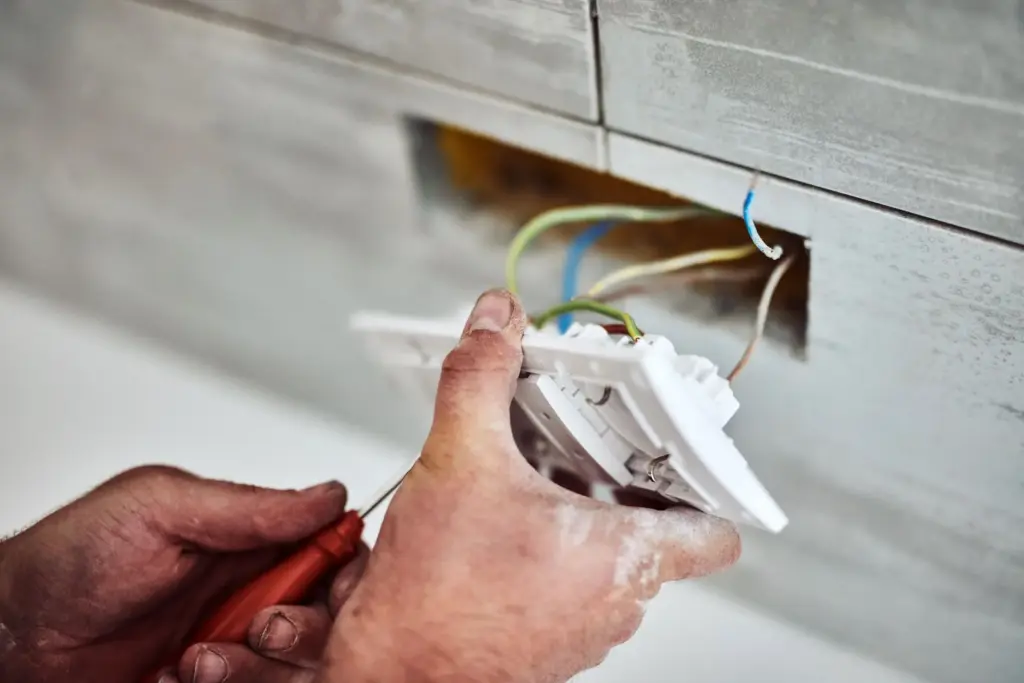
A typical Level 2 install starts with a load calculation. Brandon adds up what your panel already carries – AC, dryer, range, water heater if it’s electric – and checks what’s left before the charger circuit gets added. If there’s room, the job is a dedicated 240-volt circuit run on 6 or 8 gauge copper, landed on a 50 or 60 amp breaker depending on the charger’s rating, terminating at a NEMA 14-50 outlet or hardwired connection depending on what your charger manufacturer specifies.
If there isn’t room, the conversation changes to a panel upgrade, which is a bigger job we cover on its own page. Either way, the power to your house gets shut off for the portion of the work that’s inside the panel, usually under an hour. Anything upstream of your meter – the transformer, the drop, the meter itself – belongs to the utility, and Brandon coordinates that piece if a service upgrade is part of the job. He doesn’t touch utility-side equipment; that’s their jurisdiction, not his.
What It Costs
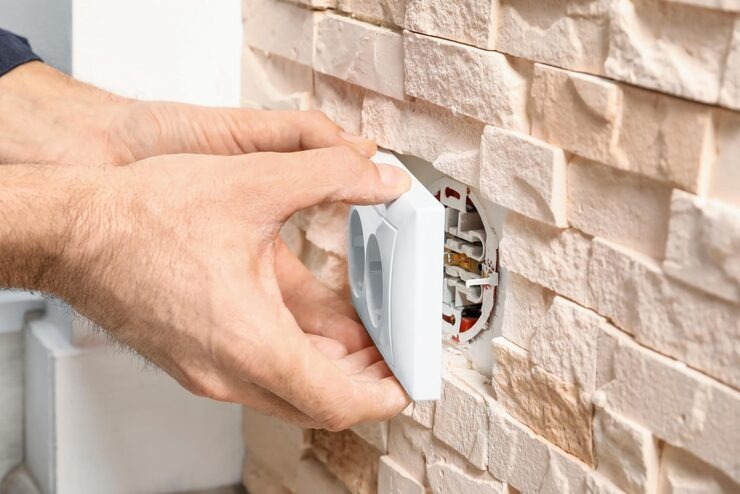
A straightforward dedicated circuit for an EV charger in a Lynnfield home, with a panel that has open capacity, runs {PRICE_LOW} to {PRICE_HIGH}. What moves that number: distance from the panel to where the charger mounts, whether we’re running conduit outdoors along a garage wall or through a finished basement ceiling, and whether the charger itself needs to be hardwired or just plugged into an outlet. If the load calculation shows the panel’s maxed out, a service upgrade adds to the estimate, and Brandon will walk you through that separately before any work starts.
How Long It Takes
Most straightforward installs are a one-day job. If Brandon’s running new conduit across a garage or through a basement, plan for a full day of work start to finish, with the actual power interruption limited to the time he’s inside the panel. Jobs that need a panel or service upgrade run longer, partly because of utility scheduling on their end, which is outside our control.
Permits and Inspection
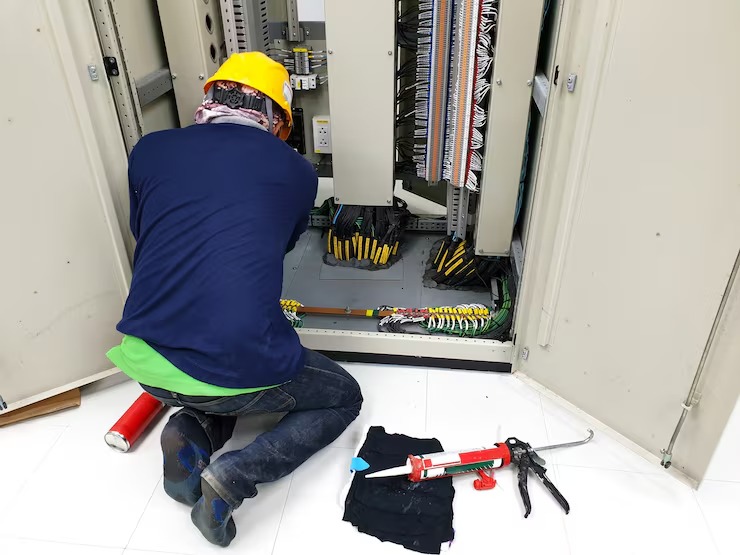
This work gets permitted through the Town of Lynnfield and inspected by the state-licensed electrical inspector before it’s signed off. That’s true for a dedicated EV circuit the same as it is for a panel swap. It’s a step some unlicensed installers skip, which is exactly why it matters – a permit and inspection means someone besides the person who did the work checked it. Massachusetts electrical code (527 CMR) sets the rules for wire sizing, breaker ratings, and disconnect requirements that the inspector is checking against. [EXTERNAL LINK: Massachusetts 527 CMR electrical code, to show the code basis for wire and breaker sizing]
Common Questions
Do I need a panel upgrade to add an EV charger in Lynnfield?
Not always. It depends on what your panel already carries. A 200 amp panel with moderate existing load usually has room for a dedicated EV circuit. A 100 amp panel with central AC, an electric dryer, and an electric range is often already close to capacity, and adding a 40-50 amp charger circuit can push it over. Brandon runs a load calculation before quoting so you know which situation you're in.
Can I use a regular outlet instead of hardwiring the charger?
Some chargers plug into a NEMA 14-50 outlet, which is common and makes future changes easier. Others require a hardwired connection per the manufacturer's instructions. Check your charger's installation manual, or bring it to Brandon and he'll confirm which your unit needs.
How much amperage does a Level 2 charger actually need?
Most residential Level 2 chargers are rated for 32 to 48 amps continuous, which typically means a 40 to 60 amp dedicated circuit once you apply the 80% continuous load rule from the electrical code. The exact number depends on the charger model, which is why we ask for the spec sheet up front.
Is a permit really required for a home EV charger install?
What if my house still has a 100 amp service?
Reach Out for EV Charger Installation
If you’ve got a charger on order or already in the garage waiting to be mounted, call {PHONE} and Brandon will get a look at your panel scheduled. Bring the charger’s spec sheet if you have it – amperage and voltage requirements vary by brand and that’s the first thing he’ll ask about.
Contact information
Talk to Brandon
Brandon’s the licensed electrician side of Belfiore. He left union work to run electrical for the family business, and EV circuits are a big part of what he does across the North Shore right now, Lynnfield included. He’ll tell you straight whether your panel has room or whether you’re looking at an upgrade first, no guessing.