
EV Charger Installation in Hamilton, MA
A lot of Hamilton was built for horses, not chargers. Estate lots with long gravel driveways, farmhouses with additions stacked on additions, and electric services that were sized decades before anyone thought about plugging a car into the garage. If you’re looking at a new EV and wondering whether the panel in your basement or barn can take it, that’s the right question to be asking first.
Why Hamilton Homes Need This
Hamilton is low density with big lots, and that shapes the electrical work here in a specific way. Long driveways mean the charger install often isn’t just a circuit to the garage wall, it’s a run out to a detached barn or carriage house that was wired for lights and a chest freezer, nothing more.
A meaningful share of homes here are on well and septic, which means a well pump already pulling real amperage off the panel, sometimes on its own dedicated circuit, sometimes not. Add a generator transfer switch, which this town leans on harder than most because outages at the end of a rural line tend to run longer, and you’ve got a panel that’s already working before the car ever enters the picture.
Then there’s the age of the housing stock. Older Hamilton properties can still have knob and tube wiring in sections that were never updated, cloth-insulated cable from a mid-century renovation, or a 60 amp service that was adequate in 1975 and isn’t anymore. Some of the estate properties never got upgraded past a Federal Pacific panel, which is a known safety issue on its own before you even add a 40 amp EV circuit to it. None of this rules out a charger install. It just means the panel gets checked first, honestly, not assumed.
What the Work Involves
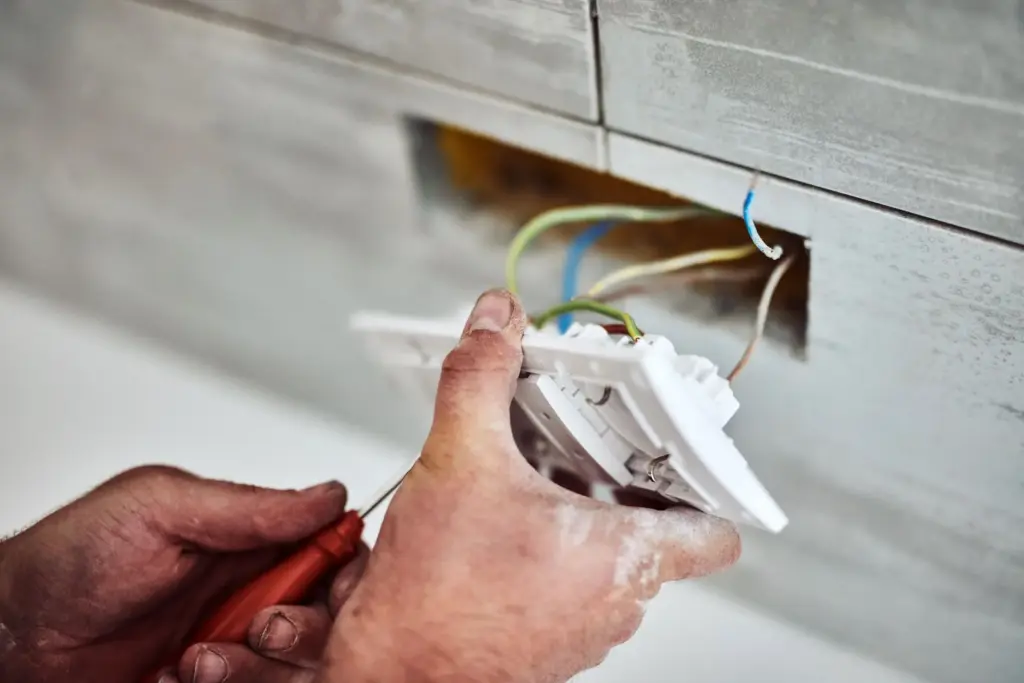
Brandon starts with a load calculation, which is the electrician’s version of doing the math before cutting anything open. That means adding up what the panel is already carrying, well pump, HVAC, generator interlock, hot tub if there is one, and seeing what headroom is left for a 240 volt EV circuit.
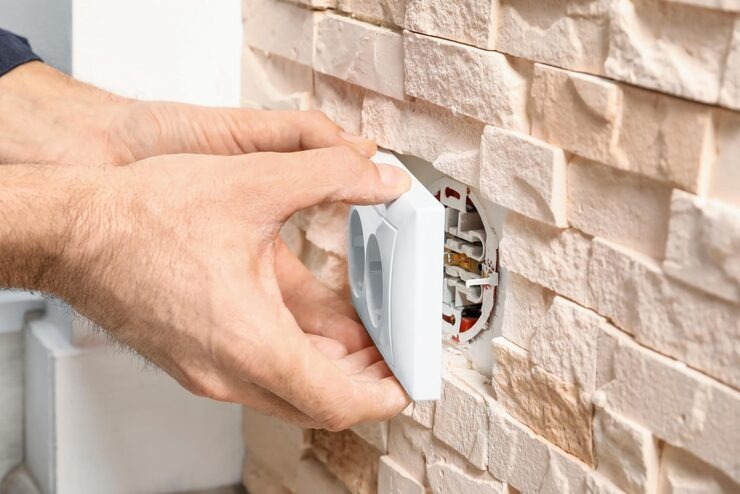
If there’s room, the job is a dedicated circuit run from the panel to the charger location, sized to the charger’s amperage draw, typically 40 or 50 amp for a Level 2 unit, on 6 or 8 gauge copper depending on the run length and voltage drop. The breaker gets installed, the wire gets pulled through conduit or fished through finished walls, and the charger gets hardwired or set up on a NEMA 14-50 receptacle depending on what you bought.
If there isn’t room, or the panel is outdated hardware, the panel gets addressed first. That might mean a straightforward upgrade to a 200 amp service, or in the case of some of the older estate properties, a full rewire of sections still running old cloth or knob and tube. The utility, National Grid in most of Hamilton, handles the service drop and meter if the amperage is increasing. Brandon handles everything on your side of the meter: the panel, the wiring, the breaker, and the final connection to the charger.
What It Costs
A straightforward dedicated circuit to a garage that’s close to the panel, with no panel work needed, runs toward the lower end of things. A run out to a detached barn, a panel upgrade, or rewiring older cable to get there safely pushes it higher. Realistic range for Hamilton jobs is {PRICE_LOW} to {PRICE_HIGH}, and the driveway distance and panel condition are what move the number, not the charger brand.
Brandon quotes it after seeing the panel and the run, not over the phone. That’s the only way to give you a number that holds once the walls are open.
How Long It Takes
A dedicated circuit install with an existing panel that has capacity is usually a one-day job, start to finish, including the permit paperwork already filed. Power to the house is off for less than an hour, just long enough to work inside the panel safely.
If a panel upgrade is part of the scope, plan on the power being out for most of that day while the utility coordinates the meter swap with Brandon’s work on the panel itself. A full rewire on an older Hamilton property, where knob and tube or cloth wiring needs replacing in sections, is a multi-day job and gets scheduled out accordingly.
Permits and Inspection
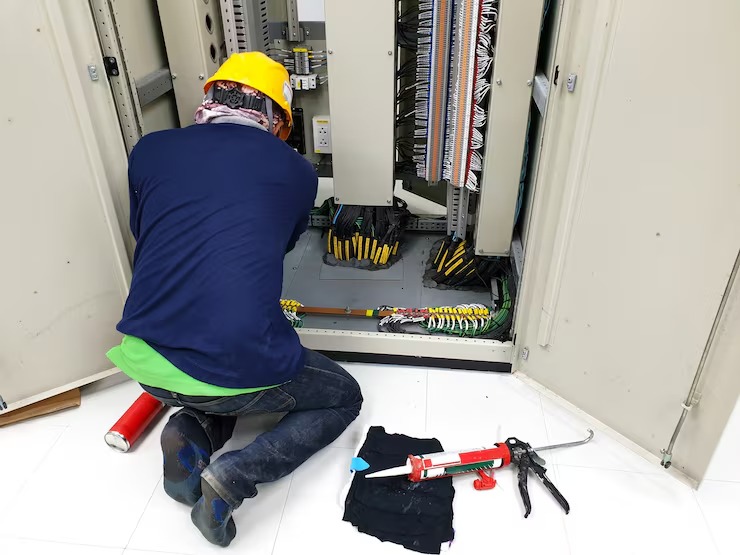
Any new 240 volt circuit and any panel work requires an electrical permit in Massachusetts, and the finished work gets inspected before it’s signed off. This isn’t optional paperwork, it’s the difference between work that’s actually been checked by someone other than the person who did it, and work that hasn’t. Belfiore pulls the permit and schedules the inspection as part of the job, so you’re not the one tracking down the town’s electrical inspector. [EXTERNAL LINK: Massachusetts Electrical Code (527 CMR 12.00) reference from Mass.gov, for homeowners who want to see the code language directly]
Common Questions
Can Hamilton's electric service handle a Level 2 charger on top of everything else?
Depends on the panel. A lot of Hamilton's older farmhouses and estate properties were built with 100 amp services, sometimes less, back before central air, hot tubs, and well pumps were all running off the same panel. Brandon runs a load calculation before quoting anything. If the math doesn't work, a panel upgrade comes first.
Do I need a permit for a home EV charger in Massachusetts?
Yes. Any new dedicated circuit and any charger hardwired or on a 240 volt receptacle needs an electrical permit and an inspection under Massachusetts electrical code. Belfiore pulls the permit and schedules the inspection as part of the job.
What amperage charger should I install?
Most homeowners land on a 40 or 50 amp circuit for a Level 2 charger, which covers a 32 or 40 amp continuous draw. If you're planning on a second EV down the road, it's worth sizing the panel and conduit for two circuits now instead of opening the wall twice.
Will I lose power to the house during the install?
Can Brandon install a charger for any brand?
Reach Out for EV Charger Installation
If you’ve got an EV coming or already sitting in the driveway with nowhere real to plug it in, call {PHONE}. Tell us the charger brand if you’ve picked one, roughly how far the run is from your panel, and whether you’re on a well. Brandon will get you a straight answer on what the job actually involves.
Contact information
Talk to Brandon
Brandon is the electrician side of Belfiore. He left union work to run electrical for the family business, and Hamilton’s mix of old farmhouse wiring and new estate construction is exactly the kind of job that needs someone who’s actually opened up both. He’ll look at your panel, run the numbers, and tell you straight whether you need a circuit, a panel upgrade, or a rewire before either one.