EV Charger Installation in Danvers, MA
A lot of Danvers houses were wired for a stove, a water heater, and maybe a window unit. They were not wired for a car. If you just bought an EV, or one is on order, the question is not whether your house can handle a charger. It is whether your panel has the room, and whether your service is big enough to add a 40 or 50 amp circuit without tripping something else in the house.
Why Danvers Homes Need This
Danvers has a good mix of older single-families and converted two-families, plus newer construction from the 80s and 90s scattered through the newer subdivisions. The older stock is the issue. A house built before the 1960s was commonly wired for a 60 amp service, sometimes 100 amp if it was updated once along the way. Neither was sized with a car charger in mind.
We still run into cloth-insulated wiring and knob and tube in some of the older sections of town, usually left over in a section of the house that was never fully rewired. We also see Federal Pacific and Zinsco panels, both known for breakers that don’t trip reliably under fault conditions. Any of these three things – undersized service, old wiring in the run, or an outdated panel brand – changes the plan for a charger install. Sometimes it means a panel upgrade has to happen first. Sometimes it just means we run the new circuit and leave the rest alone. Brandon checks the panel and the service size before quoting anything, because guessing on this leads to a callback.
What the Work Involves
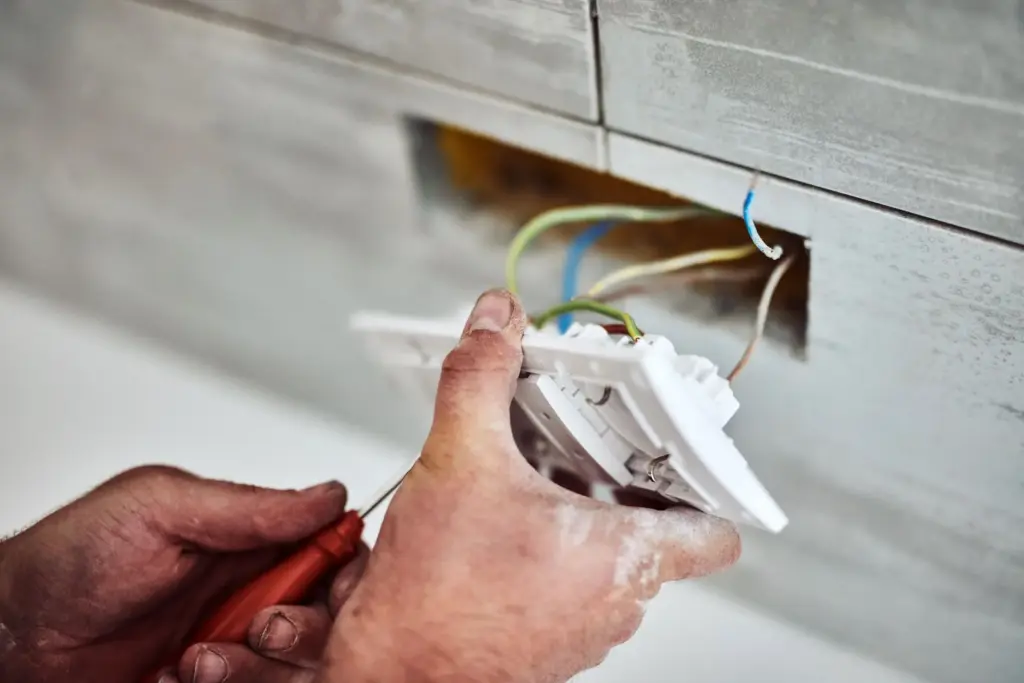
Most installs are a dedicated 240 volt circuit run from your panel to a wall-mounted charger in the garage or driveway. The breaker size depends on the charger – a lot of Level 2 units call for a 40 or 50 amp circuit on 6 or 8 gauge copper, but we size the wire to the actual amperage of the unit you’re installing, not a guess.
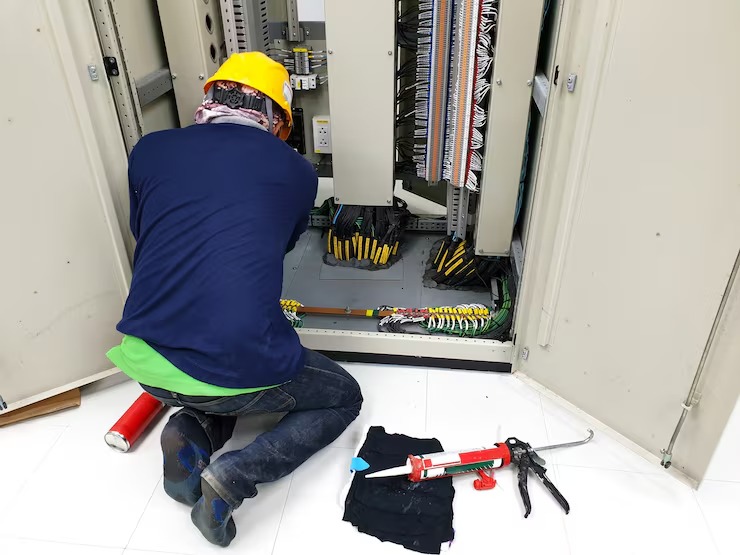
The power to your house needs to be shut off for the portion of the work that happens inside the panel. That’s usually under an hour, not an all-day outage. If your service needs an upgrade to support the new load – moving from 100 amp to 200 amp, for example – that’s separate work, and the utility has to schedule their part of it, which is outside our control on timing. For a straight circuit and charger install with no service changes, we’re usually done in one visit.
We also check your grounding and bonding while we’re in the panel. A lot of older Danvers homes have grounding that predates current code, and if we’re opening up the panel anyway, it gets fixed as part of the job instead of getting flagged later.
What It Costs
A straightforward EV charger circuit, panel has room, no service upgrade needed, typically runs {PRICE_LOW} to {PRICE_HIGH}. What moves that number: the distance from your panel to where the charger mounts, whether we’re running wire through finished walls or an open basement, and whether your panel has an open breaker slot or needs a subpanel or tandem breakers to make room. If your service needs to go from 100 amp to 200 amp to support the charger plus everything else running in the house, that’s a bigger job priced on its own, and Brandon will walk you through why before any work starts.
How Long It Takes
A single-visit charger install, panel already has capacity, is usually a few hours of work. Add a load calculation and you might need a short second visit if something in the panel needs attention first. If a full service upgrade is part of the picture, expect the utility’s scheduling to be the longer pole in the tent – their crew has to coordinate the service drop or meter work, and that timeline isn’t set by us.
Permits and Inspection
This work gets a permit and an inspection in Massachusetts, full stop. A new circuit at this amperage, and any panel or service work, has to be signed off by the local inspector before it’s considered done. We pull the permit, and we’re there for the inspection. If someone offers to install a charger with no permit, that’s the tell that they’re not licensed to be doing it in the first place. [EXTERNAL LINK: Massachusetts Board of State Examiners of Electricians – licensing and permit requirements, useful for homeowners checking who’s allowed to do this work]
Common Questions
Can my 100 amp service handle an EV charger?
Often yes, but it depends on what else is running on that service – electric heat, a range, a water heater. Brandon does a load calculation to check before recommending anything. Some 100 amp homes handle a charger fine. Others need an upgrade first.
Do I need a permit for a home EV charger in Massachusetts?
Yes. Any new circuit at this amperage, plus any panel work, requires a permit and a licensed electrician's sign-off, then an inspection. This isn't optional and it protects you if there's ever an insurance question down the line.
Does the charger brand matter for the installation?
It matters for sizing the circuit correctly – a 32 amp unit and a 48 amp unit need different wire gauge and breaker size. Tell Brandon the brand and model you're considering and he'll size the install to match it, not a generic estimate.
What if my panel is a Federal Pacific or Zinsco brand?
How much does the power go out during installation?
Reach Out for EV Charger Installation
If you’re in Danvers and thinking about a home charger, call {PHONE}. We’ll ask a few questions about your panel and your car, and go from there. No pressure to upgrade anything that doesn’t need it.
Contact information
Talk to Brandon
Brandon is the electrician here, and he’s the one who looks at your panel before anything gets quoted. If you already know the charger brand and amperage you want, tell him that up front and he’ll size the circuit and check whether your service can support it as-is. If you’re still deciding between chargers, he can talk through the tradeoffs between a 32 amp and a 48 amp unit based on how you actually drive.