
Ceiling Fan and Light Fixture Installation in Swampscott, MA
A lot of Swampscott’s housing stock went up before central air was ever a thought, which means bedrooms and porches were built to be cooled by cross breeze and not much else. Now those same rooms are getting ceiling fans, pendant lights, and outdoor fixtures on porches that were wired decades before anyone thought to put a switched outlet out there. The box on the ceiling, if there’s a box at all, usually was not built to carry a fan.
Why Swampscott Homes Need This
Chris has said it plainly: Swampscott has some of the highest ticket tolerance in our footprint, and it’s an easy call to explain why. These are desirable coastal properties, a lot of them pre-war, some going back to the 1800s along the older streets near the water. Salt air is hard on anything mounted outside, so exterior fixtures corrode faster here than they do a few miles inland, and that means outdoor ceiling fans on porches and three-season rooms need weather-rated boxes and damp or wet-location fixtures, not the fixture that came off a shelf marked for indoor use.
Inside the house, the wiring itself is often the real issue. We still find knob-and-tube in ceiling runs, cloth-insulated conductors that have gone brittle, and 60 amp services that were adequate in 1955 and are not adequate now that a house has central air, an electric range, and a couple of window units running in July. A plain ceiling box with no fan-rated bracket, tucked onto old wiring, is not something you hang a 50-pound fan from and walk away. Add tight lots and narrow driveways in the older sections of town, and getting a lift or extra equipment to a job can take more planning than it would in a newer subdivision. Coastal power outages are common enough on the North Shore that a fair number of Swampscott homeowners are also asking us about standby generators in the same conversation as fan and fixture work, since both come back to the same panel and the same question of what that panel can actually support.
What the Work Involves
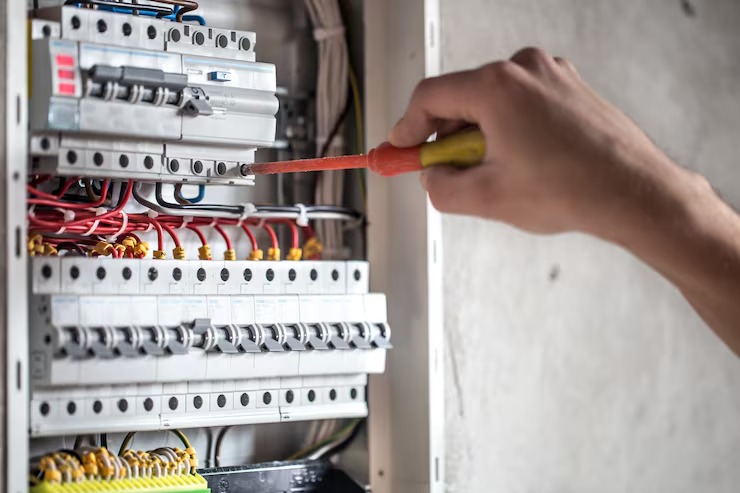
For most fan and fixture jobs, we shut off the circuit at the panel, not the whole house, so you keep power everywhere else while we work. If the existing ceiling box isn’t fan-rated, we swap it for one that is, since a standard light box isn’t built to carry the weight and wobble of a running fan. That usually means getting into the attic or ceiling cavity to add proper bracing between joists.
Wire gauge and breaker size have to match what’s already feeding the circuit, and if we find aluminum wiring or old cloth insulation back there, that gets addressed as part of the job rather than ignored. For a straight swap on an existing fan-rated box, power is typically out on that circuit for an hour or two. If we’re running new cable, adding a switch loop, or dealing with knob-and-tube behind the wall, plan on a longer day. Anything involving new service capacity, like a subpanel or an upgraded service size, is coordinated with National Grid, since the utility handles the meter and service drop while Brandon handles everything from the meter panel inward.
What It Costs
A single ceiling fan swap onto an existing fan-rated box runs toward the lower end, typically {PRICE_LOW}. Add a new switch, a remote or wall control, or a fixture in a room with no existing box, and the price moves up. A full job with new wiring, a fan-rated box added where there wasn’t one, and an outdoor damp-rated fixture on a porch can run closer to {PRICE_HIGH}. What moves the number most is attic or ceiling access, how much of the existing wiring is usable versus needs replacing, and whether we’re adding a switch location that doesn’t currently exist. We’ll always look at the space and give you the actual range before anything gets opened up.
How Long It Takes
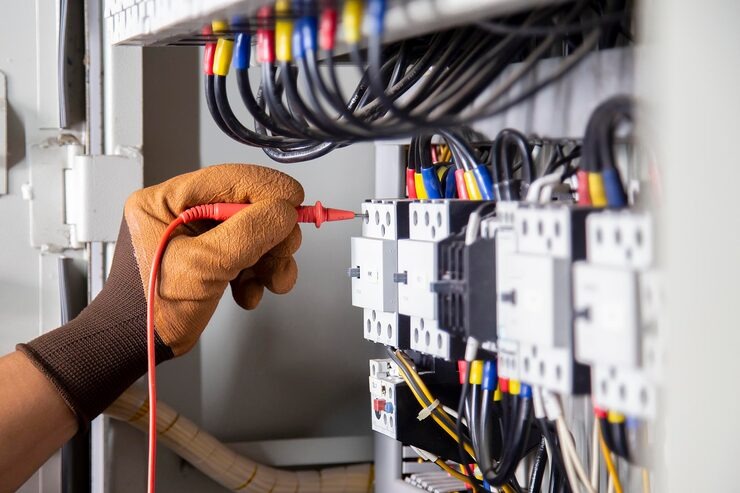
A single fan or fixture replacement on an existing box is usually a same-day job, often two to three hours including cleanup. Multiple fixtures, a new switch loop, or an outdoor installation on an older exterior wall can take the better part of a day. If knob-and-tube or aluminum wiring turns up in the run, we’ll tell you before we keep going, since that can add time and change the scope.
Permits and Inspection
Electrical work in Massachusetts, including ceiling fan and fixture installation that involves new wiring or box changes, is permitted work and gets inspected by the local building department. That’s not a formality we skip. A permit means a second set of eyes, a licensed inspector, confirms the work meets code before it’s closed up behind drywall. It’s also the clearest difference between a licensed electrician and a handyman working off a ladder with a fixture from the hardware store. Brandon pulls the permit, schedules the inspection, and handles the paperwork so you don’t have to think about it. [EXTERNAL LINK: Massachusetts Board of State Examiners of Electricians, for homeowners who want to verify licensing requirements and permit rules directly]
Common Questions
Can you hang a fan on my existing ceiling light box?
Only if that box is rated for a fan. Most older light boxes are not built to handle the weight and motion of a running fan, so we usually need to add a fan-rated box before we can hang anything on it. We'll check this before quoting the job.
Do I need a permit just to replace a light fixture?
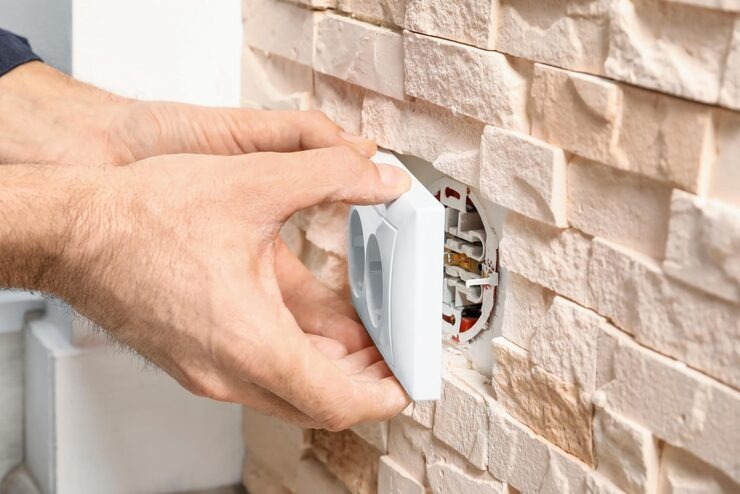
A straightforward swap of a fixture on an existing, code-compliant box often doesn't require a permit. Once new wiring, a new box, or a new switch location is involved, it does, and Massachusetts requires that work to be inspected. We'll tell you which category your job falls into.
My porch light is corroded and the switch feels loose. Is that a bigger problem?
It can be. Salt air corrodes exterior fixtures and their connections faster than people expect, and a loose switch can point to a failing connection behind the wall. Worth having Brandon look at it rather than just replacing the fixture and moving on.
Do you install outdoor ceiling fans on porches?
What if you open the ceiling and find knob-and-tube wiring?
Reach Out for Ceiling Fan and Light Fixture Installation
If you’ve got a fan you want hung, a porch light that needs an upgrade to something salt-air rated, or a room that’s never had a fixture at all, call {PHONE}. We work across Swampscott and can usually tell you over the phone what to expect before we’re on site.
Contact information
Reach Out for Ceiling Fan and Light Fixture Installation
Belfiore is a Salem-based company, plumbing and electrical, run by two brothers who are both licensed in their trade. We work across Swampscott and the rest of the North Shore, and a ceiling fan call is often the first time a homeowner here finds out what else is going on with their panel or their wiring.
Talk to Brandon
Brandon is the electrician on the Belfiore side and he's the one who'll look at your ceiling box, your panel, and your wiring before quoting anything. He left union work to run electrical for the family business, so fan and fixture calls in Swampscott get the same attention as a panel upgrade. If there's something going on behind that ceiling that changes the job, he'll tell you at the house, not after the fact.