
Ceiling Fan and Light Fixture Installation in Salisbury, MA
A lot of Salisbury houses were built for a window unit and a couple of lamps, not a ceiling fan pulling extra amps in a bedroom that used to have a single overhead bulb on a switch loop. When you go to add a fan or swap out an old flush-mount fixture, you find out fast whether the wiring in that room was ever meant to carry a load like that.
Why Salisbury Homes Need This
Salisbury sits at the top of the group with Newburyport and Salisbury, but the housing stock here runs more modest and more mixed. You’ve got beach cottages that were winterized decades ago, ranches from the 60s and 70s, and newer construction mixed in along the same street. That range matters when you’re talking about adding a ceiling fan or fixture.
We still find cloth-insulated wiring and the occasional knob-and-tube run in older Salisbury homes, especially ones close to the marsh and the older sections near the town center that predate a lot of the postwar building. Some of these houses are still sitting on a 60 amp service, which was fine when the house had a stove, a fridge, and not much else pulling power. Add central air, a couple of window AC units, and now a ceiling fan in every bedroom, and that panel starts to feel small. We also still come across Federal Pacific and Zinsco panels in this town, both of which have known breaker problems and get flagged the moment we open the panel cover for any kind of add-on work.
None of that means you can’t add a fan or a fixture. It means the first five minutes of the job is Brandon checking what’s feeding that room and whether the box up there was ever rated to hold weight, not just a light kit.
What the Work Involves
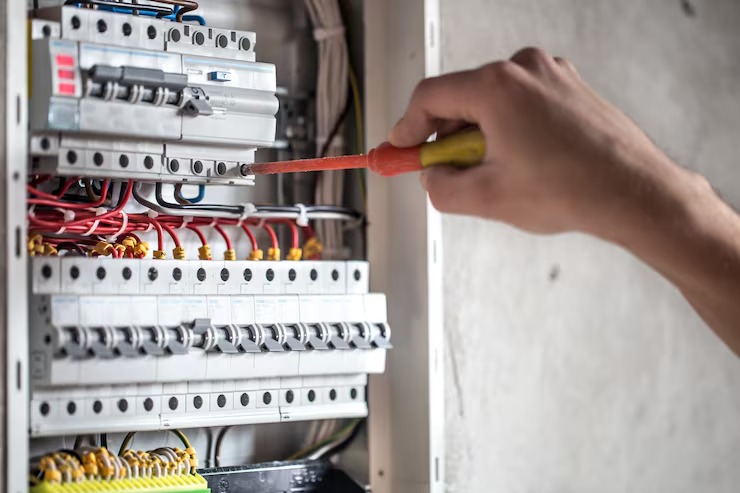
Before anything gets swapped out, we kill power to the circuit at the panel, not just the wall switch. That’s a safety step, not a formality. From there the job usually breaks down like this:
- Check the existing electrical box. A lot of older fixture boxes are rated for light fixtures only, not the added weight and vibration of a ceiling fan. If it’s not fan-rated, it gets swapped for one that is, braced to a joist or a fan-rated support bar.
- Confirm the wire gauge and circuit. Most fan and fixture circuits run on 14 gauge wire on a 15 amp breaker, which is fine for a fan and light combo. If you’re adding multiple fixtures to a circuit that’s already carrying a lot, we’ll talk about running a dedicated line instead.
- Install the fan bracket, wire the switch or remote setup, and mount the fixture. If you want separate control for the fan and the light, that sometimes means an extra switch leg or a smart remote kit instead of opening up more wall.
- Test everything under load, then close it up and check for any wobble or looseness before we call it done.
The power to that circuit is off for the duration of the swap itself, usually under an hour per fixture once the prep work is done. This isn’t utility-involved work in most cases. National Grid or Eversource only gets pulled in if the job also touches your service size or meter, which is a separate conversation from a fan or light swap.
What It Costs
A straightforward fan or fixture swap on an existing, fan-rated box runs in the range of {PRICE_LOW} to {PRICE_HIGH}. What moves that number: whether the existing box needs to be replaced or braced, whether you want a new switch leg for separate fan and light control, how accessible the attic or joist above the room is, and how many fixtures you’re doing in one visit. A single bedroom fan is a different job than five fixtures across a whole first floor, and we’ll always look at the actual box and wiring before giving you a number, not just a phone estimate.
How Long It Takes
One fan or fixture, on a box that just needs a swap, is typically done in one visit, often in an hour or two including cleanup. If the box needs to be replaced with a fan-rated one, or we’re adding a new switch leg for independent fan and light control, add time for that specific fixture, usually still same-day. Multiple fixtures in one visit just means we’re stacking that same process room to room.
Permits and Inspection
Electrical work in Massachusetts is permitted and inspected, and ceiling fan or fixture installation is no exception when it involves new wiring, a new switch leg, or a replaced box. Brandon pulls the permit, the town inspector signs off, and you get a paper trail showing the work was done to code. That matters at resale and it matters if anything ever goes wrong down the line and you need to show the work wasn’t done off the books. [EXTERNAL LINK: Massachusetts Board of State Examiners of Electricians, licensing and code reference for homeowners]
Common Questions
Can any electrical box hold a ceiling fan?
No. Standard light fixture boxes aren't rated for the weight and wobble of a running fan. If your box isn't fan-rated, we replace it or add a support brace before the fan goes up.
Do I need a permit just to install a ceiling fan?
If the box, wiring, or switch setup is being changed, yes, it falls under permitted electrical work in Massachusetts. A straight swap onto an already fan-rated box is more minor, but Brandon will tell you which category your job falls into.
My house still has knob-and-tube wiring. Can I add a ceiling fan?
Often yes, but that circuit usually needs to be updated first. We'll check what's feeding the room and talk through whether it makes sense to run new wire to that fixture.
Can I control the fan and light separately?
How many fixtures can you do in one visit?
Reach Out for Ceiling Fan and Light Fixture Installation
If you’re adding fans for the summer, replacing a dated fixture, or just want a second opinion on whether your Salisbury home’s wiring can handle what you’re planning, call {PHONE}. We’ll set a time to come look at the room, not just quote off a description.
Contact information
Reach Out for Ceiling Fan and Light Fixture Installation
Small jobs like this are often how we get to know a house. Once we’ve seen your panel and your wiring for a fan install, we can tell you honestly whether anything bigger needs attention, and there’s no pressure to act on it until you’re ready.
Talk to Brandon
Brandon is the electrician side of Belfiore. He's the one who'll look at your panel, tell you straight whether that old box can hold a fan or needs to come out, and give you the real number before anything gets touched. No guessing over the phone about what's behind your ceiling.