
Ceiling Fan and Light Fixture Installation in Hamilton, MA
A lot of Hamilton houses were built long before central air, ceiling fans, or a second light circuit in every room were part of the plan. Add a barn conversion, a horse property with a detached garage, or a farmhouse addition, and you end up with rooms that were never wired for the fixture load people want in them today. Belfiore installs ceiling fans and light fixtures across Hamilton with that history in mind, not against it.
Ceiling Fan and Light Fixture Installation in Hamilton
Whether it is a paddle fan over a screened porch, a chandelier in a dining room with 10-foot ceilings, or recessed lighting replacing a single dated fixture in a farmhouse kitchen, the job is the same at its core: get power to the right box, on the right circuit, supported the right way, and leave it inspected and safe. On Hamilton’s older and larger homes, that core job usually comes with a wrinkle – box height, joist spacing, or wiring that predates the fixture by decades.
Why Hamilton Homes Need This
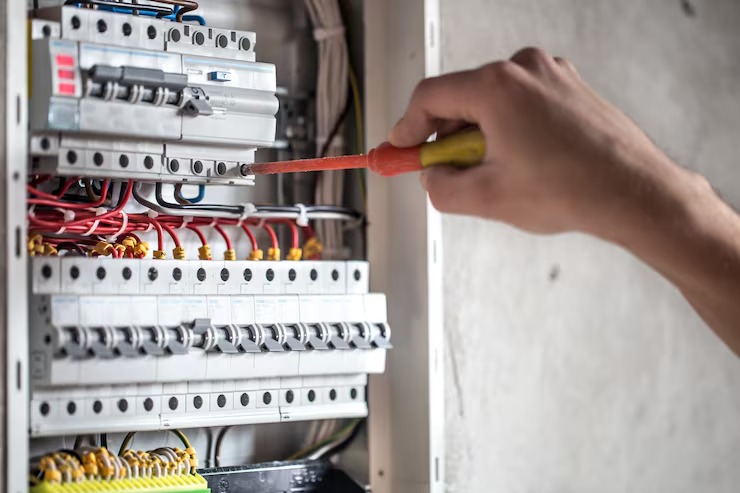
Hamilton is low density with large lots, long driveways, and a real share of properties still on well and septic. Houses out here tend to be older and bigger than the North Shore average, and a lot of them were originally wired for a fraction of the load they carry now. It is common on a service call to find cloth-insulated wiring in a farmhouse attic, a knob-and-tube run still feeding an upstairs bedroom, or a 60 amp panel trying to support a house that has since added central air, a well pump, and a couple of outbuildings. Federal Pacific and Zinsco panels also turn up here more than in newer subdivisions, and both are worth a real look before anything new gets tied into them.
Outages in Hamilton also tend to run longer than they do closer to Salem, because rural feeder lines take more time to restore after a storm. That is part of why generator interest is higher here than almost anywhere else we work – and why, when we are already in the attic or the panel running a new fixture circuit, it is worth asking what else the house’s electrical system needs to catch up to how the property is actually used.
What the Work Involves
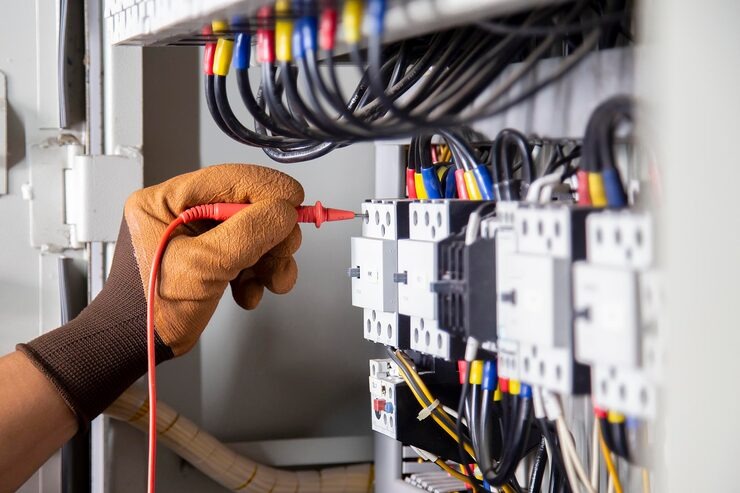
For a straightforward fan or fixture swap on an existing switched circuit, we shut off power at the breaker, confirm it is dead at the box with a meter, and swap the fixture or fan. If the existing box is not fan-rated, we replace it with one that is – ceiling fans need a box rated to support the motor’s weight and vibration, not just a light fixture pan.
New locations are a bigger job. That means running new cable from the panel or a nearby circuit, fishing it through finished walls and ceilings or an open attic if one is available, mounting a proper electrical box between joists (or adding blocking if there is nothing to mount to), and terminating everything at the switch and the panel. On a farmhouse with plaster walls or full dimensional lumber framing, fishing wire takes longer than it would in newer stick-built construction, and that shows up in the time on site, not in surprises after the fact.
Power to the work area is off only for the duration of the work on that circuit, typically a few hours. The rest of the house stays live. Anything involving the utility’s meter or service drop – as opposed to work inside the panel and downstream of it – is coordinated with the utility directly; that side is theirs, the wiring and fixtures are ours.
What It Costs
A single fan or fixture swap on an existing circuit, with a fan-rated box already in place, generally runs {PRICE_LOW} to {PRICE_HIGH}. Add a new circuit, fish wire through finished ceilings, or wire multiple fixtures on the same visit, and the number moves up from there. What actually drives the price is access – open basement or attic versus finished plaster ceilings – how far the new run has to travel from the panel, and whether the existing box needs to be replaced or upgraded to carry a fan. We give you a number before we start, not after.
How Long It Takes
A single fixture or fan replacement on an existing box and circuit is usually a same-visit job, done in two to three hours. A new location with a wire run through an open attic or basement typically takes half a day. Multiple rooms, finished-ceiling fishing, or a fixture that turns into a panel or wiring assessment once we’re inside the wall can run a full day. We tell you which category your job falls into before we start cutting anything open.

Common Questions
Can any electrician install a ceiling fan, or does it need to be licensed?
In Massachusetts, wiring work behind the wall or ceiling – including running a new circuit or replacing a box to support a fan – has to be done by a licensed electrician and inspected. A simple swap on an existing fan-rated box and circuit is lower risk, but it's still worth having a licensed electrician confirm the box and wiring are actually rated for it, especially in an older Hamilton home.
My house still has knob-and-tube wiring. Can you still install a new fixture?
Yes, but we treat it as its own conversation. Knob-and-tube can't be directly extended or spliced into under current code, so a new fixture off that wiring usually means running a new circuit rather than tapping the old one. We'll tell you which situation you're in before we start.
Do I need a permit just for a ceiling fan?
If it's a straightforward swap on an existing switch and box, often no separate permit is pulled. If we're running new wiring, adding a circuit, or replacing the box, yes – that work gets permitted and inspected, and we handle that process.
Why does my ceiling fan wobble or hum even though it's installed?
Can you add a fixture in a room that has no wiring at all right now, like a converted barn or outbuilding?
Permits and Inspection
Electrical work in Massachusetts is permitted and inspected, and fixture and fan installation is no exception once new wiring or a new circuit is involved. Belfiore pulls the permit, schedules the inspection with Hamilton’s electrical inspector, and stands behind the work when the inspector shows up. That is the difference between hiring a licensed electrician and hiring someone with a truck and a drill. Unlicensed fixture work is common and it is also the fastest way to end up with a fire hazard behind a nice-looking chandelier. [EXTERNAL LINK: Massachusetts electrical code (527 CMR) reference, for homeowners who want to see the actual wiring standard their inspection is measured against]
Contact information
Reach Out for Ceiling Fan and Light Fixture Installation
Call {PHONE} to schedule ceiling fan or light fixture installation in Hamilton. Tell us the room, the ceiling height, and whether you know what’s currently feeding that box, and we’ll come prepared with the right parts and the right plan.
Talk to Brandon
Brandon is the licensed electrician at Belfiore. On an older Hamilton property, he will tell you straight whether your existing wiring and box can handle the fixture you want, or whether the visit needs to include a look at the circuit or panel feeding it. No upsell script, just what the house actually needs.