
Ceiling Fan and Light Fixture Installation in Danvers, MA
A lot of Danvers houses went up between the 1900s and the 1940s, back when a ceiling box was built to hold a light fixture that weighed a pound or two, not a 20-pound fan pulling and twisting on that box every time it spins up. Add central AC and a couple of window units to a house that started with a 60 amp service, and it’s no surprise the circuit that feeds the bedroom ceiling is already carrying more than anyone planned for in 1935.
Why Danvers Homes Need This
Danvers has a good mix of early 20th-century single-families, converted two-families near Danversport and along Elm Street, and newer construction out toward the Topsfield line. In the older stock, we still open up ceiling boxes and find knob and tube wiring feeding the fixture, or cloth-insulated conductors that have gone brittle with age. Neither is rated to carry the draw and vibration load of a modern fan, and neither should be spliced into without derating the circuit or replacing the run back to the panel.
We also see plenty of ungrounded ceiling boxes – a two-wire cloth or early Romex feed with no ground conductor at all. That’s fine for a plain light fixture but it’s not code-compliant for a fan, especially one with a light kit or remote receiver that needs a stable ground reference. And in homes that never had a panel upgrade, we’re still finding 60 amp services and the occasional Federal Pacific Stab-Lok panel – a panel type most electricians in Massachusetts flag on sight because its breakers have a documented history of failing to trip. None of this stops us from installing your fan. It just means the first ten minutes of the job is figuring out what’s actually behind that ceiling box before anything gets mounted.
What the Work Involves
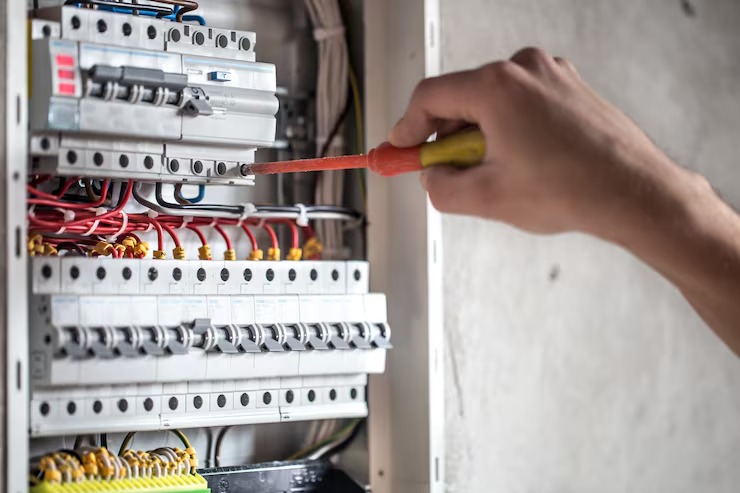
Brandon starts by killing power to the circuit at the panel, not just flipping the wall switch, then confirms it’s dead with a meter before touching anything. From there the work depends on what’s already up there.
- Existing fan-rated box: if the ceiling box is already rated for a fan and properly supported to a joist or brace bar, swapping a light fixture for a fan or replacing an old fan is usually a same-visit job.
- Standard light box, no support: most older Danvers ceilings only have a light box screwed to a single joist edge. That box has to come out and get replaced with a fan-rated box on a brace bar that spans the joists, so the fan is actually supported by structure, not drywall.
- No ground, or knob and tube feed: this is where the job grows. Depending on what we find, that can mean running a new grounded circuit back to the panel, adding a dedicated breaker, or at minimum pulling new cable to the fixture location rather than reusing the old conductors.
- Wall control or remote: if you want a wall switch that controls both light and fan speed independently, that’s typically a 3-wire run instead of the standard 2-wire, which we account for before we open the ceiling, not after.
Power is usually out for that one circuit for the length of the job, not the whole house, and most single-fixture installs run two to four hours depending on ceiling access and what’s actually inside the box.
What It Costs
A straightforward fan swap onto an existing fan-rated box runs {PRICE_LOW} to {PRICE_HIGH}. That’s the baseline for a lot of the newer Danvers homes and any house where a fan has already been there before.
Costs move up from there when the ceiling box needs to be replaced with a proper brace bar, when the circuit has no ground and needs new cable pulled, when the room has no existing switch loop and one has to be added, or when we’re installing in a vaulted or plaster ceiling where access is harder. Multiple fixtures on the same visit usually bring a lower per-unit cost than one fan booked on its own, since a lot of the setup and panel work is shared. We’ll always tell you before we open anything up if we think the job is going to move past the baseline range, and why.
How Long It Takes
Most single ceiling fan or fixture installs are done in one visit, typically two to four hours. If we find knob and tube feeding the circuit or need to run new cable back to the panel, that can stretch to a full day, and in rare cases where a panel has no room for a new dedicated circuit, we may need a second visit once a load calculation is done. We’ll tell you which category your job falls into before we start cutting anything open, not after.
Permits and Inspection
Ceiling fan and fixture installation is electrical work under Massachusetts law, which means it’s permitted and inspected like any other electrical job, not something a handyman can legally pull off without a license. Brandon pulls the permit, the Town of Danvers inspector signs off on the finished work, and you get a paper trail showing the job was done to code. That matters at resale, and it matters if anything ever goes wrong with the fixture down the road – an uninspected install is one of the first things a home inspector or insurance adjuster looks for. [EXTERNAL LINK: Massachusetts Board of State Examiners of Electricians licensing and permit requirements, to show the regulatory basis for permitted electrical work]
Common Questions
Can I install a ceiling fan on an existing light fixture box?
Only if that box is rated for a fan and properly braced to the framing. A lot of older Danvers homes have a plain light box screwed to one joist edge, which isn't rated to hold a spinning fan's weight and vibration. We check this before we mount anything.
Do I need a permit just for a ceiling fan?
Yes. Ceiling fan installation is electrical work under Massachusetts law, and it gets permitted and inspected by the town like any other electrical job. Brandon handles the permit and the inspection is scheduled once the work is complete.
What if my house still has knob and tube wiring?
It's common in Danvers' older housing stock. We can usually run a new circuit to the fixture location rather than tying into the old cloth-insulated wiring, which isn't rated for the load or the vibration a fan puts on a connection.
How long will the power be off?
Can you install a fan with a remote or a separate wall control for light and speed?
Reach Out for Ceiling Fan and Light Fixture Installation
If you’re in Danvers and thinking about a fan for the bedroom, a fixture swap in the dining room, or a full room of new lighting, call {PHONE} and we’ll get a visit scheduled. We work across Danvers and the rest of the North Shore, and we’re straightforward about what a job needs before we start it, not after the ceiling’s already open.
Contact information
Reach Out for Ceiling Fan and Light Fixture Installation
A ceiling fan install is small on paper, but it’s often the first look we get inside a Danvers home’s wiring, and it tells us a lot about what else might be worth addressing. Plenty of customers who call for a single fan end up asking what a panel upgrade or a couple of dedicated circuits would run, once they see what Brandon finds behind that first box.
Talk to Brandon
Brandon is the electrician on the Belfiore team, and ceiling fans are one of those jobs where a five-minute conversation up front saves a lot of guesswork later. Tell him the room, the ceiling height, whether there's a fan up there now, and whether the house has had any panel work done, and he can usually tell you over the phone which category of job you're looking at before he ever sees the ceiling box.