
Gas Line Installation and Repair in Amesbury, MA
Amesbury has a mix of older mill-era homes near downtown and newer construction spread toward the edges of town, and gas piping across that mix varies more than most homeowners expect. Some houses still run on black iron pipe installed decades ago, others have newer CSST runs, and that difference matters the moment you want to add a gas appliance.
Gas Line Installation and Repair in Amesbury
Belfiore Home Services installs new gas lines and repairs existing ones, from the meter to the appliance. That covers a new line for a gas range, a gas dryer, a fireplace insert, a pool heater, or a backup generator, as well as fixing a line that’s leaking, corroded, or undersized for what’s already running through it. Chris runs the plumbing side and handles this work, along with everything downstream from it — see our plumbing services in Amesbury.
What Amesbury Homes Typically Have
A lot of the housing near the Millyard and downtown dates back to the 1800s and early 1900s, piped originally for a very different set of appliances and rebuilt more than once since. Homes further out, built between the 1960s and 2000s, tend to have straighter, more modern gas runs, though some of those are now 40 to 50 years old themselves and due for a look.
Natural gas service reaches most of Amesbury, particularly around downtown and the more established neighborhoods, though some homes further out still run on oil or propane. That’s the first thing we check before quoting a new line, since it changes the whole scope of the job. Most of the town is on municipal water, though homes closer to the New Hampshire line are more likely to be on a private well, which doesn’t affect gas work directly but often comes up in the same renovation.
What the work involves
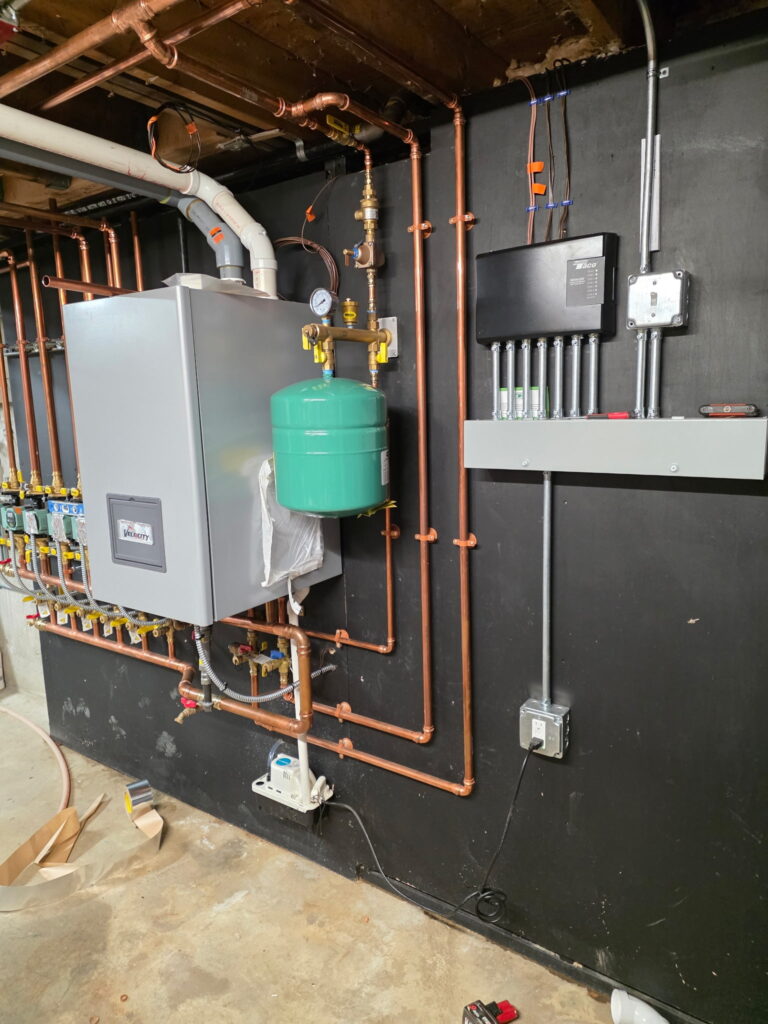
For a new line, the first step is adding up the total BTU load, meaning every appliance the line will serve, existing and new. That number determines pipe diameter and whether black iron or CSST is the right call for the run. The pipe is then routed from the meter or an existing line to the new appliance, pressure tested, and left for inspection before anything is turned on. Gas work requires a permit and sign-off from the local gas inspector, and it has to be done by a licensed gas fitter under state rules.
Repairs work differently. We locate the leak with a pressure test and a manometer or soap solution, cut out the bad section, thread or press in a new fitting, and retest before closing anything up. A line repair on its own doesn’t put your house without heat. You’d only lose heat if the job also involves taking a boiler or furnace offline, and we’ll tell you upfront if that’s the case. See Boiler Repair in Amesbury for more on that.
Repair or replace
Most of the time, a single leaking joint or a corroded fitting is a straightforward repair, not a reason to touch the rest of the line. If the pipe around it is sound, there’s no case for replacing more than you have to.
Where replacement makes sense is older black iron systems with more than one failure point, or a line that was sized years ago for one appliance and has since had two or three more added to it without ever being recalculated. In that situation, patching the latest leak just moves the problem down the pipe. Chris will walk you through which one you’re actually dealing with before recommending either option.
What it costs
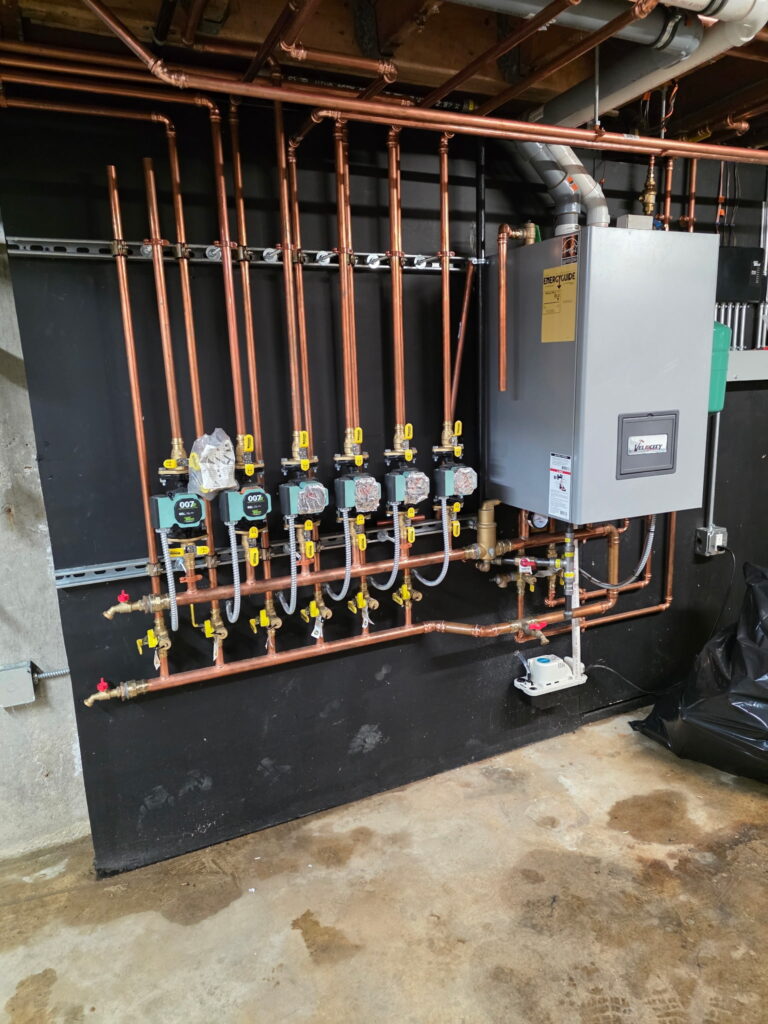
Cost depends mainly on the length of the run, how many appliances it needs to serve, and whether the work is a straightforward indoor repair or a new line that means trenching outside, say to a generator or a pool heater. A single-fitting repair is quick, contained work. A new outdoor run with its own digging and its own permit is a bigger job with more steps. Chris will walk your specific setup and give you a firm number before anything starts. If your job involves a water heater swap at the same time, Water Heater Installation in Amesbury has its own separate cost factors worth reading before you budget for both.
How long it takes
A single repair is usually a few hours, done in one visit. A new line to one indoor appliance is typically a one-day job. Larger work, like a full re-pipe or a long outdoor run to a generator, can run two to three days depending on how much trenching is involved. Inspection scheduling with the town adds time on top of the work itself, sometimes a few days, so if you’re timing this around an appliance delivery or an installer, build that into your plan.
Common Questions
Do I need a permit for a new gas line in Amesbury?
Can I add to an existing gas line, or does it need to be sized from scratch?
How do I know if I have a gas leak?
Will I be without heat during a repair?
Talk to Chris
Chris runs the plumbing side of Belfiore Home Services and handles gas line work across Amesbury and the rest of the North Shore. If you’re smelling gas, seeing a spike in your bill, or planning a new gas appliance, call 978-637-5418.
Contact information
Reach Out for Gas Line Installation and Repair
Call us at 978-637-5418 or contact us for your free quote.