
Boiler Repair for Amesbury Homes
When an older steam boiler in one of Amesbury’s mill-era homes starts banging in the pipes or won’t hold pressure on a cold morning, the cause is almost always something in the near-boiler piping or the original controls, not the boiler itself giving out. A lot of these systems are decades old and still fundamentally sound, which is why a repair call and a replacement quote can lead to two very different answers depending on who’s giving them.
Boiler Repair in Amesbury
What Amesbury homes typically have
Older steam systems, common in the Victorians and mill-era doubles near downtown, tend to develop a specific set of problems: a water level control that’s stuck or fouled, banging pipes caused by wet steam or piping that’s lost its original pitch, or an aging pressuretrol that’s no longer holding an accurate cutoff. Hot water systems, more common in the capes and colonials further from downtown, more often show up as a failed circulator pump, air trapped in the lines, or a zone valve stuck open or closed.
Fuel type shapes the maintenance pattern too. Oil boilers need the nozzle and filter serviced on a schedule or they’ll soot up and start short cycling or losing efficiency. Gas boilers more often run into ignition or pilot issues, or a gas valve that’s failing intermittently rather than all at once.
Homes on well water tend to see more mineral scale build up inside the boiler over time, which reduces how efficiently it transfers heat and can make a boiler run longer and hotter than it should just to reach temperature. That’s sometimes mistaken for a bigger mechanical problem when it’s really a maintenance issue.
What the work involves
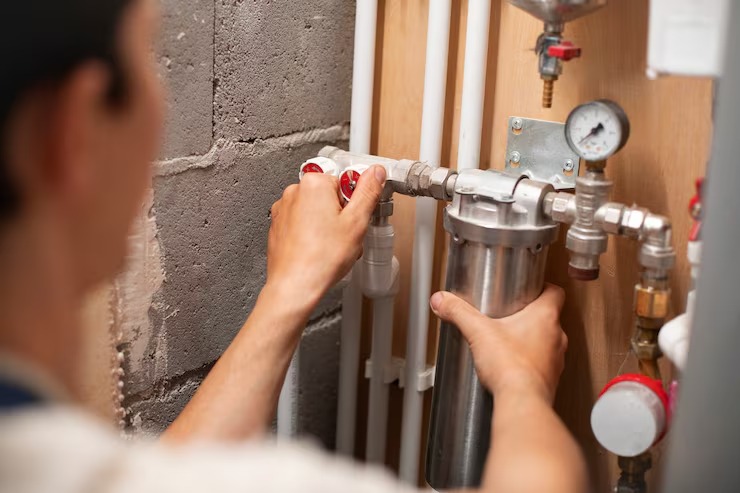
Chris starts by checking water level and pressure, looking at the near-boiler piping for sizing or pitch issues on a steam system, and testing the circulator pump, aquastat, and zone valves on a hot water system, before deciding what actually needs to be replaced. A lot of repair calls get solved without swapping the part the homeowner assumed was the problem.
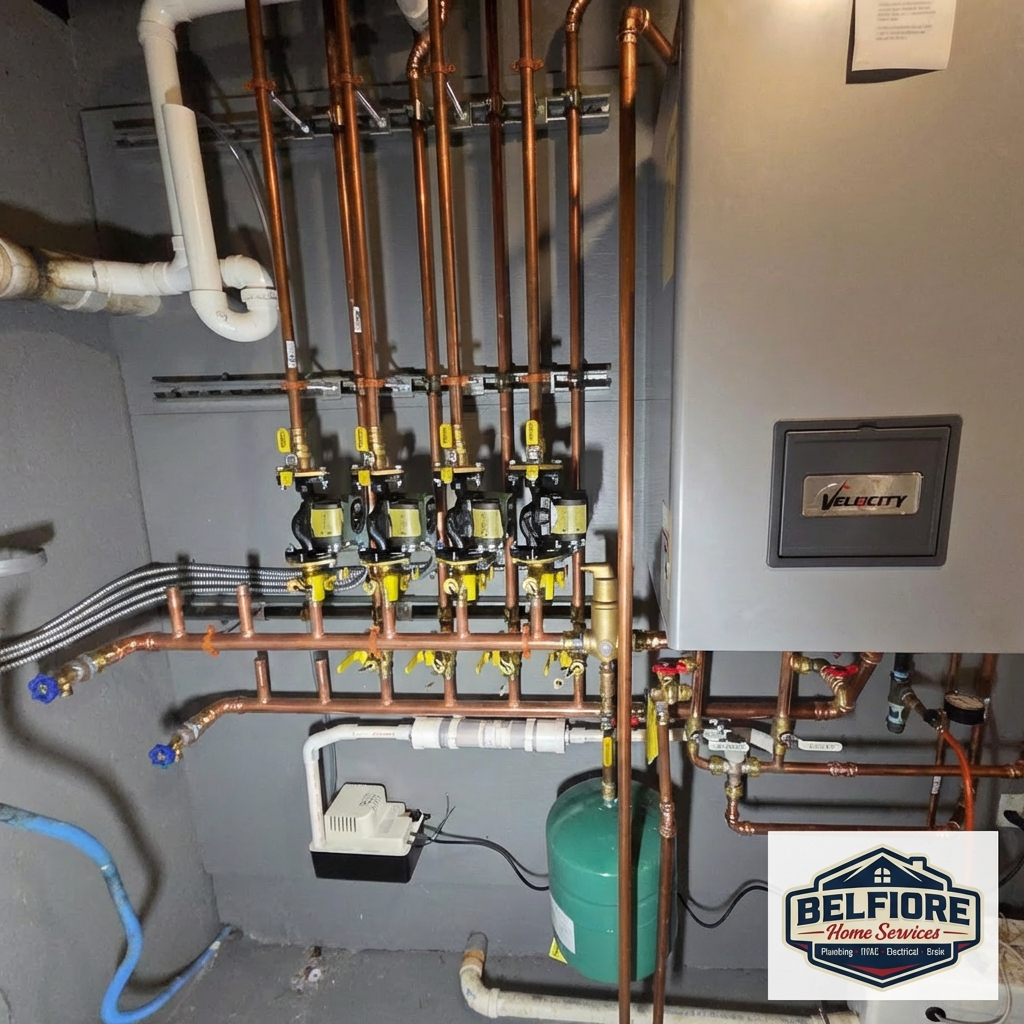
Common repairs include replacing a failed circulator pump, which means isolating that section of the system, draining a small amount of water, swapping the pump, and purging air from the line before it goes back into service. Other frequent fixes are a leaking valve or gasket, a stuck zone valve, or, on an oil system, cleaning and adjusting the burner’s nozzle and electrodes.
Every boiler has safety controls, a pressure relief valve, a low water cutoff, a high limit switch, and those get tested as part of any repair visit regardless of what the original complaint was. It’s a natural point to confirm they’re working, since a boiler with a safety control that’s failed silently is a bigger problem than whatever brought Chris out in the first place.
Repair or replace
Most calls end up being a repair. A no-heat call, banging pipes, short cycling, or uneven heat almost always trace back to a specific component or a piping and venting issue, not the boiler’s core assembly, and Chris will fix what’s actually wrong rather than suggesting a new system when a repair will do the job.
Replacement becomes the better answer once the heat exchanger itself is cracked or corroded, since that’s not something that gets patched safely. It’s also the better call when a boiler is old enough that parts are getting hard to source, or when the same system keeps coming back with new problems year after year. Chris will tell you plainly which situation you’re in rather than defaulting to either answer.
What it costs
How long it takes
Common Questions
My boiler is banging or knocking. What does that mean?
Why does my boiler keep shutting off?
Is it normal for my boiler to smell like oil when it starts?
How do I know if a repair is worth it or if I should replace the boiler instead?
Talk to Chris
If your boiler in Amesbury isn’t heating the way it should or you’re hearing something that doesn’t sound right, Chris can find out what’s actually going on and tell you plainly what it’ll take to fix. Call Belfiore Home Services at 978-637-5418.