
Boiler Installation and Replacement for Amesbury Homes
A good number of Amesbury’s older homes, especially the Victorians and mill-era doubles near downtown, are still running the same steam or hot water boiler system they were built with, sized and piped for a century-old idea of what a heating season looks like. Whether that system runs on oil or gas depends more on which street it’s on than which decade the house was built, and that split shapes what a boiler replacement actually involves.
Boiler Installation and Replacement in Amesbury
What Amesbury homes typically have
Housing closer to downtown and the old mill district tends to be older and denser, Victorians and mill-era doubles built with cast iron radiators and, more often than not, a steam boiler feeding them. Capes and colonials in the newer sections of town more commonly run hot water systems with baseboard, which are generally more straightforward to size and convert than steam.
Natural gas runs down the street in parts of town, particularly closer to the downtown core, while other sections, especially the more outlying and rural parts of town, are still oil-only. That split doesn’t follow a clean line by neighborhood, so it’s worth confirming what’s actually available at your address rather than assuming either way based on what a neighbor has.
Homes on well water see more mineral scale build up in a hot water boiler’s heat exchanger over time than homes on municipal water, which is worth factoring into how long a boiler is expected to last and how it should be maintained.
What the work involves
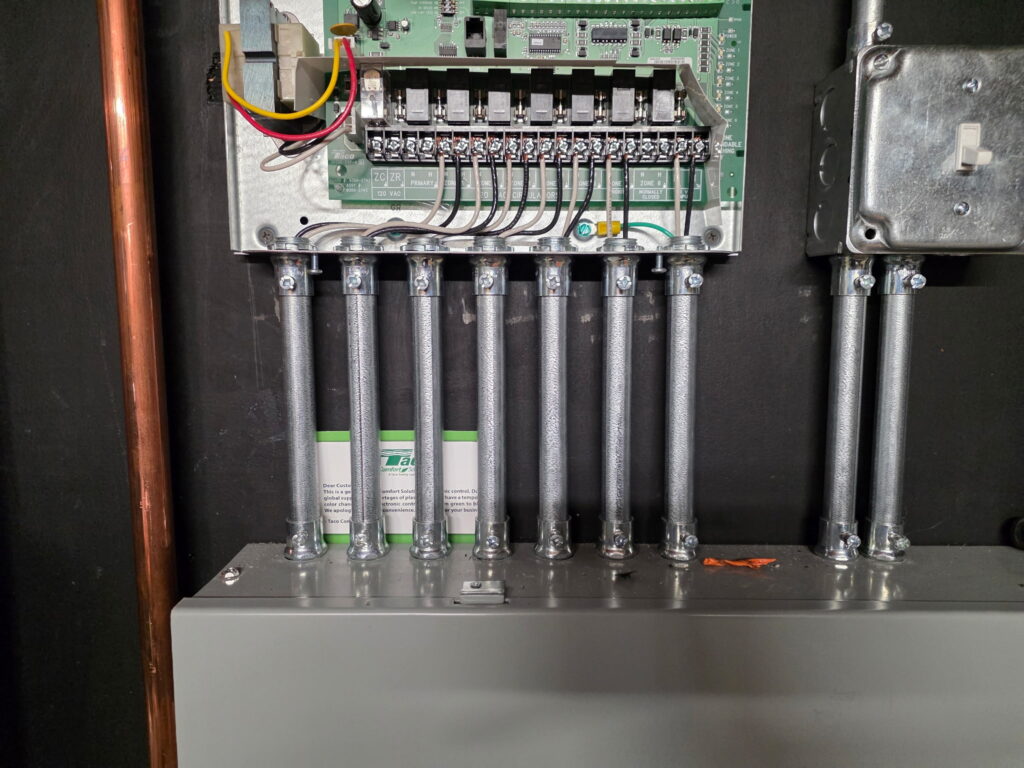
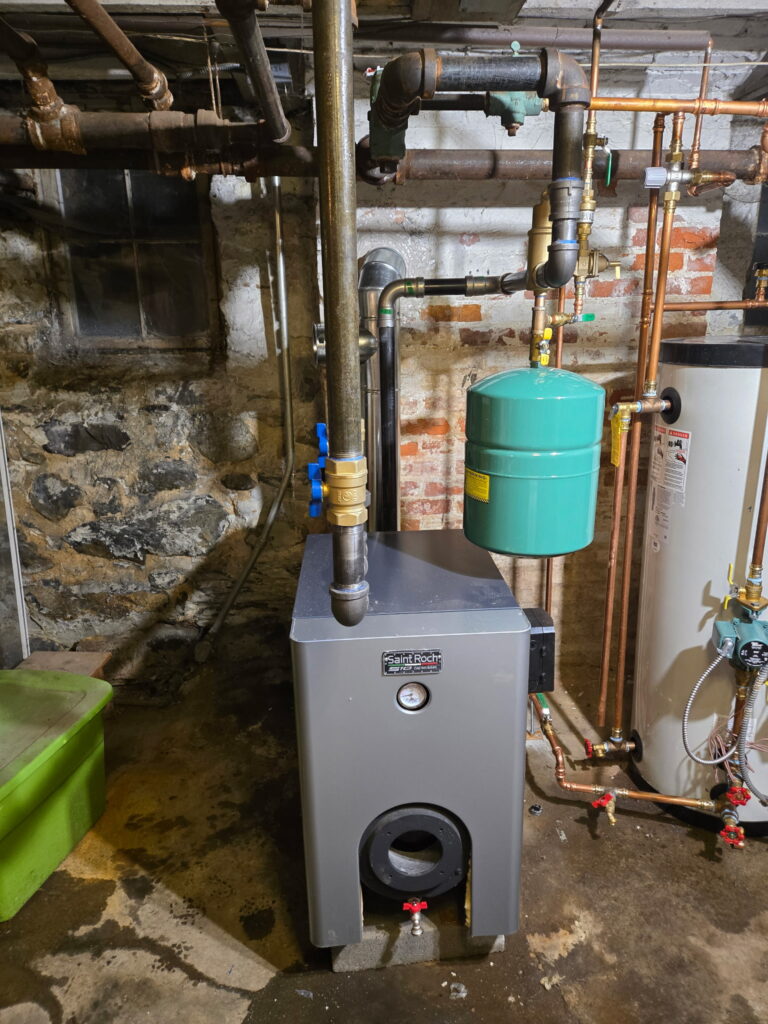
The old boiler gets drained, disconnected, and removed, and the near-boiler piping usually comes out with it, since it’s sized and configured for the boiler being replaced, not the new one. On a steam system especially, that piping is a big part of whether the new boiler heats evenly. Reused or rushed piping is one of the more common reasons a steam boiler swap doesn’t perform the way it’s supposed to.
Venting depends on what’s going in. Standard efficiency oil and gas boilers vent through the existing chimney, which needs to be lined and sized correctly for the new unit. High-efficiency condensing boilers vent through PVC pipe run directly outside, which changes where the boiler can sit and how the venting gets routed through the house.
A fuel conversion adds another step. Switching to gas means sizing the gas line for the new boiler’s input and coordinating with the utility if gas isn’t already running to the mechanical room, which is a separate piece of work that happens before the boiler itself goes in. An oil-to-oil replacement skips that step but still means sizing the new boiler correctly against the existing or a new oil tank.
Repair or replace
A boiler that’s heating fine but has one failed part, a circulator pump, a zone valve, an aquastat, is usually a repair, not a replacement, and Chris will say so rather than pushing a new system when the fix is straightforward. The same goes for a leak at an accessible fitting or valve rather than the boiler itself.
Replacement makes more sense once the heat exchanger itself is the problem, since that’s not something that gets patched. It also makes sense when a boiler is old enough that parts are getting hard to find, when repairs keep piling up year after year, or when a fuel conversion is already on the table for other reasons. Chris will tell you plainly which category your system is in rather than defaulting to a sales pitch either way.
What it costs
Boiler installation and replacement in Amesbury can vary in cost depending on the type of system being installed and the amount of work required. Factors that can affect the overall cost include whether the project is a like-for-like boiler replacement or a fuel conversion, whether the system uses steam or hot water, the efficiency level of the new boiler, and whether additional work is needed for venting, gas lines, or other connected components. Every heating system has different requirements, and Belfiore Home Services can evaluate your existing setup and explain the options before providing a project estimate.
How long it takes
A like-for-like swap, same fuel, same venting, usually takes a day. A fuel conversion or a venting change typically adds a day or two of plumbing and heating work, and if a gas hookup is part of the job, the utility’s own scheduling for the tap and meter is a separate timeline that Chris coordinates around but doesn’t control.
Common Questions
How do I know if I have a steam or hot water system?
Can I convert my oil boiler to gas?
How long will I be without heat during a boiler replacement?
Is a bigger boiler always better?
Talk to Chris
If your boiler is on its way out or you’re weighing a fuel conversion for your Amesbury home, Chris can look at what you have and tell you straight whether it’s worth repairing or time to replace. Call Belfiore Home Services at 978-637-5418.
Contact information
Reach Out for Boiler Installation and Replacement
Call us at 978-637-5418 or contact us for your free quote.